
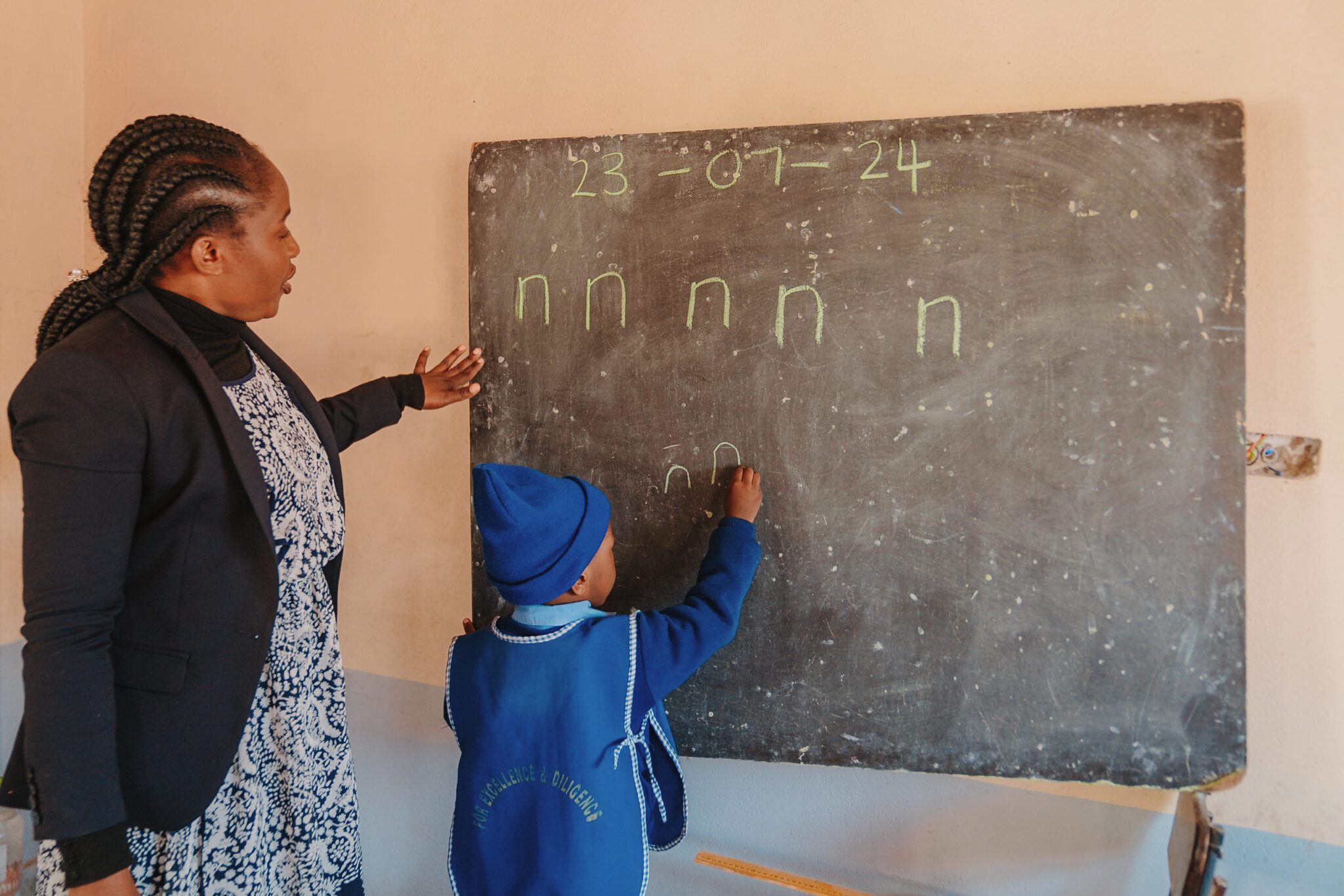
Some teachers in Zimbabwe have gone more than a decade without taking leave because schools lacked relief staff to replace them, Parliament heard recently, prompting the government to announce plans to reinstate temporary teachers to make sure classes are not left unattended.
The revelation came during a question-and-answer session in the National Assembly, where legislators also challenged the government’s insistence that there is no national teacher shortage despite concerns raised by the Zimbabwe Teachers Association (ZIMTA) over frozen posts and unemployed qualified teachers.
Raising the issue, a legislator, Wiriranai Muchemwa asked Primary and Secondary Education Minister, Torerayi Moyo, why the long-standing practice of appointing relief teachers had been abandoned.
“Before 2013, if a teacher was going on leave, there would be a relief teacher who could take over during that time. After 2013, if a teacher goes on leave, the class is left without a teacher. What plans do you have to ensure we reinstate temporary teachers who would take over and assist when some teachers are on leave?” he asked.
On this topic
Moyo acknowledged the absence of relief teachers had affected schools but said the ministry was now restoring the system.
“Yes, it is very true that when people go on maternity leave, their class would not have someone to take over,” he said.
“We used to have challenges of a shortage of teachers back then but right now, we have enough teachers and we recruited from other districts where we had a lot of vacancies. Teachers who are going to be on leave, be it maternity leave or any other leave, we are putting in place a relief teacher for that period.”
The minister’s response suggests a policy shift that could help address disruptions to learning caused when teachers take maternity, sick or annual leave.
However, Muchemwa said years without relief teachers had forced many educators to forgo their leave altogether rather than leave learners without instruction.
“From 2013 up to now, we have teachers who have not gone for leave. What plans do you have to make sure that you can pay those leave days for the teachers who did not go on leave from 2013?” asked the MP.
In response, Minister Moyo said teachers had a right to annual leave and should make use of the procedures available through their schools and district offices.
“It is every worker’s right to make sure that every teacher takes leave after a certain period. One must have enough time to rest,” he said.
He added that teachers who had accumulated the maximum allowable leave days could apply to have those days converted into cash payments.
“If the days have reached the maximum, they have the right to sell and make sure they can be paid for those leave days. They can be remunerated in the form of cash… or they can approach those from the Commission; those are the employers,” Moyo said.
The discussion then shifted to whether the lack of relief teachers reflected a broader shortage of educators.
Another MP, Lynette Karenyi-Kore questioned the minister over concerns reportedly raised by ZIMTA during a parliamentary workshop.
Karenyi said the union had indicated the government had frozen teaching posts and that many newly qualified teachers remained unemployed despite growing classroom pressures.
“Those people who recently completed their courses should be employed, so they were saying the teacher-to-pupil ratio is alarming,” she said.
“Is this challenge not caused by teachers who fail to go on leave? If they go on leave, their class will be left unattended simply because there are not enough trained teachers being recruited?”
The Minister rejected assertions that Zimbabwe faces a nationwide teacher shortage.
“We do not have a shortage of teachers in Zimbabwe,” he said.
“We have other teachers who graduated from 2019 to 2022 who are not yet employed. We are only saying they cannot be employed; it is only those who graduated this year and last year who cannot be recruited yet.”
Moyo explained the government was prioritising graduates from earlier years before recruiting those who had completed their training more recently.
“We have those people who graduated in 2020; that is the rule that we have to employ those people who graduated earlier. If we take those people who graduated in 2025, it will be corruption,” he said.
Moyo also defended the government’s recruitment efforts, saying teacher deployment had significantly improved in previously underserved areas.
“As I am speaking, the teacher-pupil ratio of late was very high but we thank the President for allowing us to recruit a lot of teachers,” he said.
“Even where I come from in Gokwe North, where people used to say we could have five teachers per school, we have recruited a lot of teachers in those places, meaning the teacher-pupil ratio is now quite admirable.”
Drawing a regional comparison, the minister said Zimbabwe’s education system was performing better than some neighbouring countries.
“Last week I was in Malawi; I discovered that one teacher had 200 children and all the children were being taught sitting on the ground but here in Zimbabwe we have a ratio of 1:35 and 1:40.”
Despite the minister’s assurances, concerns remained over shortages in specialist subjects.
MP Witness Jonga said rural secondary schools continued to struggle to recruit Mathematics and Science teachers.
“I come from rural areas, where from Form 1 to Form 6, science students are facing a challenge. The challenge is that there are few teachers for mathematics and science,” he said.
Moyo acknowledged shortages existed in some specialist subjects but said the government was prioritising recruitment in those areas.
“The government policy is that where there are shortages, for example, in science subjects like Physics, Chemistry and Biology, when teachers graduate, we hire such teachers for STEM subjects,” he said.
“For Physics, Chemistry and other science teachers, they are employed as soon as they graduate. Where there is a shortage, we employ teachers to cover that gap.”






Leave a Reply