

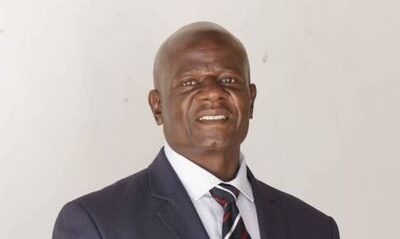
By Dr Shame Mugova
There is a revealing economic contradiction between Zimbabwe and South Africa. South Africa has one of Africa’s highest unemployment rates, yet its economy supports an extensive network of shopping malls, supermarkets and established businesses. Zimbabwe, despite reporting considerably lower unemployment under international estimates, has seen longstanding retailers struggle while many households lack sufficient purchasing power to sustain regular consumer spending.
South Africa has a much larger formal wage economy. In the third quarter of 2026, approximately 12.3 million people worked in its formal sector. Their salaries support supermarkets, housing markets, transport operators and numerous other businesses. This does not diminish South Africa’s severe unemployment and inequality. It demonstrates how regular household incomes help sustain commercial activity.
Zimbabwe’s challenge is more troubling when viewed through poverty statistics. The World Bank’s September 2026 Growth and Jobs Report estimated that approximately 80% of workers were informally employed, with median monthly earnings of just US$130, while nearly half the population lived below the international poverty line.
On this topic
In Zimbabwe’s urban communities, people sell vegetables, airtime, brooms and secondhand clothes. In rural areas, households cultivate crops, raise livestock and struggle with irregular incomes. Many work extremely hard without escaping poverty.
Zimbabwe does not lack people willing to work. It lacks enough productive opportunities that allow people to earn their way out of poverty.
This has consequences for the entire economy. A shopping centre can be financed by a few wealthy investors, but its commercial survival depends on thousands of paying customers. A factory can install machinery, but it needs markets for its products. A supermarket can stock its shelves, but customers must earn enough to purchase what is being sold.
When government constructs a road, the benefits should extend beyond the contractor receiving payment. Construction workers earn wages, engineers provide expertise, transport operators move materials and suppliers receive orders. Those incomes support groceries, housing, clothing, school fees and other expenditure. Businesses receiving that spending subsequently purchase goods, employ workers and generate additional economic activity.
Economists describe this process as the fiscal multiplier. Its strength depends on how much expenditure becomes domestic income, how that income is distributed and whether local producers can respond to increased demand.
Consider two hypothetical businesses competing to supply government with equipment worth US$5 million.
One operates a factory in Graniteside, Harare, with 300 employees and domestic suppliers. Winning the contract could enable it to hire another 100 workers.
The other has registration documents but no operating facilities or permanent staff. It imports the products from Dubai and supplies government at a markup.
The manufacturer could create jobs, strengthen suppliers and circulate wages through surrounding communities. The intermediary may generate legitimate distribution income but little domestic manufacturing activity.
If the imported product is cheaper, more reliable or unavailable locally, the intermediary may provide better value. Domestic production should not be favoured regardless of cost or quality.
The concern arises when procurement rewards privileged access rather than competitive value or overlooks the wider benefits of domestic production.
A government tender should not merely change who has money. Where economically justified, it should help expand the country’s capacity to produce, employ and create wealth.
Imagine a productive enterprise employing 50,000 workers earning US$500 monthly. Its combined wage bill would amount to US$25 million every month, or US$300 million annually.
A contractor receiving US$300 million in revenue does not necessarily earn that amount personally. Much may be spent on materials, employees, equipment and subcontractors. The relevant issue is how much domestic employment, productive investment and public value the expenditure generates.
A prosperous economy is not one in which a few people can afford almost anything. It is one in which millions of households can afford the things they need and increasingly the things they aspire to own.
Business figures including Kudakwashe Tagwirei, Paul Tungwarara and Wicknell Chivayo have featured in debate about commercial relationships with the state. Tagwirei’s October 2026 ministerial appointment makes transparency around business interests particularly relevant.
Wealth and government contracts are not evidence of wrongdoing. What matters is transparent awards, competitive prices and demonstrable public benefits.
Zimbabwe’s 2026 public procurement assessment identified weaknesses involving direct procurement, procurement data and contract management. These are institutional concerns that matter regardless of who receives a tender.
The contrast becomes more significant when government remains an attractive customer for major contractors while struggling to retain some of the professionals delivering essential services.
Teachers, nurses and university lecturers have repeatedly raised concerns about inadequate remuneration. Government education records show that selected teaching grades received approximately US$448 to US$457 monthly in 2013. Education unions reported remuneration of approximately US$450 in 2026. Although the figures are not perfectly comparable, they raise serious questions about the purchasing power of professional salaries.
A government can become an attractive customer for major contractors while remaining an unattractive employer for thousands of essential professionals.
A hospital requires more than a completed building. It needs medical personnel, medicines and equipment. A university requires lecturers and researchers. When professionals leave because remuneration is inadequate, the country risks losing both their productive contribution and the domestic spending their incomes could support.
Treasury projects revenue of approximately US$12.5 billion and expenditure of US$12.8 billion. Capital expenditure is expected to reach approximately US$2.6 billion, while employee compensation is projected to decline from 52.3% of total expenditure in 2026 to 46.7% in 2027.
Zimbabwe urgently needs productive infrastructure. Reliable electricity, roads, irrigation and water systems can strengthen manufacturing, agriculture and employment. But expenditure must produce functioning assets, not merely completed contracts.
The purpose of infrastructure investment is not to keep contractors busy. It is to make the wider economy more productive.
Public financial accountability is essential. Zimbabwe’s Auditor General found that approximately US$597.7 million in direct Treasury payments to service providers during 2024 had not been reconciled in the relevant government entities’ records by June 2025.
This does not establish that the money was stolen. It reveals weaknesses in accounting and oversight that make it harder to verify whether public expenditure achieved its intended purposes.
The 2027 budget also proposes requiring government, mining companies and other large entities to source at least 15% of their inputs from local manufacturers where capacity exists. This could strengthen domestic production, provided procurement remains competitive and supports genuine manufacturing rather than simply creating opportunities for intermediaries selling imported products.
Local procurement should create local production, not merely local invoices.
However, Zimbabwe’s poverty problem cannot be addressed through industrial procurement alone. Approximately three fifths of the population lives in rural areas, where many households depend on rainfall, subsistence agriculture and irregular income.
Public expenditure should also help poor households become more productive through reliable irrigation, agricultural extension, rural roads, access to markets and appropriate financing. Effective social protection must support those who cannot immediately benefit from employment or productive investment.
The World Bank’s latest global research shows that extreme poverty is increasingly concentrated and that education and urbanisation alone do not guarantee escape from poverty.
The country’s established businesses also need sufficient customers. OK Zimbabwe’s entry into corporate rescue in February 2026 illustrates pressures facing parts of formal retail, although its difficulties involved liquidity, supplier financing and other operational problems beyond weak purchasing power.
When formal businesses contract, workers can lose reliable salaries and suppliers can lose customers. Some displaced workers enter informal trading, remaining statistically employed without necessarily recovering their previous earnings.
Government revenue can meanwhile increase through taxation, fees, levies and improved collection, even when household incomes grow slowly. Fiscal stability is necessary, but stronger revenue collection should not be confused with widespread prosperity.
Zimbabwe therefore needs to evaluate public expenditure against measurable outcomes. How many productive jobs have been created? Are real wages increasing? Are rural households earning more? Are domestic industries expanding? Are government projects delivering functioning assets? Is the number of people living in extreme poverty declining?
Major contracts should be evaluated for competitive pricing, local productive value, employment, delivery and long term economic returns. Social programmes should be assessed by the vulnerable households they reach and the poverty they reduce.
A government can report a growing budget while households remain trapped in poverty. The real test of public finance is whether the money collected from the economy helps more people escape that poverty.
A shopping centre cannot thrive simply because an investor can afford to construct it. Its success depends on the productive economy and purchasing power of the community surrounding it.
Zimbabwe’s challenge is therefore not merely to find more money for government to spend. It is to ensure that public expenditure builds productive businesses, supports decent employment, strengthens rural livelihoods and creates opportunities that reach beyond a limited number of beneficiaries.
The ultimate achievement of a national budget is not how many billions pass through Treasury, but how many more people can build secure and prosperous lives because those billions were spent.
Dr Shame Mugova is a Lecturer in Finance at Birmingham City University. He writes on finance, economic policy, governance and development, with a particular interest in Zimbabwe and Southern Africa. He writes in his personal capacity.







Leave a Reply