
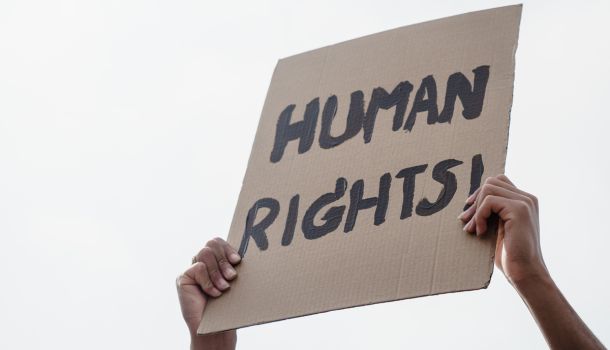
Zimbabwe continues to fall short of its international human rights obligations, with millions of citizens struggling to access basic services, economic opportunities and civil liberties, according to newly released data from the Human Rights Measurement Initiative (HRMI).
The 2026 HRMI Rights Tracker assessment paints a troubling picture of deteriorating socio-economic conditions and shrinking civic space, warning vulnerable groups including women, children, journalists, activists and government critics remain disproportionately exposed to rights violations.
The independent global organisation said Zimbabwe’s Quality of Life score stood at 63.1 percent in 2025, indicating that rights to education, work, health, housing and food remain significantly under-fulfilled.
Using an income-adjusted benchmark, Zimbabwe scored 60.3 percent, while its performance against the global best benchmark was even lower at 53.7 percent.
On this topic
HRMI noted Zimbabwe performs only close to the Sub-Saharan African average, despite its international commitments under various human rights treaties.
One of the country’s weakest indicators is the right to housing, which scored just 33.5 percent.
HRMI Co-Executive Director, Thalia Kehoe Rowden, said the findings highlighted the urgent need for authorities to prioritise the rights of citizens.
“The rights we measure are absolutely fundamental and leaders must prioritise them,” she said.
“We urge Zimbabwe’s leaders to take action and improve quality of life in light of this data.”
The report identifies children and women from low-income households as among those most at risk of socio-economic rights violations.

Respondents consulted by HRMI said many children, particularly girls, are unable to fully enjoy their right to education because of government failures to adequately support vulnerable learners through the Basic Education Assistance Module (BEAM).
Children from poor households reportedly face exclusion due to rising school fees, while orphans, children without birth certificates and those living in cyclone-affected communities encounter additional barriers.
The increasing use of digital technologies in education has also created disparities for children from families with low levels of digital literacy or limited internet access.
Basic services critical to human dignity have also experienced sustained decline.
Zimbabwe scored 31.1 percent on the right to water, 35.8 percent on sanitation and 36.4 percent on subsistence income, indicators that HRMI says have been worsening over the past 15 years.
HRMI’s East and Southern Africa Engagement Lead, Nkosi Sibanda, said the findings should prompt a reassessment of national priorities.
“While considerable national attention and resources are being channelled towards political questions and constitutional amendments, millions of people continue to struggle with access to the basic services and opportunities that underpin human dignity,” Sibanda said.
“The continued decline in rights linked to water, sanitation, housing and subsistence income suggests that greater priority must be placed on building institutions and public services that work for all Zimbabweans.”

The report also raises concerns over Zimbabwe’s civil and political rights record, as the country received an Empowerment score of 4.3 out of 10, which measures the enjoyment of freedoms relating to assembly, association, expression, participation in government, religion and belief.
HRMI said the low score suggests many Zimbabweans do not fully enjoy their civil liberties and that the country performs worse than average compared to other states in its sample.
People who criticise the government, opposition activists, civil society groups, journalists and student leaders were identified as among those facing the greatest restrictions.
According to respondents interviewed by HRMI, members of opposition parties, including the Citizens Coalition for Change (CCC), are often denied permission to hold gatherings under provisions of the Maintenance of Peace and Order Act.
Civic organisations such as the Zimbabwe National Liberation War Veterans Association, the Constitutional Defenders Forum, the National Constitution Assembly and the Zimbabwe National Students Union have reportedly faced challenges organising meetings and campaigns, particularly when advocating against constitutional changes aimed at extending presidential tenure.
HRMI respondents further reported that heavy police deployments in Harare were used to discourage demonstrations against proposals to extend President Emmerson Mnangagwa’s term in office to 2030, while community meetings have at times allegedly been disrupted and diverted towards partisan activities.
Restrictions on freedom of expression also featured prominently in the findings.
People critical of government policies were said to face prosecution under the Criminal Law (Codification and Reform) Act, while opposition voices allegedly struggle to access coverage on state-controlled media platforms.
Trade unionists, governance activists, election monitors, lawyers and non-governmental organisations working on anti-corruption issues were also cited as groups vulnerable to reprisals.
The report references the arrest of journalists, including Zimbabwe Independent editor Faith Zaba, who was detained after publishing a satirical article critical of the government, and journalist Blessed Mhlanga, who reportedly spent 72 days in detention after interviewing outspoken war veteran Blessed Geza, who publicly demanded President Mnangagwa’s resignation.

Zimbabwe’s Safety from the State score was assessed at 6.5 out of 10, reflecting concerns over arbitrary arrests, torture and ill-treatment, forced disappearances and extrajudicial killings.
Political activists, opposition supporters, student leaders, journalists and war veterans opposed to the ‘Vision 2030’ agenda were identified as particularly vulnerable to arbitrary detention and mistreatment.
HRMI respondents specifically cited members of the Zimbabwe National Students Union, civil society leaders and supporters of war veteran Blessed Geza as groups exposed to risks of harassment and abuse.
The organisation also noted detainees continue to face ill-treatment while in police custody.
Zimbabweans living outside the country were highlighted as another group experiencing rights limitations, with respondents reporting that citizens in the diaspora were denied the opportunity to vote in the 2025 by-elections.
HRMI stressed the findings should not merely serve as statistical indicators but as evidence of the lived experiences of ordinary Zimbabweans whose rights remain unfulfilled.
The full assessment is available on HRMI’s Rights Tracker platform, which monitors governments’ compliance with internationally recognised human rights standards.
Reached for a comment, a political commentator, Mxolisi Ncube said the HRMI findings underscore a long-standing disconnect between constitutional guarantees and the lived realities of many Zimbabweans.
“These findings suggest that while political elites are preoccupied with questions of succession, constitutional amendments and power consolidation, ordinary citizens are increasingly concerned about access to water, healthcare, decent housing, livelihoods and quality education,” he said.
Ngwenya said declining scores in water, sanitation and subsistence income point to structural governance deficiencies that require policy responses rather than political rhetoric.
“Human rights are not only about freedom from arrest or torture but also about whether a child can go to school, whether a family has safe drinking water, whether citizens can express themselves without fear and whether public institutions function independently. These are issues that directly affect social stability and economic recovery,” he said.






Leave a Reply