
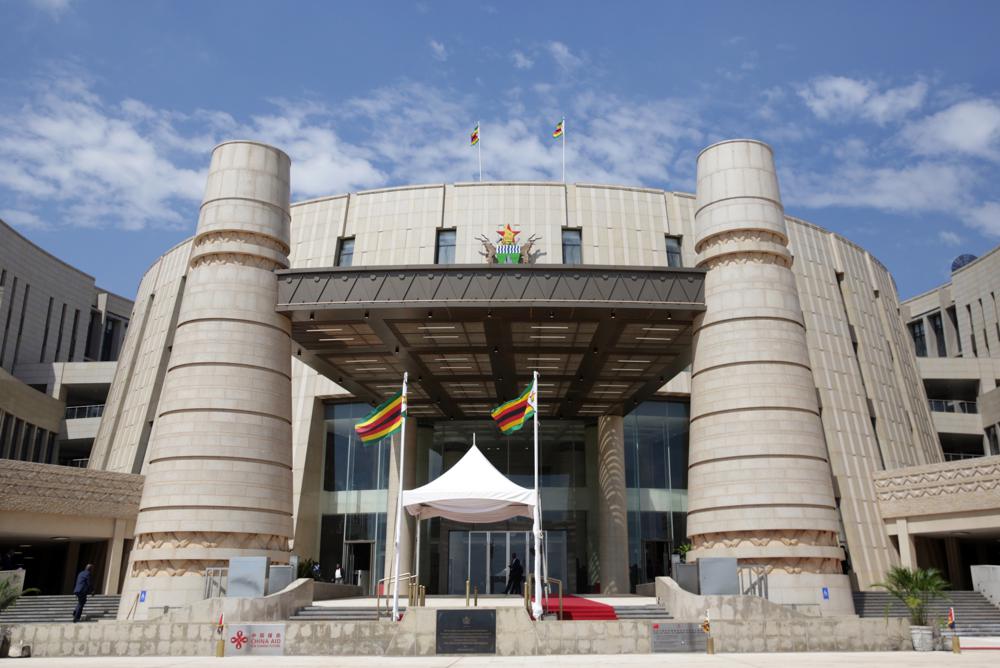
The Senate has called on government to strengthen policies and improve the provision of healthcare services for persons with disabilities (PWDs), amid concerns over communication barriers, inadequate rehabilitation facilities and shortages of essential assistive devices at public health institutions.
Contributing to a debate on the report by the Joint Portfolio Committee on Public Service, Labour and Social Welfare and the Thematic Committee on Human Rights on the rights of persons with disabilities in Zimbabwe, Senator Mary Mliswa-Chikoka said the absence of sign language interpreters in public health facilities was compromising access to healthcare for deaf patients.
The senators said the rights of persons with disabilities should be translated into practical interventions, with government held accountable for implementing recommendations aimed at improving their access to essential services.
Sen Mliswa-Chikoka submitted that the reliance on family members to interpret medical information for deaf patients compromised their privacy, dignity and the quality of healthcare they received.
On this topic
“The reliance of deaf patients on family members to interpret sensitive medical information compromises confidentiality, dignity and quality of healthcare,” she said.
She called for the institutionalisation of sign language interpretation services across public health facilities to ensure that deaf patients could communicate directly with healthcare professionals.
Sen Mliswa-Chikoka also said public infrastructure, including hospitals, schools, transport systems and Government buildings, should be designed to accommodate persons with disabilities.
“There should be ramps for those who use wheelchairs. Accessibility must be incorporated at the planning stage of infrastructure development rather than being treated as an afterthought,” she said.
She said women and girls with disabilities faced multiple layers of vulnerability, including gender-based violence, economic exploitation and barriers to accessing maternal healthcare.
“Their protection must be deliberate and adequately resourced. Safe shelters, accessible justice systems, reproductive healthcare and targeted economic empowerment programmes must form part of our national response,” Sen Mliswa-Chikoka said.
She further called for sustainable funding of disability programmes through the operationalisation of the disability levy, saying its implementation should be accompanied by transparency and accountability.
“We must know how much is collected, how much is allocated, how much is disbursed and most importantly, how many beneficiaries are reached,” she said.
Sen Mliswa-Chikoka urged parliament to strengthen its oversight role by requiring relevant ministries to submit periodic progress reports detailing budget allocations, disbursements, beneficiaries reached and progress towards implementing the committee’s recommendations.
She said the effectiveness of government policies should be measured by improvements in the lives of persons with disabilities rather than the number of policies adopted.
“Our success must not be measured by the number of policies we adopt or reports we produce. It must be measured by the tangible improvements in the lives of persons with disabilities,” she said.
Senator Itayi Mwanza weighed in, citing inadequate rehabilitation services and shortages of assistive devices as some of the major challenges affecting persons with disabilities.
Sen Mwanza said many public health facilities lacked sign language interpreters, making communication between deaf patients and healthcare workers difficult.
“Many public health facilities lack sign language interpreters, making communication between deaf patients and healthcare workers difficult,” she said.
She also highlighted challenges at Ishe Anesu Rehabilitation Centre in Harare, which she said lacked adequate physiotherapy equipment and residents’ therapists.
“Government must provide sign language interpretation in public health facilities, healthcare and rehabilitation services to ensure equal access to treatment,” Sen Mwanza said.
She said the high cost and shortage of assistive devices were affecting the independence of persons with disabilities, with some waiting for prolonged periods to access essential equipment such as wheelchairs, hearing aids, prosthetics and crutches.
“Government should establish a national system for purchasing and distributing assistive devices and ensure that they are affordable and available to those who need them,” she said.
Sen Mwanza said persons with disabilities also faced economic challenges because they were often excluded from empowerment programmes, agricultural support schemes and land allocation initiatives.
She called on government to ensure the timely payment of disability grants and review the allowances in line with the poverty datum line by December 2027.
Sen Mwanza also urged government to operationalise the disability levy by December 2026 to provide sustainable funding for disability programmes and the adoption of a national inclusive public transport policy by December 2027, with public transport operators expected to meet accessibility standards.
“The rights of persons with disabilities must not remain promises in the Constitution and Government policies. Every person deserves equal access to education, healthcare, employment, transport and other opportunities,” she said.




Leave a Reply