
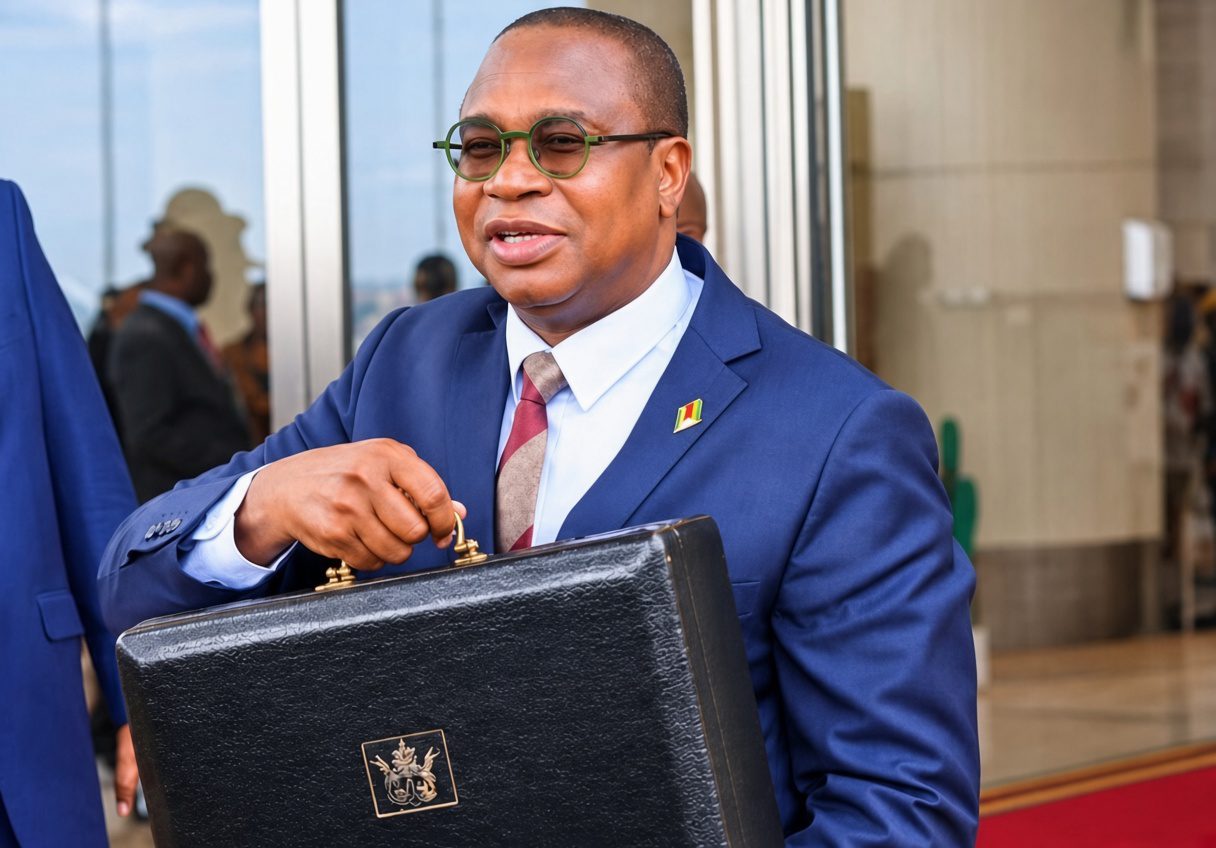
The opposition Movement for Democratic Change (MDC) has raised concerns over potential losses of up to 20 percent of public funds through procurement leakages, accusing the Treasury of failing to prioritise transparency and accountability in the 2027 National Budget.
The party said the government’s failure to commit to operationalising its electronic Government Procurement (e-GP) system and setting procurement savings targets could undermine the effective utilisation of the ZiG358.3 billion budget.
MDC Treasurer General and acting Shadow Minister of Finance, Aaron Makahamadze, said the government’s own e-GP strategy estimated between 15 and 20 percent of public funds were lost through procurement leakages.
Without transparent procurement processes, he argued a significant portion of the money allocated to government programmes could fail to reach its intended beneficiaries.
On this topic
“The biggest line item in this budget is the one they refuse to name: the money that is stolen before it ever reaches the Treasury,” Makahamadze said.
He said the 2027 National Budget, presented by Finance Minister, Professor Mthuli Ncube, on November 19, 2026 failed to provide a clear commitment to operationalise the e-GP system or establish measurable targets for reducing procurement losses.
The MDC also questioned the government’s failure to meet protected social spending targets in 2026, which Makahamadze said had been confirmed by the International Monetary Fund’s second review of the Staff-Monitored Programme (SMP).
He said audit and disbursement delays had undermined the timely release of funds for social programmes, while the 2027 Budget offered no specific mechanism to ensure that resources reached vulnerable communities.
“The 2027 Budget does not address this failure. It does not commit to a specific mechanism to ensure social spending reaches beneficiaries on time. This is a credibility gap that undermines the government’s claims of fiscal discipline,” he said.
Makahamadze said although the MDC acknowledged some positive measures in the ZiG358.3 billion fiscal plan, the budget failed to address deep-rooted economic challenges, arguing it “managed decline rather than building prosperity.”
In its assessment of the budget, the opposition party said it was not opposed to government initiatives for political expediency but believed Zimbabweans deserved an honest assessment of both progress and shortcomings.
“When the Minister of Finance presented the 2027 National Budget on November 19, 2026 we listened with an open mind. We are not a party that opposes for the sake of opposition. Where the government gets it right, we will say so. Where it fails, we will say that too. The 2027 budget largely fails,” he said.
Among the measures the MDC welcomed was Zimbabwe’s removal from the World Bank Group’s fragility classification in July 2026, which Makahamadze said could improve the country’s standing among international investors and lenders.
The party also acknowledged the reported containment of ZiG inflation, which averaged four percent during the first 10 months of 2026, as well as the Grain Marketing Board’s procurement of 365 000 metric tonnes of grain towards building a strategic grain reserve of 600 000 tonnes by 2027.
The opposition further welcomed the requirement, effective January 2027, for government, mining companies and large entities to procure at least 15 percent of their input requirements locally, where domestic production capacity exists.
Makahamadze said the measure could support local industries if implemented transparently and without rent-seeking.
However, he questioned whether the budget’s allocations to education and health would translate into tangible improvements in public service delivery.
“While the attention on Education and Health is commendable, the Minister’s speech does not provide enough detail about what households will actually receive: staffing levels, medicine availability, school-fee support, cash-transfer adequacy, beneficiary coverage or service-delivery targets,” he said.
“Allocation on paper is not the same as delivery at the clinic door or the classroom desk.”
On monetary policy, Makahamadze accused Treasury of presenting an incomplete picture of inflation by focusing on ZiG inflation while overlooking the cost pressures affecting consumers who predominantly transact in United States dollars.
With approximately 95 percent of transactions conducted in US dollars, he argued the government needed to account for USD inflation and its impact on household purchasing power.
“The Minister deliberately reported on ZiG inflation while leaving out USD inflation, when we all know 95 percent of transactions in Zimbabwe are in USD. USD inflation is running amok. This is hurting our people’s buying power and should not be ignored,” he said.
The MDC also questioned the absence of a credible debt clearance strategy, noting the government had acknowledged a public debt of US$22. 2 billion including a US$12.4 billion in external debt.
Makahamadze said Treasury had not outlined a clear pathway to settle US$2.7 billion in arrears owed to the World Bank, African Development Bank and European Investment Bank.
He argued clearing the arrears was critical to restoring access to concessional financing, adding that references to borrowing opportunities through the BRICS New Development Bank were not a substitute for resolving outstanding obligations with traditional lenders.
On agriculture, the MDC said the allocation of ZiG27.6 billion and proposed drought insurance measures were insufficient without structural reforms to address the sector’s longstanding vulnerabilities.
Makahamadze criticised continued reliance on politicised agricultural input distribution systems, arguing that farmers needed secure, bankable land tenure arrangements to access financing and invest in irrigation.
He said the absence of clear commitments to issue bankable land titles or 99-year leases limited farmers’ ability to use their land as collateral.
The party also expressed concern over inadequate allocations to youth empowerment, women and small and medium enterprises (SMEs).
The budget allocated ZiG1.6 billion to Youth Empowerment and ZiG1.5 billion to Women Affairs and SMEs, figures Makahamadze said were insufficient to support meaningful formal job creation and business development.
He argued SMEs were also discouraged from formalising a tax system that imposed excessive compliance costs on small businesses.
On the projected 3.5 percent economic growth in 2027, down from 8.3 percent in 2025, the MDC said the anticipated El Niño-induced drought exposed the economy’s continued dependence on climate-sensitive agriculture.
Makahamadze said the budget lacked a credible diversification strategy and measurable employment targets to ensure projected economic growth translated into jobs and improved livelihoods.
He also argued political uncertainty surrounding Constitutional Amendment No. 3 presented an additional risk to investor confidence, saying contested questions of political legitimacy could undermine long-term investment.
Makahamadze said a MDC government could offer an alternative economic programme centred on currency stability, transparent public procurement, debt clearance, agricultural reforms and SME development.
The party proposes operationalising the e-GP system and publicly disclosing all government contracts exceeding US$1 million, alongside clearing external debt arrears through a strategy linked to the country’s Staff-Monitored Programme record.
It also proposes bankable land titles for farmers and tax holidays for SMEs with annual turnover below US$50 000.
“We do not dismiss this budget entirely. There are elements we would preserve and build upon. But we reject the idea that this is a budget that will transform Zimbabwe. The 2027 Budget manages decline. It does not build prosperity,” he said.





Leave a Reply