
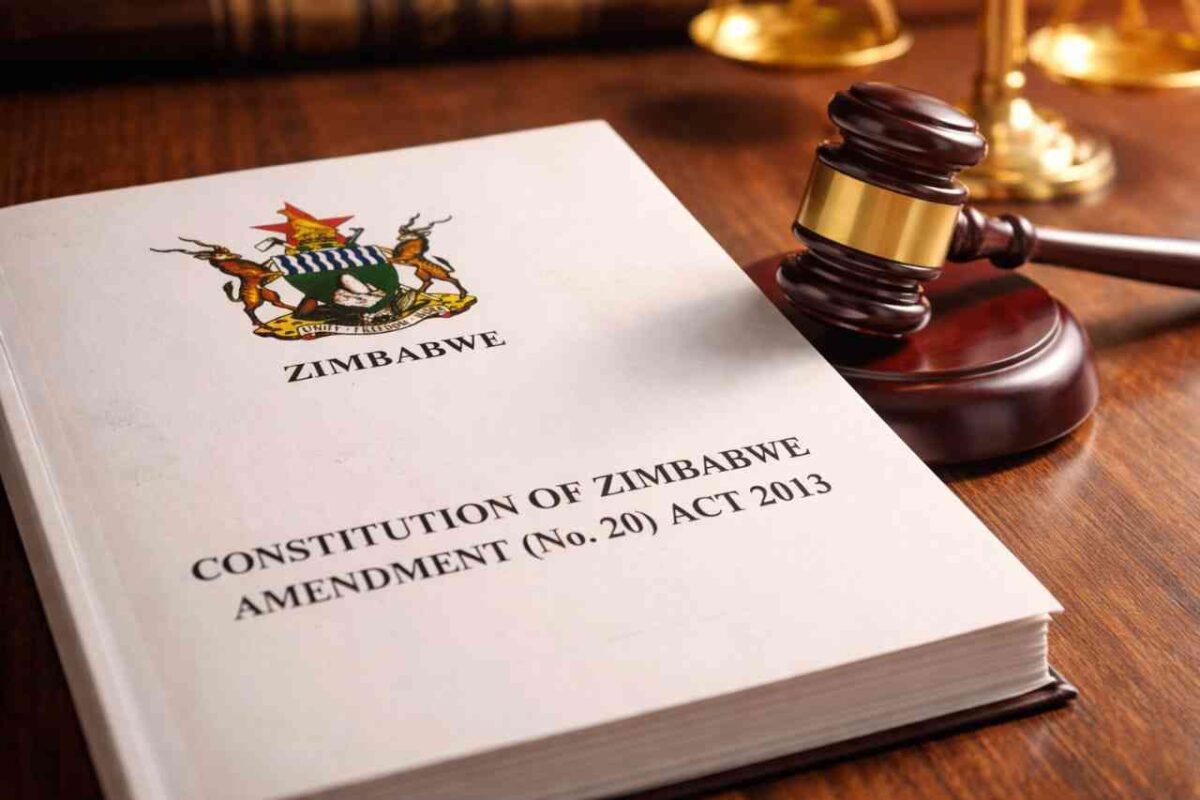
Chitungwiza South legislator Maxwell Mavhunga has criticised Constitutional Amendment Bill No. 3 (CAB3), arguing that Zimbabwe’s Constitution is being amended too frequently and risks becoming a tool of political convenience rather than a stable foundation for governance.
Contributing to the debate on the Bill in Parliament, Mavhunga said the Constitution, adopted in 2013, is only 13 years old but has already undergone two amendments, with a third now before Parliament.
“The Zimbabwean Constitution was promulgated in 2013. It is only 13 years old and we are now on the third amendment. The question, therefore, is: was there any sincerity when we enacted the Constitution in 2013? Certainly not,” he said.
Mavhunga argued that the frequency and nature of the amendments suggest constitutional changes are increasingly being driven by the interests of those in power at a given time.
On this topic
“I submit that, given the frequency and nature of these amendments, one is justified in concluding that the changes are being made for the convenience of those in authority at the time, and this is dangerous for democracy and constitutionalism,” he said.
While acknowledging that constitutions can be amended, Mavhunga said such changes should be rare and necessary to preserve the sanctity of the supreme law.
“To preserve the sanctity and sui generis nature of a constitution, it should not be subjected to frequent and, at times, unnecessary amendments,” he said.
Drawing comparisons with other countries, Mavhunga noted that the Constitution of the United States, enacted in 1789, has been amended only 27 times despite being more than two centuries old.
He said Namibia’s 36-year-old Constitution has undergone only three amendments, while Kenya’s Constitution, which he said is older than Zimbabwe’s, has not been amended. He also cited Japan’s Constitution, enacted in 1947, which has never been amended.
“In this context, the argument that societal progression necessitates these amendments is merely superficial, as it would be an insult to other progressive countries in the region and beyond that have not amended their constitutions to date,” he said.
Mavhunga further argued that CAB3 should not be used to advance succession politics, elite realignment, or the future distribution of political and economic power in Zimbabwe.
Support CITE’s fearless, independent journalism. Your donation helps us amplify community voices, fight misinformation, and hold power to account. Help keep the truth alive. Donate today







Leave a Reply