
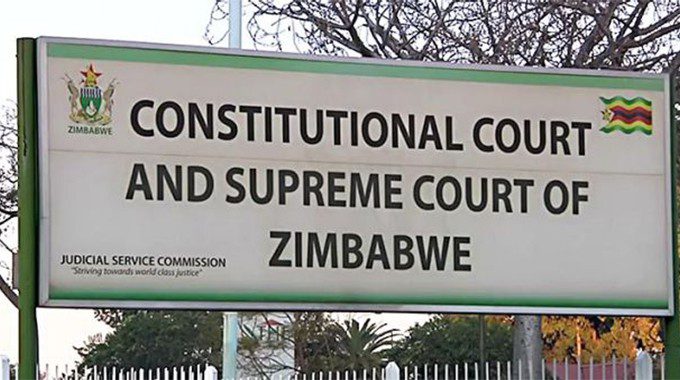
The Constitutional Court has dismissed an application by six liberation war veterans seeking to stop President Emmerson Mnangagwa from advancing Constitutional Amendment Bill No. 3 (CAB3).
A seven-member bench led by Chief Justice Elizabeth Gwaunza unanimously struck the matter off the roll on Wednesday in the case of Reuben Zulu and Five Others versus President of Zimbabwe.
The judgment was delivered by Justice Patel.
The ruling means the ConCourt declined to directly determine the merits of the challenge, with the applicants’ legal team indicating they would immediately seek relief through the lower courts.
On this topic
Constitutional law expert, Professor Lovemore Madhuku, who prepared the application on behalf of the war veterans, said the court found that constitutional obligations relied upon by the applicants were insufficiently specific to warrant the Constitutional Court exercising its original jurisdiction under Section 167 of the Constitution.
“The application will be filed in the High Court. On the same allegations, same issues which can be determined by the High Court and then going up,” Madhuku said after the ruling.
He explained the court’s decision was procedural rather than a determination of the substantive constitutional issues raised by the applicants.
“Respecting the values of the liberation struggle, all those duties that we cited under Section 9, the Constitutional Court said they are not specific enough for them to exercise the jurisdiction they have under Section 167,” said Prof Madhuku.
“We came directly to the Constitutional Court alleging that this was the kind of case which must be dealt with by the Constitutional Court directly. They are saying those duties are not specific enough for them to exercise jurisdiction directly.”
According to Prof Madhuku, the judges held that the matter should first be ventilated before a lower court.
“What this means is that the application ought to have been brought to a lower court which is like the High Court. The High Court can determine those issues and then it goes up to the Constitutional Court through the normal processes of appeals and so forth,” he said.
He added that the war veterans had already instructed their legal team to continue the challenge.
“As we are seeing, we are getting instructions from our clients. They said they will need to file the same application in the High Court which can then determine those broad-based duties because they are not clear, so they have to be ventilated.”
The case was brought by war veterans Reuben Zulu, Godfrey Gurira, Shoorai Nyamangodo, Joseph Chinyangare, Digmore Knowledge Ndiya and Joseph Chinguwa, who sought to block Mnangagwa from participating in processes related to CAB3.
Filed on February 16, 2026, the application challenged the President’s role in Cabinet deliberations that led to the approval of the proposed constitutional amendments, arguing that he stood to benefit personally from the changes.
The war veterans alleged President Mnangagwa breached Section 90 of the Constitution, which requires the President to uphold, defend and respect the Constitution and to avoid conflicts between personal interests and official duties.
They argued that by chairing Cabinet discussions on February 10, 2026 and approving the draft bill, the President acted unlawfully because the proposed amendments could potentially affect presidential tenure arrangements.
The applicants also alleged violations of Section 196(2) of the Constitution, which requires political leaders and public officials to conduct themselves in a manner that maintains public confidence and prevents abuse of office.
CAB3, has become ‘infamous’ for seeking to reshape Zimbabwe’s political system.
Among the controversial provisions are proposals to extend presidential terms from five years to seven years and replace direct presidential elections with a parliamentary electoral college system for choosing the president.
The war veterans further relied on Section 328(7) of the Constitution, which prohibits constitutional amendments from extending the term of an incumbent president unless certain constitutional safeguards are satisfied.
They argued any amendment designed to prolong President Mnangagwa’s tenure could not lawfully apply to the sitting office-holder.
In their application, the applicants sought a declaration that President Mnangagwa had acted unconstitutionally, an order nullifying Cabinet approval of the bill and an interdict preventing him from signing, assenting to or otherwise advancing the legislation.
Support CITE’s fearless, independent journalism. Your donation helps us amplify community voices, fight misinformation, and hold power to account. Help keep the truth alive. Donate today









Leave a Reply