

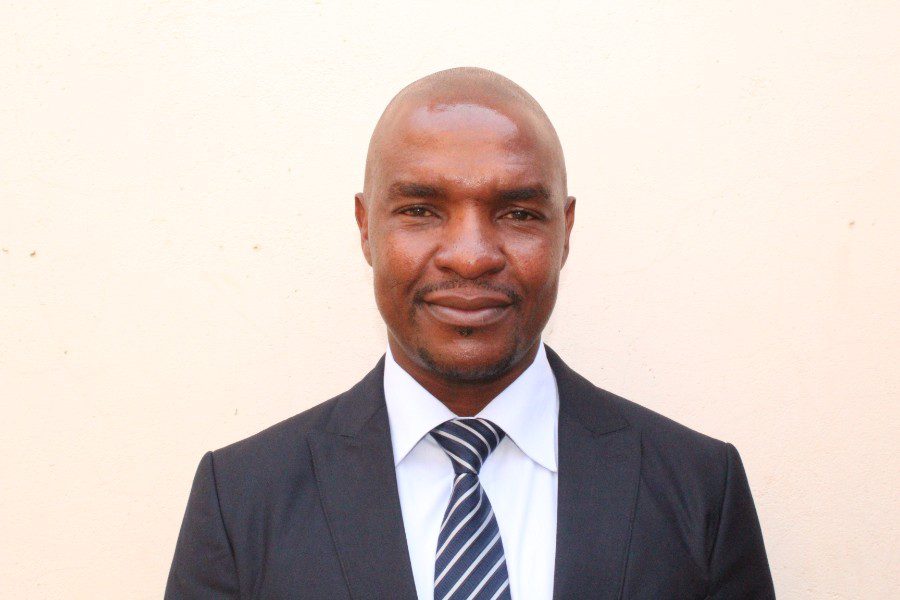
By Dr Shame Mugova
I recently came across a discussion in which young people, particularly unemployed graduates, were being encouraged to think beyond the usual broiler projects. Why raise chickens simply because someone else is making money from them? Why not identify something different, something others have overlooked?
It was sensible advice. There is little wisdom in entering a crowded market simply because somebody said there was money to be made.
But something about the discussion troubled me.
On this topic
We were asking how an unemployed graduate could find something to do. We were not asking why so many graduates needed to invent their own employment in the first place.
I was reminded of pastors encouraging graduates to be resourceful. If someone studied engineering but engineering companies were struggling, people still needed food. Find another opportunity. One pastor drew on the biblical story of the friends who removed part of a roof to bring a paralysed man to Jesus when the ordinary entrance was blocked.
Government has also encouraged graduates to become job creators rather than simply job seekers.
None of this advice is necessarily wrong. Yet I found myself remembering Leonard Zhakata’s words in Dambura Mbabvu: “Tiri kurasikira papi mukuronga? Pfungwa dzedu dzinonetera papi?”
Where are we getting it wrong in our planning? Where is our thinking failing us?
Perhaps we have become so skilled at finding ways around economic problems that we are no longer asking why those problems persist.
Consider a Zimbabwean family that has spent years educating a child. Parents have paid school fees, met university expenses and perhaps received assistance from relatives working abroad. Graduation brings celebration and the hope that years of sacrifice will open greater opportunities.
Then the applications begin. Months pass. Suitable employment remains elusive. Gradually, the family conversation changes.
Could we find money for a broiler project? What about a tuckshop? Perhaps someone in South Africa could help source goods for resale.
I cannot criticise that family. They need their child to earn a living. But a family may spend years preparing a child for professional employment, only to spend the years after graduation financing an alternative livelihood.
There is nothing dishonourable about raising chickens, selling vegetables, importing clothing or running a small shop. Some of these businesses generate excellent incomes and eventually become substantial enterprises.
My concern is not that graduates are becoming entrepreneurs. Some will build successful businesses and become major employers. It is that entrepreneurship may increasingly be less a choice among attractive opportunities than a response to the absence of them.
An economy can produce more entrepreneurs because opportunities are expanding, or because employment opportunities are disappearing. Those are very different economic stories.
The advice to find a business that others are not doing may work for one graduate. But what happens when thousands receive the same advice?
Imagine a neighbourhood where several people already sell groceries, vegetables and chickens. More graduates enter the same markets. Their businesses provide useful services, and competition may improve convenience, quality and prices.
But where household incomes remain limited, additional traders may simply divide existing spending among more businesses. More people become economically active without necessarily becoming more prosperous.
We keep encouraging people to open businesses, but spend too little time asking who will earn the incomes needed to sustain those businesses.
Zimbabwe already has an enterprising population. Across towns, cities, growth points and rural communities, people trade, farm, manufacture on a small scale and provide countless services. The question is whether this activity is generating sufficient productivity, rising incomes and opportunities for others.
According to ZIMSTAT’s second quarter 2025 labour force survey, 58.5% of employed Zimbabweans worked in the informal sector, while unemployment among young people aged 15 to 24 stood at 39.3%.
These figures do not mean informal work is inherently unproductive or that all graduates are unemployed. The same survey recorded unemployment of 10.1% among people in the labour force whose highest qualification was a tertiary HND or bachelor’s degree.
But having employment does not necessarily mean earning a decent income or fully utilising specialised skills.
The World Bank’s September 2026 Growth and Jobs Report identifies a related challenge. Economic growth has not translated sufficiently into productive employment and rising household incomes, with too many workers concentrated in relatively low productivity activities.
Consider poultry farming, the activity that prompted my original reflection.
A graduate raising a few hundred chickens may earn a useful income. With adequate capital, skills and market access, that project could grow into a substantial commercial operation.
Now imagine a competitive poultry industry supported by feed manufacturers, hatcheries, veterinary services, processing plants, cold storage facilities, transport businesses and larger markets.
Such an industry creates opportunities for farmers, engineers, accountants, technicians, drivers, managers and production workers. Small producers can supply larger enterprises, while expanding businesses generate demand for specialised services.
That is different from thousands of graduates independently raising chickens because suitable employment is unavailable.
The chicken is not the problem. The economic structure around it is what matters.
A prosperous economy needs entrepreneurs, but it also needs businesses capable of employing people who do not wish to own enterprises.
Nor should we assume salaried employment is always better than self employment. A successful trader may earn more than a formally employed graduate, and changing careers does not necessarily mean wasting one’s education.
Yet specialised skills require opportunities for practical development. Engineers need experience with industrial systems, accountants with organisational responsibilities and scientists with research facilities. Without growing institutions that use these skills, we risk producing graduates who struggle to gain experience while employers later struggle to recruit experienced professionals.
There are encouraging signs. The Confederation of Zimbabwe Industries’ 2025 manufacturing survey reported output growth of 13% and capacity utilisation of 55.9%. The question is how to sustain and broaden that recovery.
Sometimes creating employment means enabling an existing manufacturer to employ ten more people rather than persuading ten unemployed graduates to establish separate businesses.
That requires reliable electricity, functioning transport networks, access to finance, predictable regulation and viable markets. No individual graduate can independently provide these conditions.
Government need not employ every graduate. But economic policy, private investment, financial institutions and universities must work towards an economy in which enterprises can expand and people can develop productive careers.
The demographic challenge makes this urgent.
ZIMSTAT projects Zimbabwe’s population aged 15 to 64 to increase from approximately 8.35 million in 2022 to 12.76 million by 2042. That is another 4.4 million people of working age, although not all will participate in the labour force.
Population growth can be an economic advantage when investment and productivity expand alongside it. But what opportunities are we preparing for this larger potential workforce?
We cannot keep producing future workers without paying equal attention to the future workplaces in which their knowledge and skills will be needed.
Zimbabwe’s National Development Strategy 2 already identifies industrial development, diversification, infrastructure, entrepreneurship and employment creation as priorities. The question is whether these ambitions translate into growing businesses, productive investment and better incomes.
We should measure progress beyond the number of projects funded or young people trained. How many supported businesses survive, expand production, reach new markets and employ additional workers? Are existing enterprises investing and recruiting? Are graduates finding opportunities to develop their capabilities?
And this is where my greatest concern lies.
Imagine a graduate who cannot find suitable employment today and starts a small trading business. Through hard work, the business sustains a family and pays for the children’s education.
Twenty years later, one of those children graduates.
Will that young person inherit a country with expanding industries, stronger institutions and more opportunities to apply their education? Or will the family once again be searching for startup capital because another graduate cannot find suitable work?
A parent encouraging a child to start a project is responding to an immediate household need. A pastor encouraging resourcefulness is offering practical hope. A graduate finding another livelihood is demonstrating initiative.
All deserve respect.
But a household needs a strategy for surviving the economy as it exists. A country needs a strategy for changing the economy its households will inherit.
We can admire the friends who removed the roof in the biblical story without accepting that everyone should continually find alternative entrances because the ordinary routes remain inaccessible.
We should celebrate Zimbabweans’ ingenuity without allowing it to become an excuse for leaving underlying economic problems unresolved.
A graduate who starts a broiler project may have solved a personal unemployment problem. The national question remains.
We cannot hustle our way to national prosperity merely by teaching each generation new ways to survive.
The real measure of our economic planning will be whether the next generation inherits opportunities that this generation did not have.
Dr Shame Mugova is a Lecturer in Finance at Birmingham City University. He writes on finance, economic policy, governance and development, with a particular interest in Zimbabwe and Southern Africa. He writes in his personal capacity.





Leave a Reply