
Dr Phillan Zamchiya
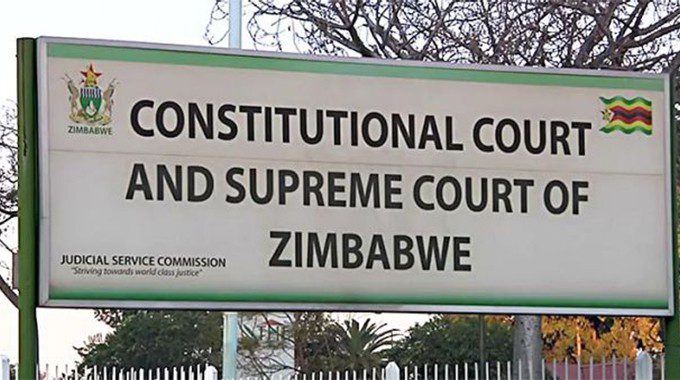
On 12 November 2026, at the SAPES Policy Dialogue hosted by Professor Ibbo Mandaza, I argued why the Constitutional Court must invalidate Constitutional Amendment No. 3 (CAA 3), signed into law by President Emmerson Mnangagwa on 7 July 2026 and gazetted the same day as Act No. 6 of 2026.
The amendment extends presidential and parliamentary terms from five to seven years, postpones elections from 2028 to 2030, abolishes direct presidential elections, expands presidential influence over Parliament, and restructures electoral administration and judicial appointments.
My presentation comes against the backdrop of five constitutional challenges to CAA 3.
On this topic
Vrante Mahlupeko of the National Constitutional Assembly (NCA) seeks to invalidate the entire Act, arguing that ten provisions were introduced without the mandatory 90-day publication period under section 328(3)–(4). If successful, the other challenges will become unnecessary. Prince Sibanda, a recalled Citizens Coalition for Change (CCC) Member of Parliament, contests the extension of incumbents’ terms under section 328(7).
Both cases, initially scheduled for 11 November, will be heard on 18 November 2026, with Mahlupeko’s first. The postponement allows the Constitutional Court to reconstitute its bench amid objections to judges appointed under CAA 3.
On 25 November 2026, Douglas Mwonzora, leader of the Movement for Democratic Change (MDC), challenges the abolition of direct presidential elections without a referendum.
Unlike the other three, two war veterans’ cases await Constitutional Court decisions on direct access. Reuben Zulu and five others challenge the abolition of direct presidential elections, while Eliphas Kawa and Hazvineyi Machingura seek to invalidate the entire Act. The Court reserved judgment on their applications on 22 September and 2 November 2026, respectively.
I paid tribute to some of Zimbabwe’s legal luminaries and constitutional lodestars, Professor Lovemore Madhuku, Tendai Biti, Advocates Lewis Uriri and Tawanda Zhuwarara, and lawyer Aleck Muchadehama, for their courage in bringing these challenges before the courts. Whatever their political differences, these cases raise national questions about popular sovereignty, constitutional supremacy and the limits of state power.
Against this legal and political backdrop, I advanced eight interconnected arguments for invalidating CAA 3, anchored in one fundamental question. Who ultimately holds constitutional authority in Zimbabwe? My arguments were as follows.
1. CAA 3 undermines popular sovereignty. Zimbabwe’s Constitution is clear. Sovereign power belongs to the people, not those entrusted to govern them. Section 3(2)(f), among the founding values and principles of the Republic, recognises that governing authority derives from the people. But CAA 3 takes fundamental constitutional decisions away from them without their consent.
2. CAA 3 allows delegated power to override sovereign power. The President and Parliament derive their authority from the people under sections 88 and 117. Yet CAA 3 allows them to use that delegated authority to extend their terms of office from five to seven years without seeking a fresh mandate from the people.
3. CAA 3 threatens the gains of decolonisation and democratisation. Zimbabweans fought colonial domination and postcolonial authoritarianism to secure the 2013 constitutional settlement. Section 3(1)(i) recognises the liberation struggle as a founding value. Transformative constitutionalism, as reflected in South Africa, Brazil and India, demands that courts defend historical democratic gains born of struggle, not legitimise their reversal.
4. CAA 3 confuses parliamentary majority rule with constitutional democracy. A two-thirds parliamentary majority does not give Parliament unlimited power to change the Constitution. Section 2 establishes constitutional supremacy, meaning even Parliament is bound by the Constitution. Reader, political majorities must operate within the Constitution, not above it.
5. CAA 3 introduces major constitutional changes without a referendum. It changes how leaders are elected, how long they govern and how democratic institutions operate. The scale is enormous. Even Justice Minister Ziyambi acknowledges that 12 other Acts must be amended to align with CAA 3. Remember, Zimbabweans voted directly on constitutional proposals in 2000 and 2013, even when referendums were not expressly required. Today, section 328 expressly requires referendums for certain amendments. Hence, the Law Society of Zimbabwe warns that extending terms without one would violate the Constitution and international law.
6. CAA 3 undermines Zimbabwe’s binding constitutional values and democratic principles. Section 3 establishes the Republic’s founding values and principles, which bind the State. Sections 46 and 331 require courts to promote these democratic values when interpreting the entire Constitution. These are not lipstick political ideals but binding constitutional standards against which CAA 3 must be assessed.
7. CAA 3 relies on selective and mechanical constitutional interpretation. The government distinguishes electoral cycles from presidential term limits, narrowly defines referendum requirements and justifies post-consultation additions. But the Constitution must be interpreted holistically, purposively and in light of its practical consequences, not as isolated clauses serving political expediency.
8. CAA 3 endangers the democratic future of generations to come. Imagine, even at the wildest stretch, that Mnangagwa is a saint. What happens when a monster succeeds him, inheriting longer terms, greater executive power and the precedent of changing how people are governed without their consent? The Constitution must restrain not only leaders we might trust today, but also those we may have every reason to fear tomorrow.
9. A central theme throughout my presentation was that Zimbabwe’s Constitution belongs to the people, not those temporarily entrusted with political power. But people power must also be organised. Zimbabwe urgently needs sustained popular mobilisation to reclaim and defend constitutional sovereignty. Yes, the people must have the final say, but the collective power to make it count.
10. I concluded that the judiciary must not become an accomplice in the erosion of the constitutional democracy Zimbabweans struggled to establish. Let the judges demonstrate such courage, integrity and impartiality that one day, across the world, people will say, “If you want to see someone as sober as a judge, go to Zimbabwe!” Otherwise, the opposite would be too ghastly to contemplate.
For fuller arguments and richer reflections from my engagements with our host, Professor Ibbo Mandaza, and fellow distinguished panellists Dr Justice Alfred Mavedzenge and Reverend Kenneth Mtata, watch the discussion on YouTube.





Leave a Reply