
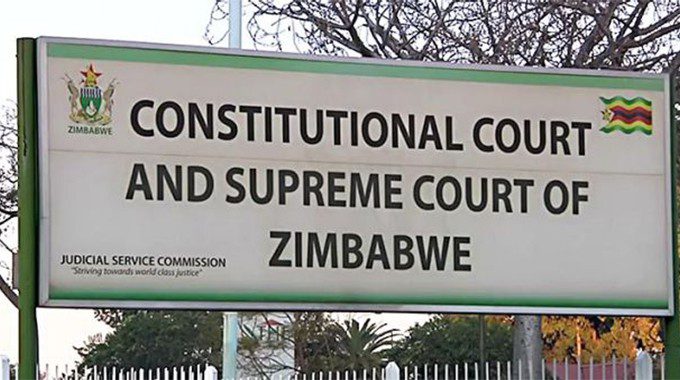
Constitutional law professor Lovemore Madhuku says five legal challenges concerning the Constitution of Zimbabwe Amendment (No. 3) Act of 2026 (CAA3) remain before the Constitutional Court, with the apex court expected to determine how the related matters will proceed after four of them were removed from the roll.
CAA3 changed the method of electing the President from a direct vote by citizens to an election by members of the Senate and National Assembly sitting jointly.
It also made other changes, including extending the presidential and parliamentary terms from five to seven years.
Giving an update on the case, Prof Madhuku, who represents applicants in some of the challenges, said the first of the five matters, an application by six liberation war veterans seeking direct access to the Constitutional Court (ConCourt), was heard on September 22, 2026.
On this topic
The veterans are challenging the removal of the direct presidential vote, arguing that the change affects a right protected under the Constitution and therefore required a referendum.
“The first one with war veterans was already heard on 22 September,” Prof Madhuku said.
“We are seeking direct access to the full court to do a very simple thing, to say that you cannot take away the right of Zimbabweans to elect their president directly without a referendum.”
The State opposed the application, arguing the applicants had not met the requirements for direct access and should first approach the High Court.
The Constitutional Court reserved judgment after hearing the application.
Madhuku said the outcome of the direct-access application would determine the next step for the war veterans.
“We are expecting a judgment very, very soon. We are very hopeful that they will allow the war veterans to go on to the Constitutional Court to join the other cases,” he said.
The remaining four matters raise related but distinct constitutional questions.
One was filed by the opposition MDC led by Douglas Mwonzora and challenges the removal of citizens’ direct participation in presidential elections.
The matter had been scheduled for September 23, 2026 but was removed from the roll and no new hearing date has been publicly announced.
Another case was brought by Prince Dubeko Sibanda by former Citizens Coalition for Change Binga North legislator.
Prof Madhuku said the application challenges the application of amendments to incumbents, relying on Section 328(7) of the Constitution.
“That had been set down for 30 September. It has been taken away,” he said.
A fourth matter is an omnibus application involving war veterans represented by former Finance Minister Tendai Biti.
Prof Madhuku said the application challenges several aspects of the constitutional amendment process and had been scheduled for October 7, 2026 before it was removed from the roll.
The fifth case was filed by National Constitutional Assembly member, Vhurande Mahlupeko.
The case challenges the parliamentary process on the basis that provisions were amended despite not having been included in the legislation as gazetted.
Prof Madhuku said the four matters had effectively been “hunting together” because they raise overlapping constitutional issues, although they advance different legal arguments.
“All these four cases are dealing with that. They are together as four cases. They now have not been set down. The court removed them from the roll.”
He noted the removal should not necessarily be interpreted as a determination on the merits of any of the challenges.
“We believe that that is simply a procedural step,” Prof Madhuku said.
He added the ConCourt may seek to bring the parties together for discussions or a case-management process to determine how and when the matters should be heard.
The ConCourt has not publicly announced new hearing dates or formally confirmed that the four matters will be consolidated.
Prof Madhuku said, however, a coordinated hearing could be more orderly given the overlap between the cases.
“They want to bring, I think, the parties together to a discussion, possibly a case management where they determine when these matters will be heard,” he said.
“As far as we are concerned, if that is going to mean simply having the matter being heard at a given time period rather than the period that was there, that this one will be heard this week, another one next week, another one the following week. I think that was not very tight.”
The developments leave the war veterans’ direct-access application awaiting judgment, while the four other CAA3 challenges await further directions from the ConCourt.






Leave a Reply