
Pope Leo XIV has called for global resources invested in the war industry to be redirected towards sustainable agricultural research and the restoration of degraded soils, a message with particular significance for Zimbabwe as a strengthening El Niño weather pattern threatens to worsen food insecurity across East and Southern Africa.
The World Food Programme (WFP) has warned that the developing El Niño could disrupt rainfall, agriculture and food production across the region, with its effects potentially extending into 2027, despite the phenomenon being expected to peak between September and December 2026.
The warning comes against the backdrop of the devastating 2023/2024 El Niño-induced drought, which exposed Zimbabwe’s vulnerability to rain-fed agriculture and left communities struggling with crop failures, water shortages and livestock losses.
In his message marking World Food Day on October 16, 2026 the pontiff urged governments and the international community to reconsider their spending priorities, arguing technological advancement and economic growth mean little if millions of people cannot access adequate food.
On this topic
“Furthermore, there is an urgent ethical imperative to redirect resources invested in the war industry toward sustainable agricultural research and the regeneration of degraded soils,” Pope Leo said.
The 2023/2024 drought severely affected agricultural production across Southern Africa, prompting Zimbabwe to declare a national disaster in April 2024.
Poor rainfall, prolonged dry spells and high temperatures contributed to widespread crop failures, depleted water resources and deteriorating pastures.
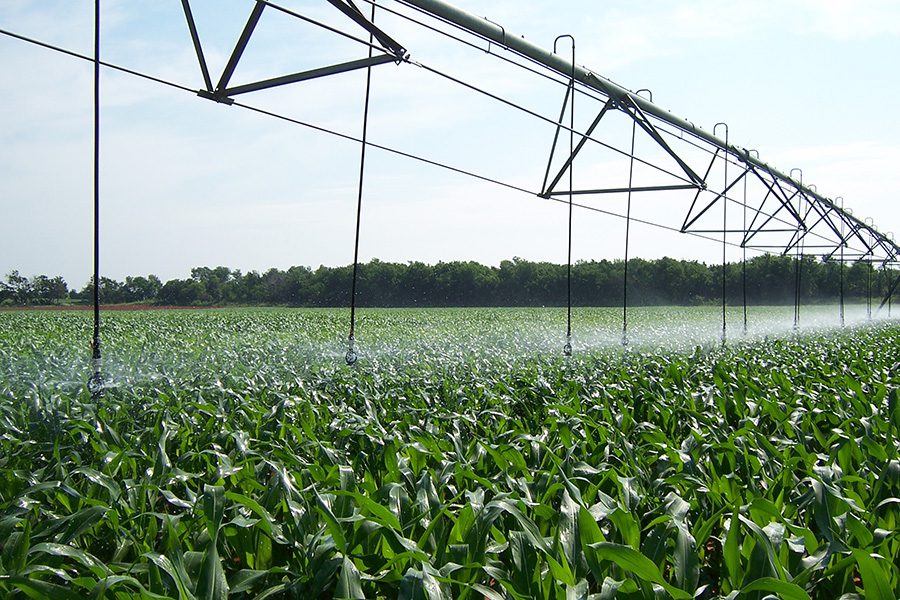
In Zimbabwe, where agriculture underpins rural livelihoods and food security, the crisis highlighted the risks of relying heavily on rainfall-dependent farming without sufficient investment in irrigation, drought-tolerant crops and soil conservation.
According to a 2024 assessment by the United Nations Food and Agriculture Organisation (FAO), approximately 70 percent of Zimbabwe’s population depends on agriculture for food and income, underscoring the importance of protecting agricultural livelihoods against climate shocks.
Pope Leo’s message, delivered to the FAO on World Food Day, also challenged the assumption that technological advancement and increased agricultural production automatically translate into food security.
Zimbabwe experienced a substantial recovery in cereal production following the drought-affected 2024 harvest, according to the FAO’s December 2025 assessment.
However, elevated food prices and limited household purchasing power continued to constrain access to food among vulnerable communities.
“Hunger cannot be considered a statistical anomaly, for it is caused mainly by a lack of political will and collective charity,” Pope Leo said, arguing hunger requires political commitment, collective responsibility and a fairer distribution of resources.
The pope added access to adequate and safe food was a basic human right, placing responsibility on governments and the international community to protect it.
The pontiff also warned against agricultural systems that prioritise financial returns at the expense of small-scale farmers, soil fertility and the environment.
“When modern technology is used in agriculture in ways that strip the soil of its natural fertility or drives farmers from their land, motivated solely by financial considerations, this cannot be regarded as progress, but instead a sophisticated form of destruction,” he said.
To farmers in drought-prone areas of Matabeleland, Masvingo and other low-rainfall regions, the warning highlights the need to balance agricultural productivity with the long-term protection of land and water resources.
During the 2023/2024 drought response, WFP supported interventions in Zimbabwe that included drought-tolerant seeds, fertiliser, boreholes and climate information to help communities withstand the effects of the crisis.
Early-warning messages were also disseminated in districts including Hwange, Binga, Chiredzi and Masvingo.
Such interventions demonstrate the importance of investing beyond emergency food assistance to protect livelihoods and strengthen communities’ resilience to future climate shocks.
Pope Leo called for agricultural innovation that combines scientific advances with farmers’ accumulated knowledge of local soils, rainfall patterns and growing conditions.
“It is not a matter of rejecting technological advances, but rather of integrating them with the wisdom of farmers who have deepened their understanding of the soil and the climate through centuries of conscientious observation,” he said.
In Zimbabwe, this approach could include expanding access to drought-tolerant crops, improving water harvesting and small-scale irrigation, restoring degraded land, promoting conservation agriculture and strengthening access to reliable seasonal weather forecasts.
However, such interventions require sustained investment, affordable agricultural inputs, effective extension services and policies that enable farmers to adopt climate-resilient practices.
Pope Leo’s appeal to redirect military spending towards sustainable agriculture also places food security within a broader debate about global priorities.
He warned against using food as an instrument of geopolitical pressure, arguing protecting food production was inseparable from protecting human dignity.
“Bread should be neither an instrument of geopolitical pressure nor a volatile financial asset. Nor must it ever be used as a weapon of war,” he said.
In Zimbabwe, where climate shocks can undermine harvests and deepen household vulnerability, the message underscores the importance of long-term investment in agricultural research, irrigation, soil restoration and climate adaptation.
While emergency food assistance remains necessary when harvests fail, strengthening agricultural systems could help reduce communities’ exposure to successive seasons of poor rainfall.
The pontiff urged governments and international institutions to move beyond declarations and place human dignity and the common good at the centre of food production.
“Tomorrow is not an abstract span of time that awaits us passively; rather, it is the harvest of what we sow today through our decisions,” Pope Leo said.






Leave a Reply