
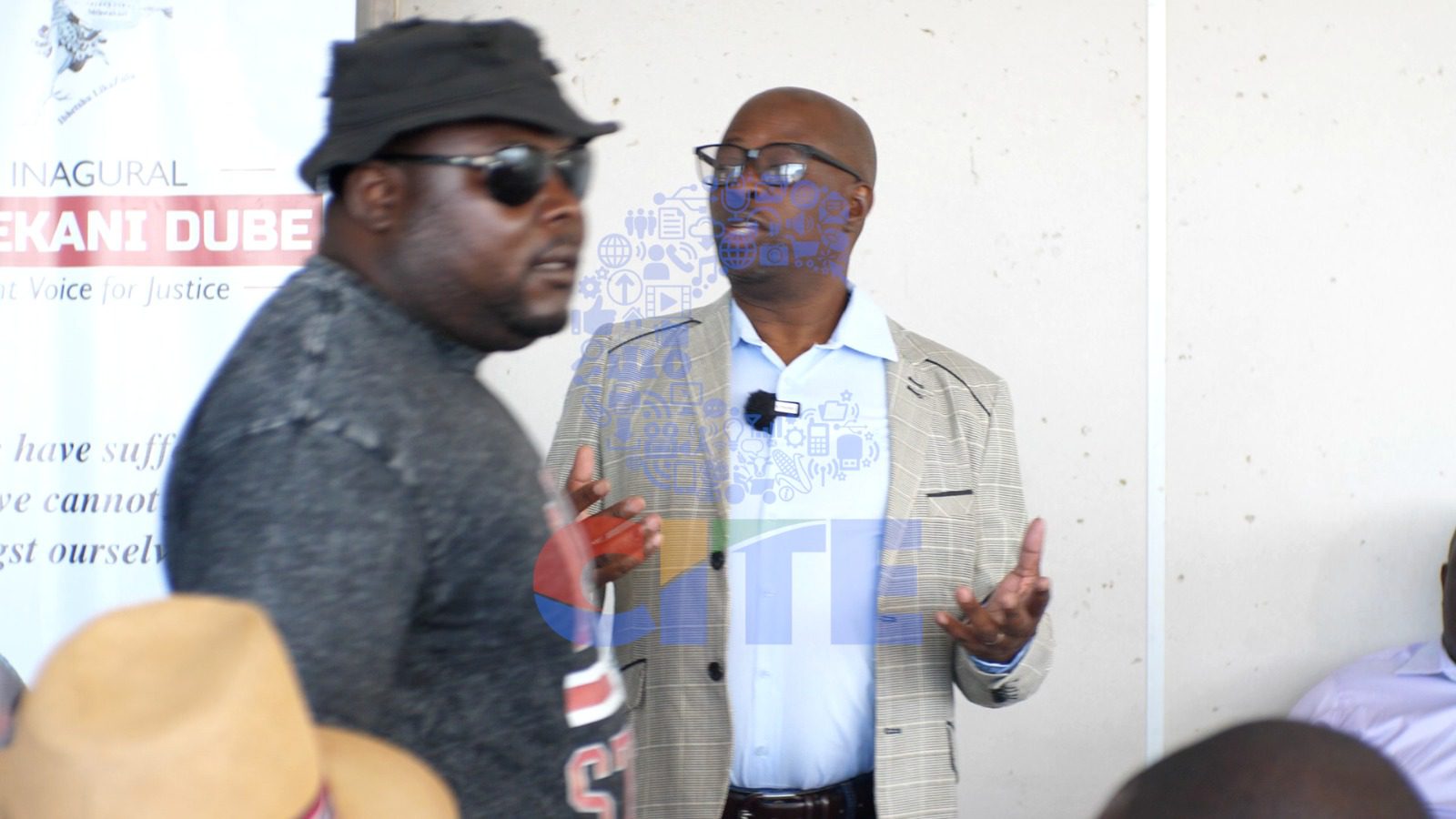
Human rights defenders have condemned the disruption of a memorial lecture for late activist Qhubekani Dube, saying the incident highlights growing restrictions on civic freedoms and a lack of accountability for human rights violations in Zimbabwe.
The memorial lecture, held in Bulawayo on November 10, 2026, was reportedly disrupted by unidentified individuals, forcing proceedings to stop and raising concerns about the safety of human rights defenders and the freedom to commemorate victims of past abuses.
Speaking on CITE’s This Morning on Asakhe programme during a discussion titled Remembering Qhubekani Dube: Defending Human Rights in a Shrinking Civic Space, Royal Legal Trust executive director Sindiso Mazibisa said the disruption was an attack on democracy.
“I was extremely disturbed on the 10th of November 2026 when the memorial service was disturbed by some of these vigilante affiliate groups and so on. It’s an attack and an affront to our democracy. As the topic is rightfully pointing out, we’re having shrinking democratic space in civil society and this needs to be confronted,” Mazibisa said.
On this topic
He described Dube, who was closely associated with pressure group Ibhetshu LikaZulu, as a selfless human rights defender who worked across political divides and challenged injustice regardless of who was responsible.
“He was one man who was selfless to the extent that he cared more about his people, about the democratic space and rectifying a lot of injustices that were happening in our communities. He was one man who associated with people across the political divide,” he said.
Mazibisa recalled Dube’s engagements with political figures from different parties, including Zanu PF’s Jabulani Sibanda and opposition politician Welshman Ncube, as well as various civil society organisations.
He also highlighted Dube’s role in efforts to secure death certificates for victims of the Gukurahundi atrocities, saying the initiative helped families who had struggled to obtain official documentation for relatives who were killed or disappeared during the violence.
More than 200 death certificates were secured through the initiative, he said.
Mazibisa urged civil society organisations and other stakeholders not to abandon plans to hold a physical memorial despite the disruption.
“My view and my prayer to Ibhetshu and all concerned parties is that we must not allow what happened on the 10th of November to perturb us. We still insist that we should have a physical memorial service for what he believed in. He believed in the equality of all human beings across the political divide,” he said.
He identified impunity as a major obstacle to the protection of human rights in Zimbabwe, arguing that the failure to hold perpetrators accountable had allowed intimidation and other abuses to persist.
“You see the challenge I see and I’ve seen in my years active practice and in consultancy and also as an activist is that we have a deep problem where impunity is the root problem,” he said.
Mazibisa said civil society organisations were facing not only funding challenges but also increasing intimidation, adding that the protection of civic freedoms required both legal and political action.
Zimbabwe Human Rights NGO Forum executive director Wilbert Mandinde also linked the disruption to the country’s unresolved history of human rights violations, particularly the lack of accountability for atrocities committed during Gukurahundi.
He said the failure to address past abuses had undermined reconciliation and created an environment in which individuals could disrupt public gatherings without fear of consequences.
Mandinde questioned the effectiveness of previous reconciliation efforts, including those undertaken through the National Peace and Reconciliation Commission (NPRC), arguing that there had not been a sufficiently independent process to address the Gukurahundi atrocities.
He said meaningful reconciliation required citizens to have the freedom to openly discuss and confront the country’s history.
“The fact is we can certainly continue to raise the fundamental question to say how can we as a country ensure that reconciliation is achieved? It cannot be [achieved] without people being able to freely discuss and observe their own history,” Mandinde said.
On the state of civic space, Mandinde said the extent to which Zimbabweans could exercise their constitutional rights was an important measure of the operating environment for civil society.
He acknowledged that the implementation of the Private Voluntary Organisations Amendment Act had resulted in some organisations registering with the relevant board, but said its impact would ultimately depend on how the legislation was applied.
Mandinde cited several constitutional provisions protecting fundamental freedoms, including Section 58, which guarantees freedom of assembly and association, and Section 59, which provides for the right to demonstrate and petition peacefully.
He also raised concerns about the exercise of freedom of expression and media freedom under Section 61, as well as access to information under Section 62 and political rights under Section 67.
Mandinde questioned whether these rights were being respected in practice, pointing to reported arrests of journalists, interference in media spaces and difficulties faced by citizens seeking information from public institutions.
He said although Section 86 of the Constitution allows certain limitations on fundamental rights, any restrictions must meet constitutional requirements and be reasonable and justifiable.
Mandinde added that developments following the passage of the Private Voluntary Organisations Amendment Act and Constitutional Amendment Act No. 3 in July 2026 would be important in assessing the future of civic freedoms.






Leave a Reply