
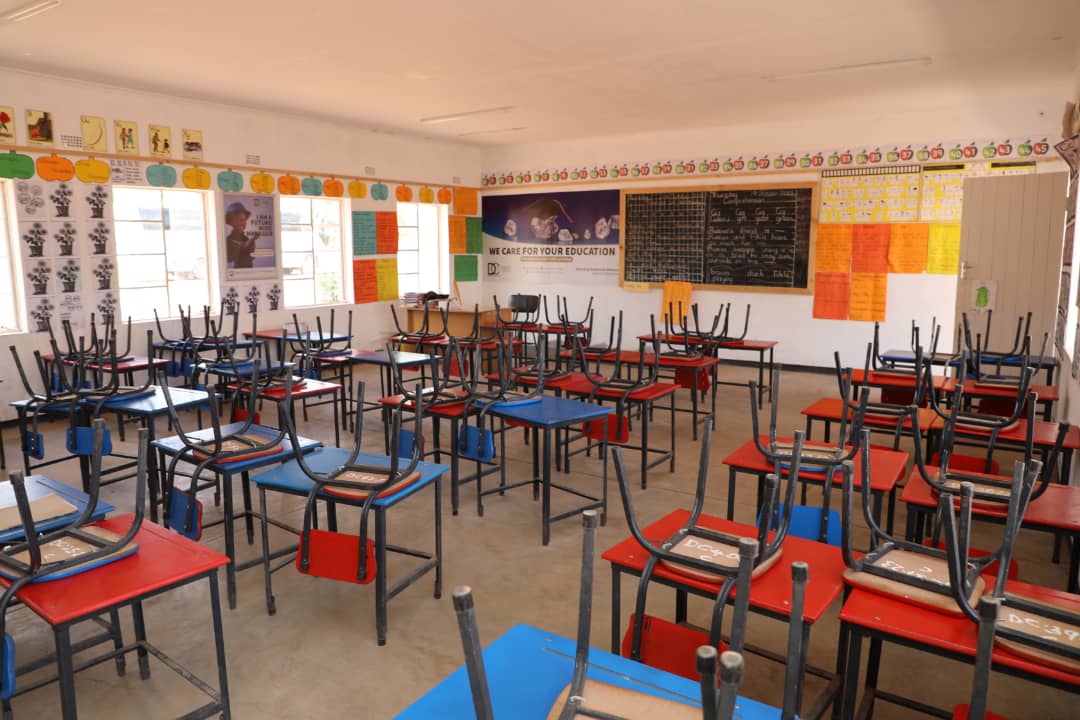
The Ministry of Primary and Secondary Education has raised concern over persistently poor examination results and high school dropout rates in Matabeleland North, warning that the province continues to record the weakest academic performance in Zimbabwe.
Speaking at a policy dialogue on strengthening education safety nets through transparency and accountability hosted by Transparency International Zimbabwe (TIZ) in Bulawayo on Thursday, Acting Provincial Education Director Sizalobuhle Siziba said Matabeleland North has ranked last among Zimbabwe’s 10 provinces in Grade Seven, Ordinary Level and Advanced Level public examinations for many years.
“As a province, when we look at learning outcomes — Grade Seven, Form Four and Form Six public examination results — Matabeleland North is not doing so well,” she said.
“When you rank the 10 provinces, we have been in position 10 for a very long time and it is quite worrying. We have to change that narrative.”
On this topic
She said the province recorded a Grade Seven pass rate of about 35% in 2025, while the Ordinary Level pass rate was also 35%.
Although the Advanced Level pass rate stood at about 98%, she questioned what had happened to the majority of learners who never reached that stage.
“What is happening to the other 65%?” Siziba said. “If I had the figures here, I would also show how many girls are among those who passed.”
She said girls generally outperform boys in primary school but their performance declines as they move through secondary education.
“Normally we have more girls passing at primary level, but by O-Level we have fewer girls passing than boys. By the time we reach A-Level, more boys are passing than girls,” she said.
Siziba said poverty, migration and the inability to pay school fees continue to force many children out of school before completing primary education.
According to the ministry, between 87% and 88% of children complete primary school, meaning about 12% drop out before finishing Grade Seven.
“They have fallen through the cracks because of school dropouts, poverty, failure to pay fees and migration,” she said.
She said learner losses increase sharply at the transition to secondary school.
Although all pupils who complete Grade Seven are expected to proceed to Form One, only about 55% to 58% make the transition.
“We have already lost many children because of economic hardships, parents failing to pay school fees and long distances to secondary schools,” Siziba said.
The ministry said many more learners leave school before reaching Form Four, with early pregnancies, poverty, long distances to school and unaffordable fees among the main reasons.
“Many children drop out because of early pregnancies, long distances, economic hardships and school fees. By the time they get to Form Four, they are very few,” she said.
Those who complete Form Four face another hurdle, as only learners with at least five Ordinary Level passes, including Mathematics, English and Science, qualify for Advanced Level.
“Our transition rate from O-Level to A-Level is around 10% to 15%, with fewer girls than boys progressing,” Siziba said.
“By the time they complete Form Six, only about 5% of the learners who started the education journey remain.”
She said the low progression rate has limited access to tertiary education and scholarship opportunities, particularly in science, technology, engineering and mathematics (STEM) fields.
“Parents often complain that very few learners from Matabeleland North benefit from scholarships,” she said.
“Other provinces may have between 200 and 300 learners accessing scholarships, while we struggle to have even 20.”
Siziba said the province intends to prioritise learners from rural day secondary schools, noting that many of the province’s top-performing boarding schools enrol pupils from across Zimbabwe.
“When we talk about our own children, we mean those who completed secondary education in our rural day secondary schools,” she said.
“Although schools such as John Tallach, St James and David Livingstone are located in Matabeleland North, they are national schools and about three-quarters of their learners come from Bulawayo, Harare, Masvingo and other provinces.”
“Our target is to support our own girls and boys from rural secondary schools so they can complete their education and access higher education opportunities.”





Leave a Reply