
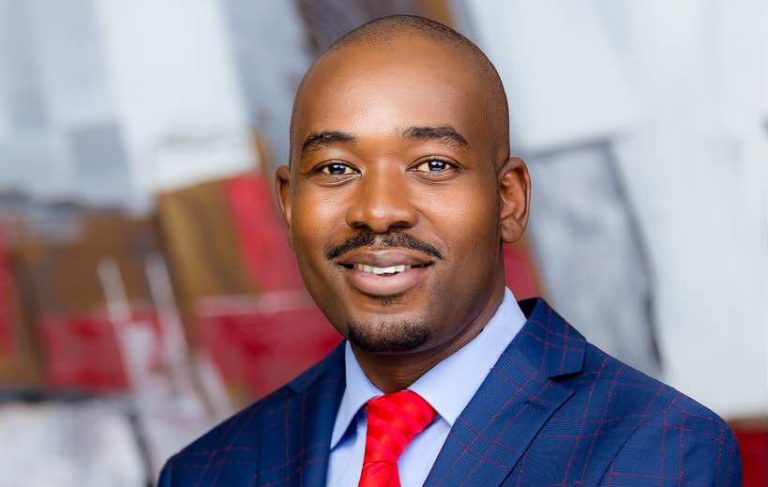
Former Nelson Chamisa’s spokesperson, Dr Nkululeko Sibanda, on Monday mounted a spirited defence of the opposition leader amid growing accusations that he has gone soft on Zanu PF and failed to openly oppose Constitutional Amendment Bill No. 3 (CAB3) and the controversial “2030 agenda.”
Speaking at a press conference in Bulawayo, Sibanda dismissed claims by critics, including political activist Jealousy Mawarire, that President Emmerson Mnangagwa’s administration had compromised Chamisa and was deliberately remaining silent on key national issues.
Sibanda said allegations that Chamisa was “selling out” were speculative and unsupported by evidence. He argued that Zanu PF’s continued attacks on the former Nelson Chamisa leader showed that the ruling party still viewed him as a political threat.
“I do not think Chamisa fragmented himself or projected himself as better than anybody else,” Sibanda said. “What he is simply saying is to warn people.”
On this topic
He questioned why Chamisa continued to face political attacks if he was allegedly working with Zanu PF behind the scenes.
“Has he gone to State House openly? If a gentleman is selling in secret, the gentleman is not selling,” Sibanda said. “What we know is that Zanu PF has attempted many times to limit his ability to act and that should count for something.”
The outspoken academic and political commentator argued that Chamisa’s political trajectory, including losing control of the MDC Alliance to Douglas Mwonzora and later the Citizens Coalition for Change (CCC) to self-styled secretary-general Sengezo Tshabangu, pointed to sustained interference by the ruling establishment rather than collusion with it.
“Chamisa, who refused to be part of POLAD, got his party taken over by Mwonzora, now taken over by Tshabangu, and must now follow debates shaped by people who came out of POLAD,” Sibanda said.
He also criticised sections of the opposition and civic society for focusing excessively on personalities instead of national issues.
“In any case, part of the problem in this country is that we have built a kind of politics that relies on individuals,” he said. “We are now just talking about people and not about their ideas and about moving forward.”
Sibanda’s remarks come amid growing debate over CAB3 and the “2030 agenda”, a campaign by some Zanu PF supporters seeking to extend Mnangagwa’s rule beyond his constitutional term limit.
Chamisa has faced criticism from some opposition activists for not taking a more aggressive public stance against the proposals. Mawarire and other critics have alleged that his silence suggested a possible understanding with Mnangagwa, accusations Sibanda strongly rejected.
Quoting biblical teachings, Sibanda said political leaders should be judged by their actions rather than speculation.
“What did Jesus say? You will see the false prophets by their work,” he said. “We are going to see if Chamisa is selling by his work. If Zanu PF stops taking every organisation he forms, then maybe Zanu PF wants him there.”
Sibanda also said he personally found it impossible to support Zanu PF while ordinary Zimbabweans continued to endure economic hardship.
“For as long as I’m going to a hospital that has no medication, and Wicknell Chivhayo is meant to sit next to South African President Cyril Ramaphosa, for as long as I’m going to drive on roads with potholes while Kudakwashe Tagwirei has all the money he has, I don’t see why anybody with a good heart will support Zanu PF,” he said.
The press conference also saw Sibanda weigh in on widening factional tensions within Zanu PF.
He claimed that the debate around CAB3 and the “2030 agenda” was less about ordinary Zimbabweans and more about an escalating succession battle within the ruling party.
“People need to realise the country is in active coup mode,” Sibanda said. “A palace coup is taking place. Either the vice president is going to be couped out of the palace or the president is going to be couped out of the palace.”
He alleged that tensions between Mnangagwa and Vice President Constantino Chiwenga stemmed from unresolved power-sharing arrangements dating back to the 2017 military-assisted removal of former president Robert Mugabe.
Sibanda further accused Zanu PF of manipulating national discourse by diverting public attention towards constitutional technicalities instead of broader electoral and governance reforms.
“What I care about is whether or not you can actually remove Zanu PF influence on elections,” he said. “Zanu PF literally tells us what to think, when to think, and we all think that way.”
Support CITE’s fearless, independent journalism. Your donation helps us amplify community voices, fight misinformation, and hold power to account. Help keep the truth alive. Donate today







Leave a Reply