
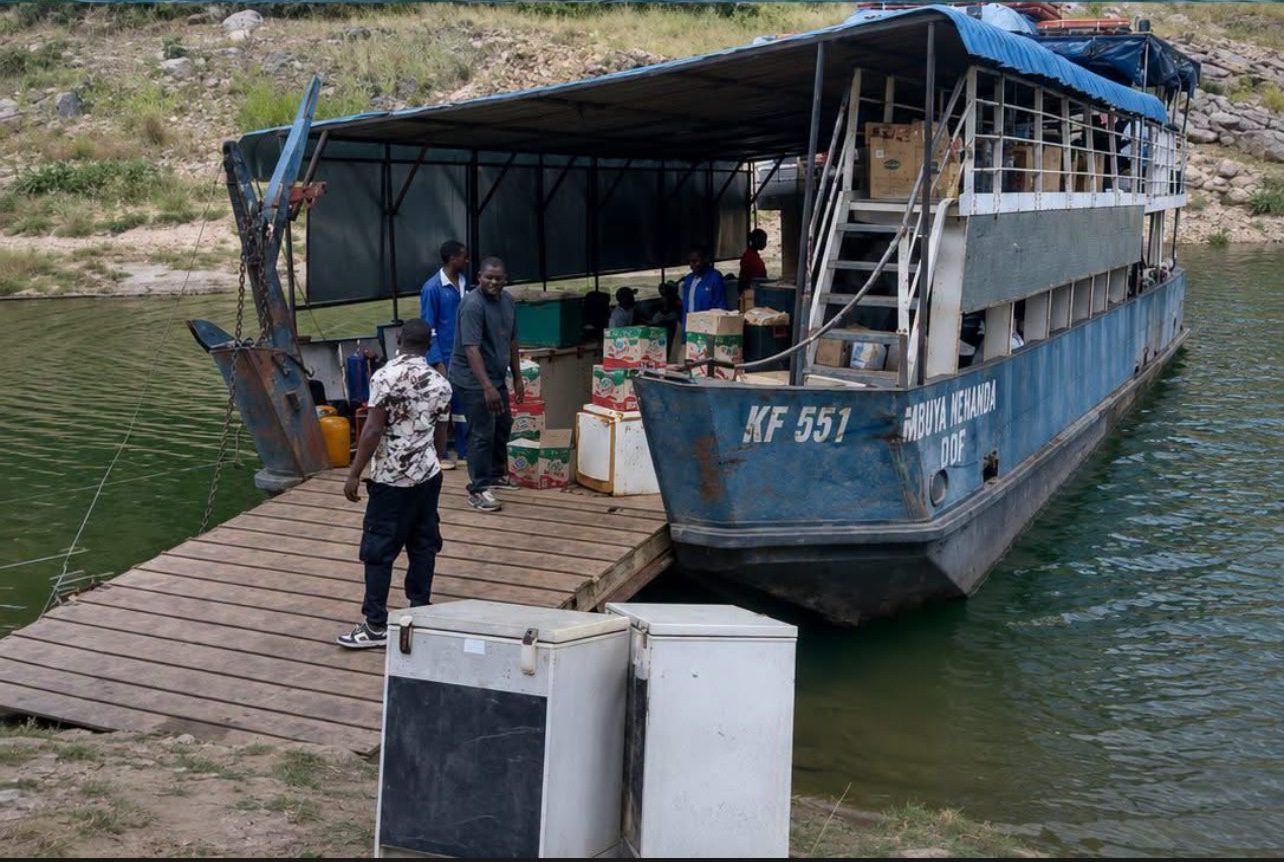
Political activists in Binga have said the Lake Kariba boat tragedy has exposed a long-standing infrastructure failure that has left communities in Nyaminyami district with little choice but to depend on ageing boats for basic transport.
As the search for victims of the Rural Infrastructure Development Agency (RIDA) passenger ferry Mbuya Nehanda continued on Wednesday, activists said the disaster should not be seen solely as a boat accident, arguing the deaths are also a consequence of years of neglect of the road network connecting communities in Binga and Nyaminyami to Kariba.
The ferry capsized on Tuesday afternoon while travelling from Kariba towards rural communities in Nyaminyami district, killing an as-yet undetermined number of people and leaving scores missing.
The Zimbabwe Republic Police said 13 bodies had initially been retrieved while 67 people had been rescued and taken to Mahombe-kombe Primary School Command Centre for medical attention.
On this topic
However, police said investigations indicated the vessel could have been carrying more than its confirmed capacity of 90 passengers, excluding the five crew members, after the captain was initially informed that 120 people (108 adults and 12 children) were travelling to Chalala from Kariba.
Reports on Wednesday said divers had recovered a further 24 bodies, including 14 adults and 10 children, as the Zimbabwe National Army sub-aqua team joined the search operation.
For communities along the Zambezi, however, the tragedy has renewed attention to a transport crisis which has been allowed to persist for decades.
Political activist Chilumbo Mudenda, from Ward 1 in Binga North under Chief Sinakatenge, told CITE that communities had been forced to use boats because there was no reliable road network linking Nyaminyami to Kariba’s rural and urban areas.
“The situation is not good,” Mudenda said, describing the accident as the latest manifestation of a transport crisis affecting communities on both sides of Lake Kariba.
“People have no means of transport. There is no road network that connects Nyaminyami district to Kariba Urban. People rely on that dilapidated boat.”
Mudenda said most of the roads serving the area were constructed during the colonial era and had deteriorated to the point where they were no longer passable.
“People work in Kariba. For instance, here in Binga North Ward 1, people work in Kariba. The Zambezi River stretches for more than 800 kilometres, so during the holidays, or in terms of transportation, there is no road network that connects Nyaminyami district to Kariba Rural or Urban,” he said.
“The roads are old, built during colonial times, and are no longer passable. So people prefer to use boats to go to and from Kariba. That is the mode of transport.”
The ferry, according to Mudenda, was part of a weekly transport lifeline serving scattered communities along the lake, picking up passengers in Kariba and dropping them at different settlements under several traditional leaders before reaching communities in Binga.
The activist said the geographical and administrative arrangements had also complicated the delivery of assistance to affected families.
Although Nyaminyami is in Mashonaland West, Mudenda said many of the affected communities were predominantly Tonga-speaking and closely connected to communities in Binga and Hwange.
“Victims are from three affected chieftainships: Chief Mola, Chief Sinakatenge and Chief Siamusanga,” he said.
The accident has therefore affected families across communities that rely on the lake for movement, employment, education and access to essential services.
Mudenda said several households in Binga North were already mourning relatives who were missing following the accident.
“Under Chief Sinakatenge, Ward 1, we have four homesteads that have been closed, including my own aunt, who is my mother’s younger sister, and her two children are still missing,” he said.
He said some children from the area attended schools in Kariba and returned to their rural homes during school holidays, meaning the movement of people across the lake was not simply a matter of convenience but a necessity created by the absence of alternative transport.
The lack of roads, Mudenda argued, could also complicate the emergency response.
“The hearses that we hear are yet to come, how will they move to the ground? There are no roads,” Mudenda said.
“How will affected people in Binga North receive help? Even if the government declares a national disaster, it does not help because of the poor road network.”
Another resident from Chief Sinakatenge’s area, Coneck Mukonka, echoed Mudenda’s concerns about the condition of the roads and the dependence on water transport.
“We are asking whether the loss of people could have been prevented if communities had been provided with safe, reliable and accessible transport infrastructure in the first place,” he said.
Mudenda said the tragedy should also prompt scrutiny of the ferry’s operating practices.
The vessel’s confirmed carrying capacity was 90 passengers, excluding the five crew members. A RIDA security officer, Anymore Chambati, one of five crew members aboard the vessel, was reported to have said that 153 people, including infants, were on board when the ferry capsized. Only two of the five crew members reportedly survived.
Mudenda said overloading had allegedly become common because of the limited transport alternatives.
“The carrying capacity of that boat is 90 with equivalent life jackets, but the boat had more than that. That is what people on the ground are saying, people were overloaded,” he said.
He added that smaller boats and speedboats were also regularly used by residents attempting to cross the lake, with accidents allegedly occurring even before Tuesday’s disaster.
“People die on a daily basis on smaller boats or speedboats trying to cross because of the lack of road infrastructure that connects Binga straight to Kariba,” he said.
“There are places like Mola where there are no roads at all because of poor governance.”
The tragedy has also triggered political criticism of the government’s management of public transport infrastructure.
Opposition activist, Fadzai Mahere accused the government of ignoring previous concerns about the condition of the Mbuya Nehanda ferry.
Her criticism followed a post by Government spokesperson Nick Mangwana last year announcing reduced fares for the RIDA-operated passenger vessel, which services remote communities in Nyaminyami.
Mangwana had said the fare reduction brought financial relief to travellers, with charges from Peters Point to Chalala reduced from US$15 to US$10, Peters Point to Musamba from US$12 to US$8 and Peters Point to Kings Camp from US$9 to US$6.
Mahere said the government’s focus on reducing fares had failed to address concerns over the vessel’s condition.
“This is what happens when a government prioritises propaganda over the welfare of the people. When will you apologise for ignoring the people’s concerns and ultimately causing dozens of deaths? Who is being charged for the culpable homicide of these victims? What is being done to avoid such needless loss of life in the future?” she questioned.
The accident has also raised broader concerns about Zimbabwe’s disaster preparedness.
Former education minister and opposition politician, David Coltart, said the tragedy required a comprehensive review of the country’s emergency response systems.
“This tragedy needs a serious review of our disaster preparedness. It is devastating that so many lives of Zimbabweans have been lost,” he said, warning the incident could have implications for tourism, particularly if visitors perceive Kariba and Zimbabwe as lacking effective disaster-response capacity.






Leave a Reply