
By Shame Mugova
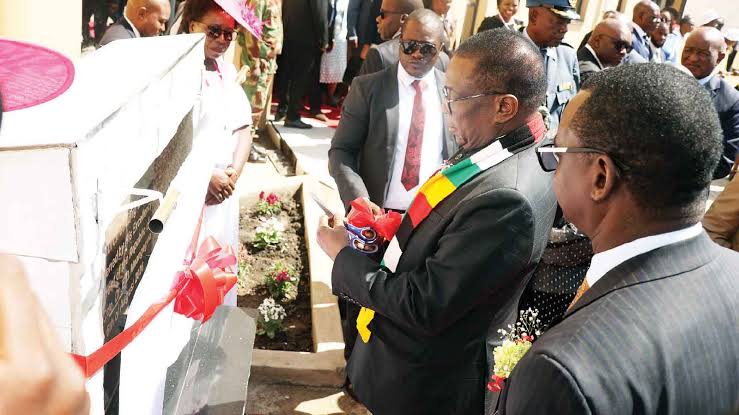
Many Zimbabweans of my generation will remember what happened when word arrived that the President, a minister or another senior official was coming to visit a school, hospital or government institution. Grass was cut, walls painted, broken windows repaired and potholes along the official route suddenly received attention. The best rooms were prepared, and considerable effort went into deciding what the visitor would see.
As a child, I thought this was simply how important visitors were received. Looking back, I think it revealed something deeper about the culture our institutions were developing: the habit of pleasing those above rather than serving those below.
Imagine a school without enough classrooms, where some children learn under a tree, and the toilets are broken. If the Minister of Education visits, those are precisely the things the minister needs to see. Yet the instinct can be to hide the worst conditions, repair what lies along the official route and showcase the strongest part of the school. The visit is declared a success, the officials leave satisfied, and the children return to the tree the following morning.
On this topic
The problem is not the cleaning. It is the distortion of information. The person with the greatest authority to intervene has been protected from the reality he or she needed to understand. What looks like respect for authority becomes the management of reality for the benefit of power.
That instinct extends far beyond ceremonial visits. Every organisation needs hierarchy, but a serious problem develops when career security and advancement depend more on satisfying the person above than on fulfilling the public purpose of an office. The administrator pleases the district official, the district official pleases the permanent secretary, the permanent secretary pleases the minister, and the minister pleases those higher in the political hierarchy. Eventually the chain reaches the President.
Everyone learns to look upwards. The citizen, meanwhile, is waiting for someone to look back.
This is where political loyalty becomes dangerous inside institutions that should remain professional. A police officer should be guided by the law, a revenue authority should administer taxation fairly, and a regulator should enforce standards even when the organisation being regulated belongs to Government.
Zimbabwe’s Constitution is clear on the principle. Public administration is supposed to be accountable, transparent and responsive to people’s needs. Public servants are not supposed to act in a partisan manner, and the security services are required to remain politically neutral. The principle is simple: the party may govern the State, but it must not become the State.
Once that boundary weakens, incentives change. An official who produces uncomfortable information may become less secure than one who is politically dependable. Officials learn which rules can be enforced safely and which truths are better softened before they travel upward.
Institutions teach people through what they reward and what they punish.
This is why institutional decline is not simply about incompetent people occupying important offices. A system can contain intelligent and technically capable officials and still perform badly because it rewards the wrong behaviour. People become skilled at surviving the institution rather than improving it. They learn how to read political expectations, present bad news without upsetting anyone important and remain useful to those who influence appointments.
Zimbabwe’s post-independence history offers clues to how this culture developed. Former Finance Minister Simba Makoni has reflected on the contrast between the sacrifice associated with the liberation struggle and the material privileges that increasingly came with political office. This is not nostalgia for Rhodesia, an exclusionary racial State. Independence was necessary. The harder question is what kind of public-service culture independence was going to build.
The early years were hardly a golden age. Yet Willowgate provides an interesting contrast: senior politicians were publicly investigated for abusing privileged access to vehicles, a commission heard evidence, findings became public, and ministers resigned. The system was imperfect, but misconduct within Government could still become a problem Government was forced to confront.
Over subsequent decades, Zimbabwe repeatedly tried to repair institutional weakness through restructuring. The Posts and Telecommunications Corporation was broken into successor entities, ZESA was unbundled and ZBC restructured. Some reforms were justified, but changing an organisational chart does not change the incentives inside it. One poorly governed organisation can be divided into four poorly governed organisations. A regulator is independent only if it can inconvenience Government and survive doing so.
The real test of institutional strength is more basic. Can a permanent secretary tell a minister that a policy is failing? Can a board challenge a politically connected chief executive? Can a regulator sanction a government-owned entity? Can a police commander refuse an improper request? Can a minister acknowledge that an institution under his or her portfolio has failed? And can that minister tell the President something the President would rather not hear?
Those questions matter because information deteriorates when bad news travels through a hierarchy that rewards reassurance. A serious failure begins at operational level. On its way upwards it becomes a “challenge”. At the next level it becomes a “temporary constraint”. By the time a public statement is written, “measures are being implemented”.
The underlying problem has not improved. Only the language has.
A State that punishes bad news eventually governs in the dark.
The same incentives shape public spending. Governments accumulate privileges and commitments that become difficult to reverse because stopping them creates identifiable losers. By contrast, the benefits of maintaining hospitals, roads, electricity and public transport are dispersed across millions.
A pothole cannot lobby Cabinet. A broken hospital machine cannot threaten to withdraw political support. A bridge requiring maintenance does not attend a party conference.
Yet this unglamorous work is the essence of competent government. There is no ribbon-cutting ceremony for maintaining a ferry before it becomes dangerous or replacing equipment before it fails. When preventive maintenance succeeds, nothing dramatic happens. That absence of drama is the achievement.
The danger is that a State can become better at maintaining political relationships than maintaining public assets.
The Lake Kariba ferry disaster has brought this wider problem back into view. When catastrophe occurs inside a government agency, the first response should be institutional curiosity: what went wrong, who knew, which safeguards failed, what was management doing, what was the regulator doing and what must change? But when criticism of an agency is interpreted as criticism of Government, and criticism of Government as hostility towards the ruling party, the minister responsible can become the defender of the institution he or she is supposed to scrutinise.
That turns accountability upside down. The first question should not be, “How do we protect Government from this criticism?” It should be, “Is the criticism true?” If it is, correcting the failure is not surrendering to Government’s critics. It is governing.
Zimbabwe’s institutional problems therefore cannot be solved simply by appointing new personalities into the same incentive structure. Leadership matters, but new people can quickly learn old habits. The deeper reform is to make honesty safer than pretence. Public servants who identify problems early should be valued, regulators protected when they inconvenience powerful institutions, and boards reminded that appointment by Government does not make them political representatives. Ministers should treat criticism of agencies under them as information, not insubordination.
Most importantly, those at the top must deliberately create room for disagreement. A President surrounded by people whose careers depend on pleasing him faces a peculiar danger: he may eventually become the last person to know that his Government is failing. Everyone reports progress, praises the programme and explains why criticism is unfair, while millions of citizens experience a reality that never reaches the room.
Strong leaders need people who can tell them they are wrong. Presidents need ministers capable of bringing bad news. Ministers need professional officials willing to challenge assumptions. Governments need regulators prepared to frustrate them, auditors willing to embarrass them, journalists willing to question them and citizens free to complain.
These people are not enemies of effective government. They are its early-warning system.
Perhaps the old ritual before an official visit contains the larger lesson. When a minister visits a school, do not hide the children learning under a tree; take the minister to them. When hospital equipment is broken, do not remove it from the official tour; show it. When a State enterprise is failing, do not improve the presentation; improve the enterprise.
Zimbabwe will begin rebuilding its institutions when the uncomfortable truth becomes more valuable than the comfortable report, and when success in public office is measured not by whether the person above is pleased, but by whether the citizen below is being served.
Dr Shame Mugova is a Lecturer in Finance at Birmingham City University. He writes on finance, economic policy, governance and development, with a particular interest in Zimbabwe and Southern Africa. He writes in his personal capacity.








Leave a Reply