
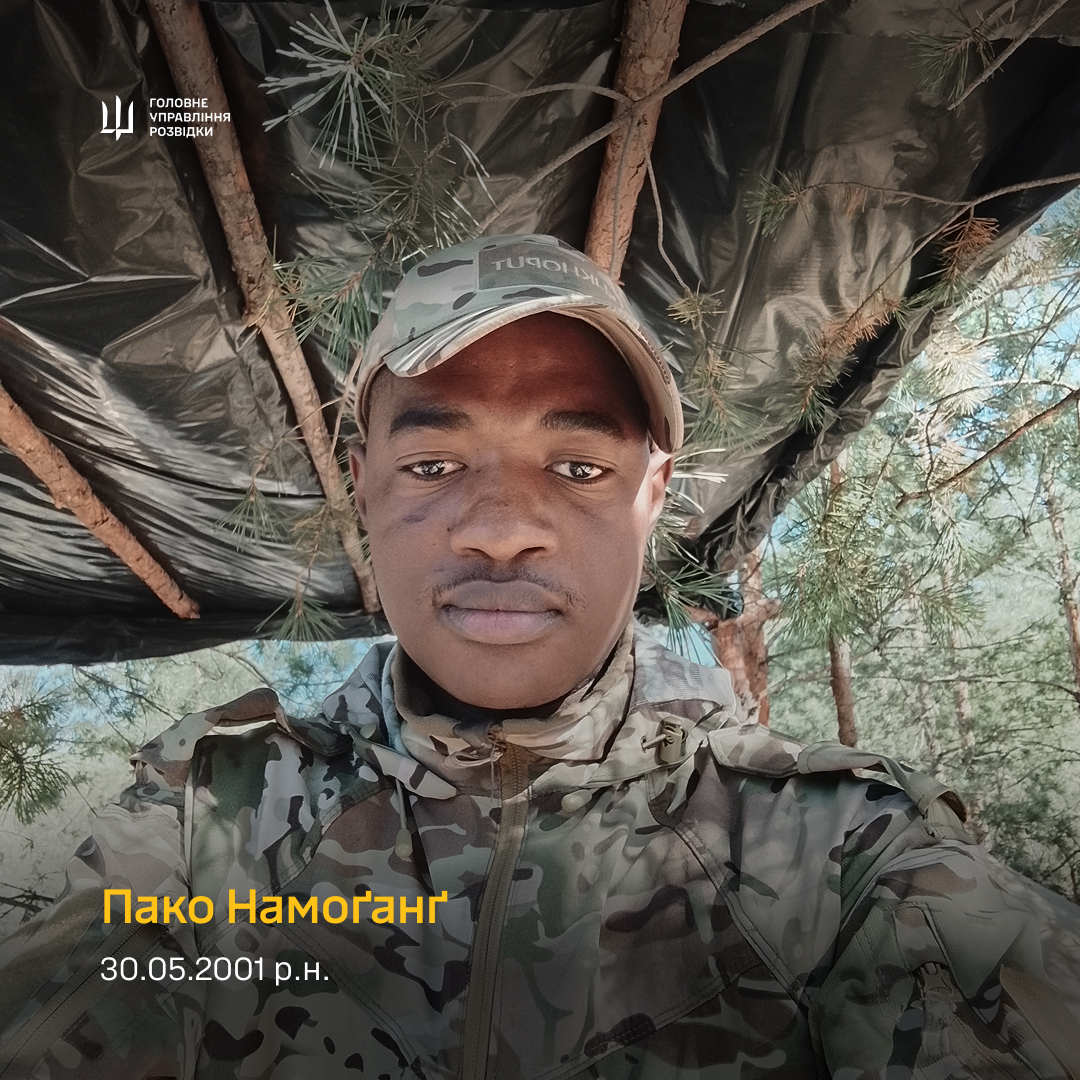
A 25-year-old Botswana national, Pako Namogang, has reportedly been killed while fighting for Russian forces in Ukraine, exposing the growing reach of recruitment networks targeting African citizens for the war, Ukraine’s Defence Intelligence (DIU) has said.
DUI identified Namogang, born on 30 May 2001, as the first identified citizen of Botswana to have died fighting on Russia’s side in the war.
According to the Ukrainian agency, Namogang was killed in combat around mid-August 2026 near Novoliubivka, in the Luhansk region of eastern Ukraine.
The account, published by Ukrainian authorities, traces Namogang’s journey from a WhatsApp recruitment group to Moscow and, ultimately, the frontline.
On this topic
DIU said Namogang was recruited through a WhatsApp group called “Work in Russia”, where a recruiter openly stated they were seeking people to serve in the Russian army.
The agency said Namogang travelled from Johannesburg’s OR Tambo International Airport to Moscow, Russia on 6 July 2026, after he was assured by the recruiter that someone in South Africa would help him register and board his flight.
The Ukrainian intelligence agency suggested the person expected to assist him may have been linked to Russia’s Trade Representation, but the information provided did not independently establish that connection.
Namogang arrived in Moscow on 7 July and was accommodated in a hotel before signing a one-year military contract on 21 July.


DIU identified the person who handled the contract process as Senior Lieutenant A. V. Levykin.
The agency also named two alleged intermediaries, Yelizaveta Sergeyevna Savinovskikh and Mikhail Sergeyevich Petrushenko, whom it said helped recruit foreign nationals and arrange their transfer to Russian forces. These allegations have not been independently verified.
After signing their contracts, Namogang and other foreign recruits were reportedly housed at the Avangard Military-Patriotic Education Centre for Youth in Patriot Park near Moscow.
DIU alleged instructors at the centre participated in training foreign recruits before they were transferred to military training facilities.
Namogang subsequently spent about a week and a half at a Russian army training centre before being deployed to the occupied territories of Ukraine, where he was reportedly killed weeks later.
The case has taken on an additional dimension because, according to DIU, Namogang provided recruiters with the personal information of friends, including passport details, to facilitate their recruitment.
Their current whereabouts and status remain unknown, the Ukrainian agency said.
The “I Want to Live” project, which encourages foreign recruits who have joined the Russian army but find themselves in trouble to surrender to Ukrainian forces, reportedly has information on at least 25 Botswana nationals who signed contracts with Russian forces.
It said one was held as a prisoner of war and at least one, Namogang, had been killed.
The figures could not be independently verified from the information available.
Namogang’s case adds to concerns about the recruitment of African nationals into the Russia-Ukraine war, including reports of people travelling under the impression that they are pursuing employment opportunities before finding themselves involved in military service.
The reported death comes as Botswana’s government warned citizens against deceptive overseas recruitment schemes.
In a statement issued on 18 July 2026, the Botswana government said reports indicated that the number of Batswana drawn into such schemes was rising “at an alarming rate”.
Authorities said some citizens were promised lucrative jobs abroad but discovered after arriving in Russia they were forced into combat in Ukraine.
“The government of Botswana once again cautions all citizens against falling prey to deceptive recruitment schemes that lure Batswana into travelling abroad under false pretences, only to be coerced into joining combat in the Russia-Ukraine war,” the statement stated at the time.
The Botswana government warned that its ability to provide consular assistance to citizens once they reached Russia was “extremely limited”.
It also disclosed its Ministry of International Relations continued to receive distress calls from Batswana already deployed to the war, describing the dangerous conditions they faced.
“While the Government continues to explore all possible avenues to assist and bring them home, citizens must understand that prevention is the most effective safeguard,” the statement stated.
The warning highlights the difficulties governments face when citizens are recruited through overseas networks and moved across borders before their families or authorities can establish the nature of their employment.
Namogang’s journey also raises questions about the role of recruitment intermediaries and the movement of foreign nationals through third countries.
His departure from South Africa is particularly significant because the Regulation of Foreign Military Assistance Act of 1998 regulates the provision of foreign military assistance by South African citizens and residents.
Whether any particular conduct connected to Namogang’s travel breached South African law would require investigation and evidence establishing the roles of the individuals involved.
Meanwhile as African heads of state and government gather in Moscow for the Third Russia–Africa Summit from 28 to 29 October, 2026, calls have been made that they must move beyond warning citizens not to travel overseas.
The African leaders are expected to verify overseas job offers, investigate suspected recruitment networks, share information with other governments and establish clear channels through which families can report missing relatives.
Namogang’s reported death also leaves unanswered questions about the friends whose personal details he allegedly passed to recruiters.






Leave a Reply