
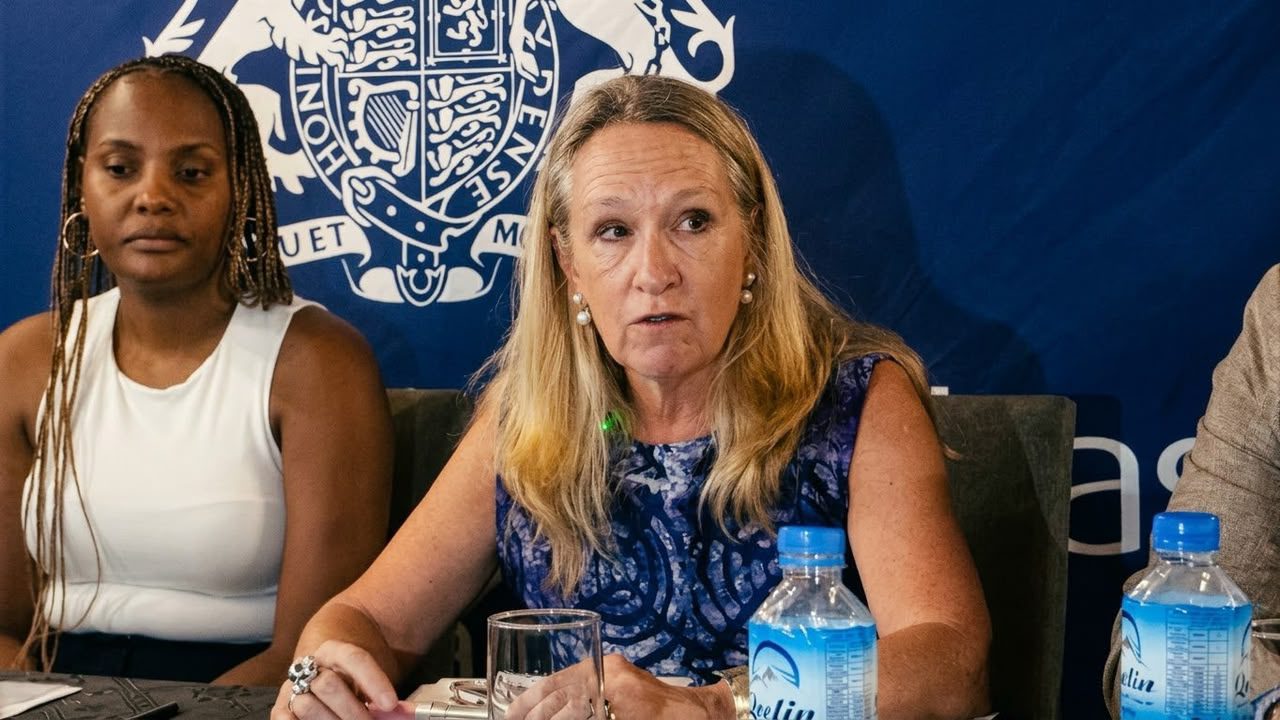
The United Kingdom has defended its increasingly conciliatory approach towards Zimbabwe, saying it prefers engagement over public confrontation as it seeks to rebuild relations with Harare, while maintaining that the controversial Constitutional Amendment Act No. 3 (CAA3) is a sovereign matter for Zimbabweans.
British Ambassador to Zimbabwe, Gill Lever, said the shift in approach was gradual rather than a sudden change in policy, reflecting Britain’s efforts to rebuild relations with Zimbabwe since 2017 and a broader review of its engagement with African countries.
Lever made the remarks on Monday during her first visit to Bulawayo, following questions from CITE about Britain’s apparent softening of its position on Zimbabwe, particularly after the passage of CAA3, which has attracted criticism from opposition parties, civil society organisations and human rights groups.
“Our view is it’s a constitutional amendment and changes are a sovereign matter for Zimbabwe, and it’s not for me to comment on the constitutional change. We have expressed concerns behind the scenes, but we do recognise it’s a sovereign matter,” Lever said.
On this topic
She described Britain’s current relationship with Zimbabwe as a “modern respectful partnership”, arguing the confrontational approach adopted in previous years had not benefited either country.
“For many years the very difficult relationship that we had, where we had a very critical relationship between our two countries, did not serve the people of either of our countries well. So we would rather address issues where we have disagreements in a respectful and constructive way,” she said.
Her comments come months after the UK government’s position on Zimbabwe’s proposed constitutional amendments came under scrutiny in the House of Lords.
Read: https://cite.org.zw/uk-lords-
In April, British parliamentarians challenged their government’s approach, questioning whether its preference for engagement was sufficiently robust in the face of what some MPs described as democratic backsliding.
Responding on behalf of the government at that time, Lord-in-Waiting Gerard Lemos said British officials remained in contact with Zimbabwean authorities, civil society and other stakeholders, while continuing to monitor reports of harassment.
However, he defended the decision to prioritise engagement over confrontation.
“On speaking out more strongly, frankly, the government’s view is that 20 years of megaphone diplomacy did not get us anywhere, and we are now in the business of engaging,” Lemos said.
Asked by CITE to explain the apparent softening of Britain’s stance, Lever said the change was part of a longer process of reassessing how the UK relates to Zimbabwe and other African countries.
She said that after 2017, Britain began rebuilding its relationship with Zimbabwean authorities and citizens, recognising that many Zimbabweans felt let down by the deterioration in relations between the two countries.
“I wouldn’t say it’s been a sudden shift. I think it’s been sort of a gradual one as we’ve tried to post-2017, rebuild our relationships with the government and with the people of Zimbabwe,” she said.
Lever said the UK subsequently reviewed its Africa policy under the new Labour government in 2023, consulting governments, civil society organisations and other stakeholders across the continent to understand what African countries wanted from their relationship with Britain.
The process resulted in the UK’s ‘Africa Approach,’ which seeks to establish partnerships based on mutual interests rather than Britain prescribing what African countries need.
“We asked African countries, what do you want from us as the UK? Because we feel that we are perhaps telling you what we think you need and we’re not listening to all of the countries that we partner with,” she said.
The UK diplomat argued that cooperation on areas of common interest creates opportunities to address disagreements through dialogue.
“If you can work with people on certain issues and if you have problems or difficulties, you’re much easier able to then raise those difficulties and challenges and work through them together,” Lever said.
The ambassador also pointed to changing global power dynamics, saying Britain needed to maintain relationships and alliances across different regions as the international system became increasingly multipolar and contested.
“It’s also worth thinking about the kind of bigger geopolitical issue, you’re all journalists, you’ll follow the international news, these are very complicated times that we’re living in and we need to you know have friendships and alliances with all sorts of countries,” Lever said.
She said the Commonwealth was becoming particularly important as countries sought new alliances and platforms for cooperation.
On Zimbabwe’s bid to rejoin the Commonwealth, Lever said Britain was keen to see the country return to the organisation but stressed the decision rested with all member states, following a recommendation by the Commonwealth Secretary-General.
“We’re very keen to see Zimbabwe back in the Commonwealth again when the time is right, and we’re working on a constructive way forward for Zimbabwe to re-enter the Commonwealth,” she said.
Lever said the process required a fair and consistent approach, with the Commonwealth’s Harare Principles on democracy and good governance remaining central to the organisation’s values.
“My expectation is that the Secretary-General will be thinking about that when she makes recommendations for the re-entry of any country who wants to join the Commonwealth,” she said.
She added the UK could not determine the outcome of Zimbabwe’s application or anticipate the Secretary-General’s recommendation.
Lever also defended the relevance of the Commonwealth, dismissing suggestions that it was merely a ‘nostalgic institution rooted in Britain’s colonial past.’
She said the organisation continued to provide a platform for discussions on trade and investment, climate resilience, international financial reform and shared values.
The ambassador cited the recent Commonwealth Heads of Government Meeting in Antigua, which she said had brought together leaders and foreign ministers, including strong participation from African countries.
She also said discussions had included reparations for the transatlantic slave trade, with the British government favouring a structured and time-limited dialogue on what would constitute a meaningful apology.







Leave a Reply