
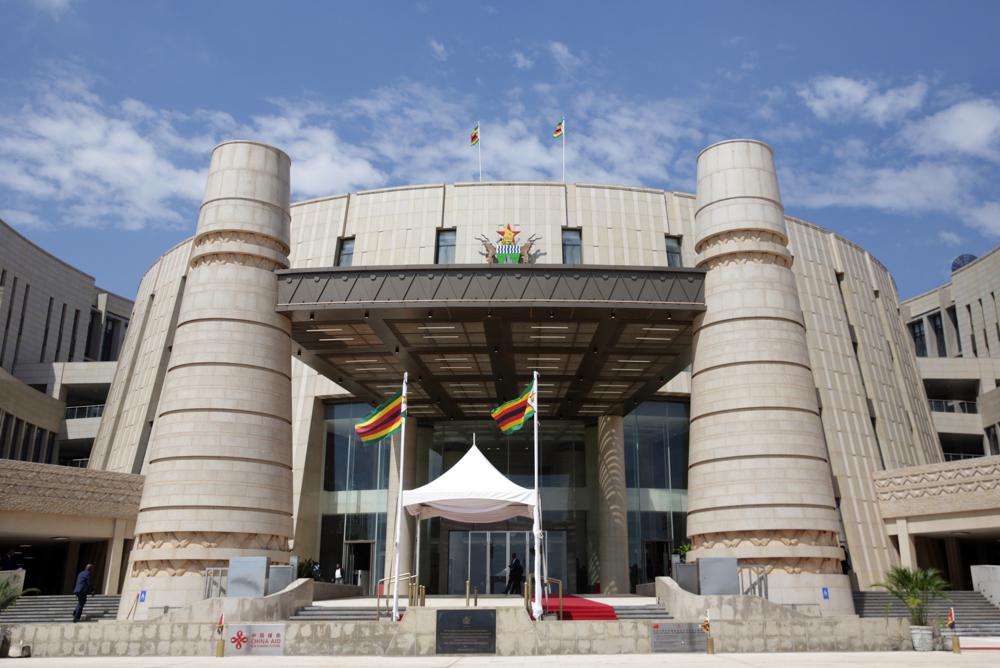
The opposition MDC party says the controversial Constitution of Zimbabwe Amendment (No. 3) Bill, 2026, can still be defeated in the Senate if opposition legislators vote against it, arguing that Zanu PF does not command the required two-thirds majority in the Upper House.
The remarks come as Parliament prepares to debate the Constitutional Amendment No. 3 Bill, which has already drawn criticism from opposition figures, lawyers, civic groups and war veterans, who argue that the proposed changes threaten constitutionalism and democratic governance in Zimbabwe.
MDC leader Douglas Mwonzora told CITE that although Zanu PF has a two-thirds majority in the National Assembly, it lacks sufficient numbers in the Senate to pass the amendment without support from opposition senators.
“If the opposition in Parliament were to vote against CAB3, that would effectively kill the amendment. Zanu PF does not have a two-thirds majority in the Senate,” said Mwonzora.
On this topic
“It is critically important that the opposition in Parliament understands its duty to the people.”
Mwonzora, who helped draft Zimbabwe’s Constitution, explained that constitutional amendments require separate votes in both Houses of Parliament.
“In terms of the Constitution, for the amendment to pass, it must be voted for by a two-thirds majority in each House,” he said.
“The amendment requires a two-thirds majority vote in each House and each House votes separately.”
He argued that Zanu PF would still fall short of the required numbers in the Senate even if traditional leaders voted alongside the ruling party.
“In the National Assembly, Zanu PF has a two-thirds majority. But in the Senate, out of 81 members, Zanu PF has 33 senators,” he said.
“Our traditional leaders are 17 and the Citizens Coalition for Change (CCC) has 26 senators. Two-thirds of 81 is about 54 votes.”
“Assuming Zanu PF and chiefs vote together, that gives them 50 votes, which is still short of the required two-thirds majority.”
Mwonzora said the fate of the Bill therefore depended on opposition legislators.
“So, assuming opposition MPs live up to their responsibilities, they can easily block this amendment,” he said.
“Opposition MPs must live up to their responsibilities.”
Under Section 328(5) of Zimbabwe’s Constitution, a Constitutional Amendment Bill must be passed by a two-thirds majority in both the National Assembly and the Senate.
The Constitution states: “A Constitutional Bill must be passed, at its last reading in the National Assembly and the Senate, by the affirmative votes of two-thirds of the membership of each House.”
This means the threshold is based on the total membership of each House, not only those present and voting.
The proposed Constitutional Amendment No. 3 Bill has become increasingly contentious amid concerns that some provisions could alter key governance structures and further centralise executive power.
Critics have also linked the Bill to possible attempts to extend President Emmerson Mnangagwa’s stay in office beyond 2028 through the so-called “2030 agenda”.
Public reactions on social media reflected growing distrust among some citizens regarding the role of opposition legislators in Parliament.
One commentator, Eddie Chandiringa, said: “The problem now is that we can’t trust some of these people in the so-called opposition. I really wonder who they are representing in Parliament.”
Another citizen argued that all legislators, regardless of political affiliation, had a constitutional obligation to act in the national interest.
“It’s not only the duty of the opposition, but of all MPs as a whole, to serve the interests of the country rather than the interests of their political party leaderships,” the commenter said.
Others expressed concern over allegations that some opposition parliamentarians could side with Zanu PF during the vote.
“Tshabangu has greatly corrupted opposition parliamentarians, especially senators. One female senator was glossing over the 2030 issue, saying she wished they could extend the term so that they continue eating. The challenge is that most of these people may never make it into future Parliaments,” another citizen commented.
Debate over the amendment is expected to intensify in the coming weeks as Parliament moves closer to deliberating the Bill.
Support CITE’s fearless, independent journalism. Your donation helps us amplify community voices, fight misinformation, and hold power to account. Help keep the truth alive. Donate today







Leave a Reply