
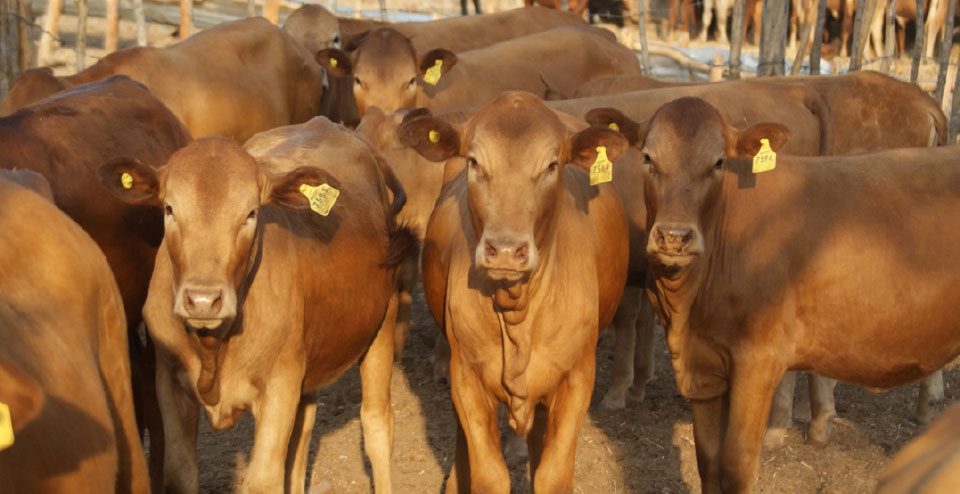
Villagers in Methodist Village on the outskirts of Bulawayo say they are living in fear following a rise in stock theft cases in which thieves reportedly disable cattle by hacking their hind legs before slaughtering them and taking the meat.
Residents say the attacks have caused significant financial losses in the peri-urban community, where many families rely on livestock for their livelihoods.
Bulawayo police have confirmed one such incident and arrested a suspect.
Inspector Nomalanga Msebele, the Bulawayo provincial police spokesperson, said 29-year-old Benedict Sibanda of Magwegwe North had been arrested in connection with the theft of six cattle from Methodist Village in Ward 17.
On this topic
She said the incident occurred on 20 June when a 53-year-old man took cattle to graze.
“At around 6pm, he returned and informed the complainant that he had lost six cattle in the grazing area. They then went back to search for the missing cattle but failed to locate them,” said Inspector Msebele.
Police later received information that cattle remains had been found in a bushy area between Pumula North and Magwegwe West.
“The accused person had slaughtered four cattle and taken all the meat portions, leaving only the heads, offal and skins. Two cattle were found alive but had sustained injuries to their legs,” she said.
Inspector Msebele said investigations led to Sibanda’s arrest.
“The total value stolen was US$3 000 and property worth US$1 000 has since been recovered,” she said.
Residents say the attack reflects a growing trend in the area.
Nqobizitha Moyo, a villager, said six cattle had recently been stolen using what residents describe as a cruel method.
“Our livestock is being stolen. In recent weeks, one villager lost six cows in Methodist Village through this tactic,” he said.
“Our cattle graze in the bush and we believe the herd boys lost track of them. We later woke up to discover that they had been killed. This is a serious challenge for us and we hope publishing this issue will raise awareness.”
Moyo alleged that the stolen meat was being sold through illegal channels.
“Our livestock is being killed and the thieves take the meat and sell it wherever they can,” he said.
Another villager, who identified himself only as Mhlophe, said the thieves appeared to target cattle while they were grazing.
“What these thieves do is strike the cattle on the back legs with machetes. Once both legs are injured, the animal cannot move and remains lying where it falls,” he said.
“It appears they do this during the afternoon. They also remove the cattle bells so that the herd boys cannot easily identify where the animals are.”
Mhlophe alleged that some of the meat was being sold through informal outlets in Bulawayo.
“We were told there are butchers in Magwegwe and Mabuthweni where meat is allegedly being sold without the required inspection papers,” he said.
“The six cows were one of the biggest incidents, but there have also been cases where cattle were killed inside kraals using the same method. Stock theft is becoming a major problem, especially in Methodist. We do not know whether it is because we are close to the city or because the thieves live within our communities.”
Cattle theft remains a recurring challenge in many rural and peri-urban parts of Zimbabwe, where livestock represent an important source of income and household wealth.
Inspector Msebele urged members of the public to report anyone suspected of selling uninspected meat or operating illegal backyard meat businesses.
She also encouraged livestock owners to pen their cattle at night and strengthen security measures to reduce the risk of theft.
The latest incident has heightened anxiety among Methodist Village residents, who fear stock thieves are becoming increasingly organised and sophisticated in their methods.








Leave a Reply