
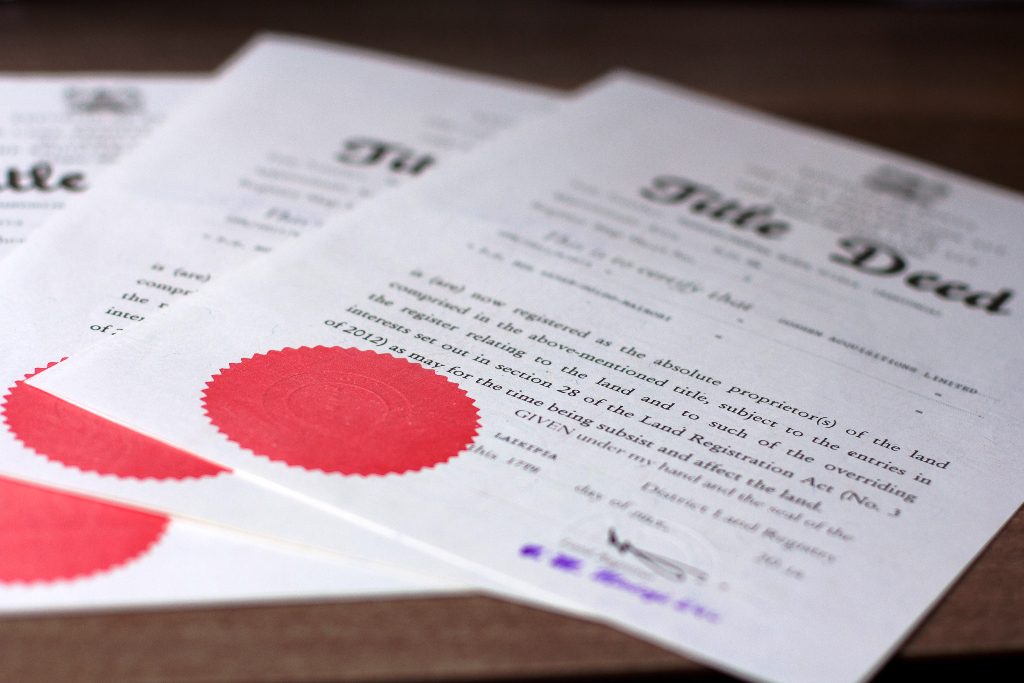
Bulawayo residents who own council houses have been urged to apply for title deeds to strengthen their legal ownership of their properties and reduce the risk of ownership disputes.
The call was made during a recent community meeting at Nkulumane Hall, where Bulawayo City Council officials explained the title deeds programme, which is expected to be completed by July 2027.
The meeting also allowed residents to seek clarification on how the planned digitisation of title deeds will affect property ownership, document security and access to land records.
Bulawayo City Council housing officer for Nkulumane, Tshabalala and Nketa, Lovemore Dube, explained the process of applying for council housing and eventually obtaining a title deed.
On this topic
“Before someone is given a house, once a person turns 18 years, they can go to the Housing Office at the Tower Block in Bulawayo with their ID and birth certificate, and they can write a form called Family Accommodation. Some call it a housing waiting list. That will be renewed before you receive a stand,” said Dube.
He said successful applicants receive an agreement of sale when they are allocated a property.
“When you get a house, they will give you an agreement of sale. In Nkulumane we have a suspensive agreement, which states that an individual buys the house and the stand. After the 25 years have been completed, one can now apply for title deeds,” he said.
Dube said the process differs in Nketa, where residents first purchase a stand before building a house.
“In Nketa one can buy a stand and build. Once the person has built, one is given a certificate of occupation stating that they qualify for applying for title deeds,” he said.
He also outlined the procedure when a property owner dies before or after obtaining title deeds, saying the surviving family members must first complete the estate administration process through the Master of the High Court before ownership can be transferred.
“In the event that a person dies after those 25 years, those who remain, most probably it will be the wife, have to do an estate winding-up. Then you have to go to the Master of the High Court office and you will be given a paper, and the name will be changed to the person who is alive. You cannot apply for title deeds for someone who is now deceased. You can go and apply for the title deed after the house has been registered in your name. With children, it is the same procedure,” he said.
Dube said applicants must submit two certified copies of their birth certificate, the agreement of sale and a processing fee of US$24.50. They must also ensure their municipal account is fully paid and at least three months in advance.
He said applications are circulated through various council departments before being considered by the Chamber Secretary.
“Your paper will go around each and every single department of the City Council and then be taken to the Chamber Secretary. The Chamber will see the comments from every department and, if they are satisfied that you qualify for the title deeds, they then appoint you a lawyer,” he said.
The appointed lawyer then contacts the applicant to pay the registration fee before the documents are lodged with the Deeds Office.
“The lawyer will then contact you and write you a letter, and they will tell you to come and pay a certain amount, which is the registration fee to go to the Deeds Office,” he said.
Dube said ownership is legally confirmed once the title deed has been issued.
“Once you are registered at the Deeds Office, a document will come out written ‘Title Deed’. Once you’re given that document, the land is yours. This paper is proof of ownership,” he said.
He said an agreement of sale and a title deed both provide proof of ownership but confer different rights.
“The one who has the agreement of sale but does not have the title deeds has also got proof of ownership, which is the agreement of sale. The difference is that the one who has the agreement of sale can say that the house is theirs, but the ground belongs to the council. The one who has title deeds owns the whole property, including the ground,” he said.
Dube said owners with either an agreement of sale or a title deed may sell their properties, although the procedures differ.
“Both parties are allowed to sell the house if they want. The one who has the agreement of sale has to come to the office with the buyer. The one who has the title deeds does not come to council but goes to their lawyers, and they do the sale through the lawyers, but all are owners of the house,” he said.
He said the move to digital title deeds is intended to improve security and reduce the risk of fraud.
“Title deeds need to be upgraded. The old ones are easy to manipulate, which means thieves can change them and rob them and take your property,” said Dube.





Leave a Reply