
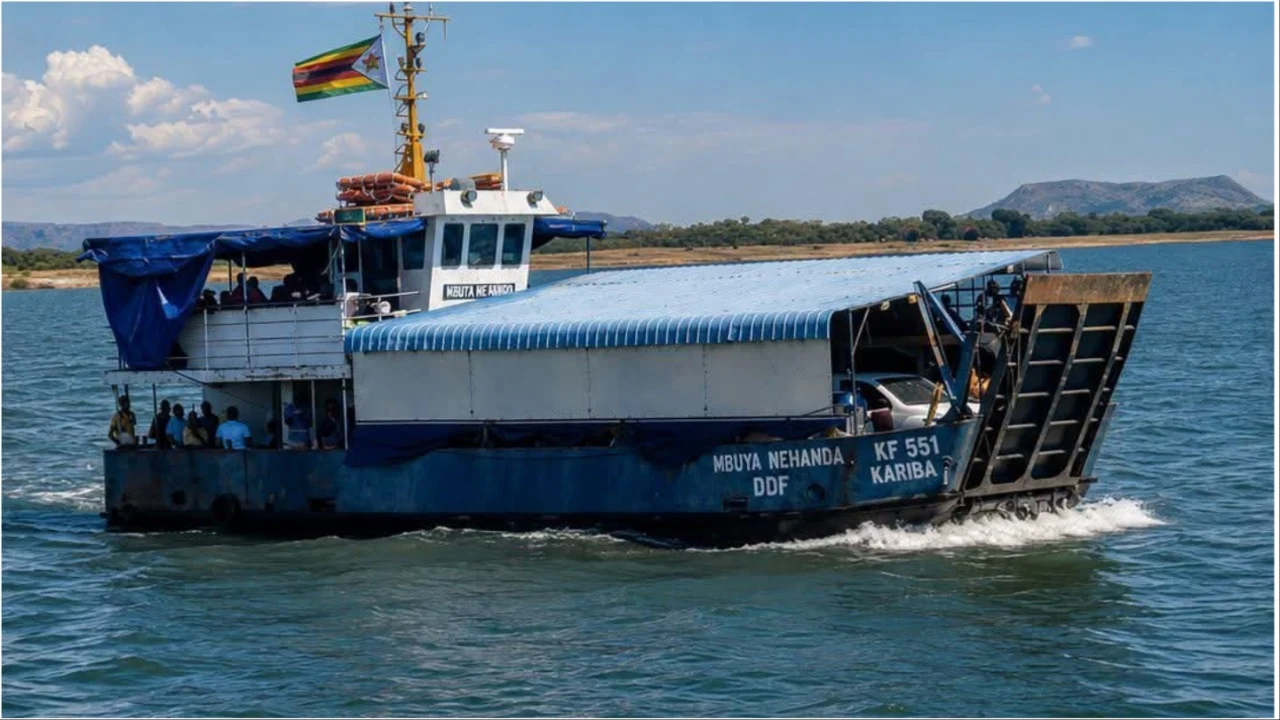
Zimbabwe Lawyers for Human Rights (ZLHR) has called for an independent investigation into the Lake Kariba ferry disaster, saying accountability must extend beyond the vessel’s operator to regulators and public institutions responsible for maritime safety.
The call comes as the death toll from Tuesday’s disaster rose to 84, after police confirmed that four more bodies were recovered from the lake on Sunday.
The ferry, operated by the Rural Infrastructure Development Agency (RIDA), capsized on August 11 while travelling from Kariba towards Charara.
ZLHR said the scale of the tragedy required authorities to establish not only what caused the ferry to capsize, but also whether regulatory and safety obligations had been met before the vessel set sail.
On this topic
The organisation said the investigation should determine whether the ferry was properly licensed and inspected, whether passenger capacity and safety requirements were observed, and whether adequate emergency procedures were in place.
“ZLHR accordingly calls on all the relevant authorities to undertake a prompt, thorough, independent and transparent probe into the circumstances surrounding the Lake Kariba ferry disaster,” the organisation said.
ZLHR said investigators should also examine whether the ferry operator, regulators, public officials or other institutions failed to discharge their duties and whether such failures could attract criminal, civil or regulatory liability.
“The probe and past accountability must extend beyond the immediate operator of the ferry,” ZLHR said, adding that any failures by regulatory authorities or public institutions to fulfil their constitutional and statutory duties should be investigated with equal seriousness.
The organisation said the findings should be made public and anyone found responsible for negligence, misconduct or regulatory failures should be held accountable.
“This tragedy must not be reduced to a statistic or allowed to fade from public attention without meaningful action,” it said.
ZLHR said the government’s responsibility extended beyond expressing condolences, arguing that authorities had a constitutional obligation to establish the truth, identify systemic failures and take steps to prevent a recurrence.
The organisation cited Section 48 of the Constitution, which protects the right to life, as well as Section 44, which requires the State and government institutions to respect, protect, promote and fulfil constitutional rights.
It also cited Section 3(2)(b), which requires the State and its institutions to uphold principles of good governance, including accountability, transparency and responsiveness.
Meanwhile, search and recovery operations are continuing, with police saying efforts remain underway to locate people reported missing.
ZLHR called for survivors to receive appropriate assistance and for the identification and recovery of victims to be carried out with dignity and respect.
“The bereaved families, the survivors and the public have a right to know what happened,” the organisation said.
“They are entitled to timely and accurate information, to expect that those responsible will be held accountable, and to access appropriate remedies and avenues of justice.”
ZLHR commended local communities, government agencies and other rescuers involved in the aftermath of the disaster, saying their efforts helped save lives.
However, the organisation said the tragedy should trigger wider reforms to Zimbabwe’s maritime safety system, including stronger regulatory oversight, enforcement and emergency preparedness.
The organisation said a comprehensive review was necessary to ensure that failures exposed by the Kariba disaster were addressed and that a similar tragedy does not occur again.






Leave a Reply