
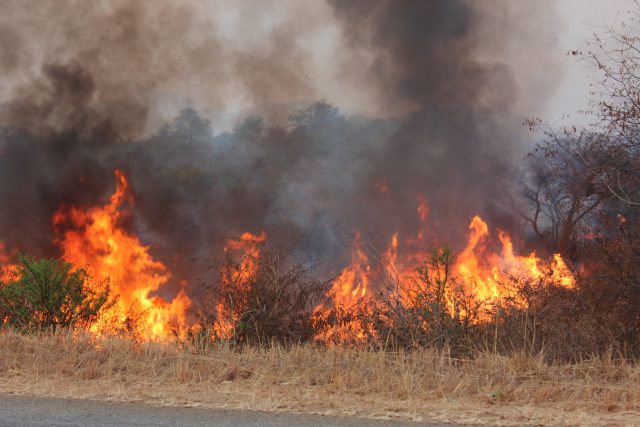
Matabeleland North and Matabeleland South remain among Zimbabwe’s three most affected provinces by veldfires, despite a national decline in fire incidents and the area of land burnt this year.
The two provinces rank second and third respectively, behind Mashonaland West, as the 2026 fire restriction period enters its final month.
The Environmental Management Agency (EMA) said 2 301 veldfire incidents had been recorded between July 31 and October 30, burning 754 017.13 hectares of land.
This represents a 22 percent decline in both fire incidents and the total area burnt compared with the same period in 2025, when 2 950 incidents destroyed 967 283.24 hectares.
On this topic
EMA Environmental Education and Publicity Manager Amkela Sidange said the continued impact on the Matabeleland provinces highlighted the need for sustained vigilance.
“The high incidence of veldfires in the Matabeleland provinces reinforces the importance of year-round preparedness and demonstrates that no province is immune to veldfires,” said Sidange.
She said the reduction in incidents and land burnt reflected progress in community participation, as well as veldfire prevention and suppression efforts.
However, EMA expressed concern over an increase in fire-related deaths, which doubled from three in 2025 to six this year.
Sidange said A1 and A2 resettlement areas accounted for the largest proportion of land burnt during the period under review.
With the fire restriction period ending on November 30, EMA has urged communities, farmers and landowners to maintain preventive measures and ensure fires do not spread beyond their intended areas.
“Starting fires during the restriction period, leaving fires unattended and failing to extinguish them are punishable offences. The use of fire outside designated residential or business premises during the restriction period is also prohibited in accordance
with Statutory Instrument 7 of 2007,” she said.
Sidange said landowners and occupiers were required to put adequate veldfire prevention measures in place and ensure fires did not escape from properties under their control.
She added that EMA would continue monitoring veldfires through real-time satellite imagery and ground-based surveillance to detect outbreaks and assess their impact.
The agency also called for sustained community participation and enforcement of fire prevention regulations to protect lives, livelihoods, property and the environment.






Leave a Reply