
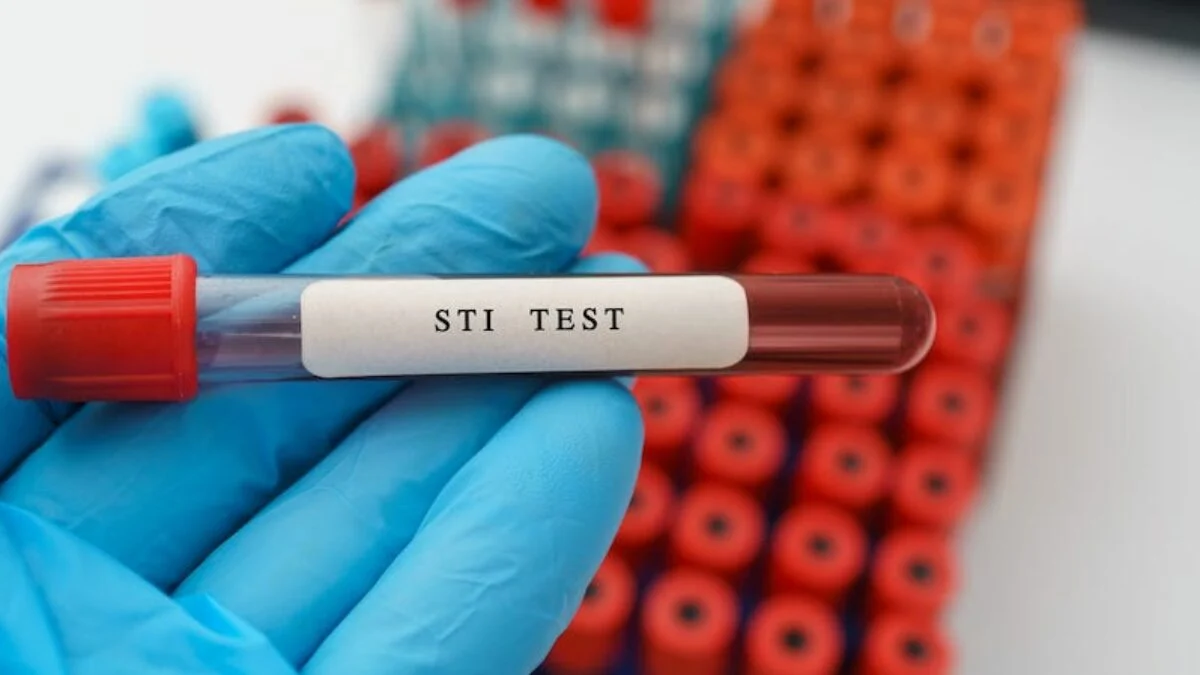
A sharp rise in sexually transmitted infections (STIs) among young people aged between 10 and 24 years in Bulawayo’s Magwegwe District has prompted the National AIDS Council (NAC) to intensify targeted interventions, including a mentorship programme aimed at adolescent boys and young men.
For NAC programming purposes, Magwegwe District covers the Magwegwe, Pumula and Lobengula areas.
Known as the Brother-to-Brother Programme, the initiative is being implemented by a youth-led organisation. Youth through a social contracting arrangement with NAC, seek to equip boys and young men with sexual and reproductive health knowledge, life skills and mentorship to reduce risky behaviour associated with HIV and STIs.
The programme represents more than an HIV prevention strategy but more of an attempt to shape a generation of informed, responsible young men capable of reducing risky behaviours and contributing positively to their communities.
On this topic
Speaking during a media engagement tour at Isilwane Youth Centre in Old Pumula on Monday, NAC Magwegwe District AIDS Coordinator Kenneth Ncube said district data collected over the past three years had revealed a worrying trend.
“Magwegwe District is made up of five wards and comprises about 150 000 people. As NAC, we implement what we call the District Response Initiative (DRI), where each district develops programmes that address challenges unique to that district,” said Ncube.
“What we do in Magwegwe may not necessarily be what is done in Bulawayo North or Nkulumane because our interventions are informed by local realities.”
Ncube said STI data collected from health facilities across the district had become a critical indicator guiding HIV prevention programming.
“If you look at the data that we are collecting from our health centres and other wards, you will find that we follow one of the most important indicators that proxies HIV infections, and that is sexually transmitted infections,” he said.
“In other words, where we are seeing an increase in sexually transmitted infections, we suspect there is also an increase in HIV infections because STIs are easier to detect and therefore guide our planning and programming.”
According to NAC data for Magwegwe District covering the period between 2023 and 2025, STI infections were largely concentrated in two age categories, those aged 10 to 24 and those aged 25 to 49.
However, it is the younger age group that is driving the increase.
“Looking at the Magwegwe programme data from 2023 to 2025, there are hardly any STIs in the age bands zero to nine and 50 years and above. However, there are many such infections in the 10 to 24 and 25 to 49 age bands,” said Ncube.
“The 10 to 24 age group contributes largely to the increases in the number of sexually transmitted infections while the 25 to 49 age band, though contributing significantly, is hardly responsible for the increase in such infections.”
He said this trend had convinced NAC that prevention efforts needed to focus heavily on adolescents and young adults.
“When looking at the overall picture of who is responsible for the increase in STIs, it is the 10 to 24 age group. The number of STI cases in this age group is increasing while the 25 to 49 age group remains relatively stable,” he said.
In an interview with CITE, Ncube attributed the trend largely to risky behaviour among young people.
“The cause is more of naughty behaviour, low-risk perception and experimenting. When these young people start engaging in sexual activity, they are mostly interacting with their peers,” he said when asked what was driving such an occurrence.
While acknowledging that some young women aged between 18 and 24 may engage in relationships with older men for financial reasons, he said younger adolescents were largely engaging in sex within their own age groups.
“If the infections were mainly coming from parents, then we would be seeing them in the zero to nine age group, but that is not the case. The infections start from the 10 to 24 age group, meaning they are either interacting among themselves or with older people,” he explained.
Ncube said HIV positivity rates in health facilities also showed that boys were testing positive at higher rates than girls in the district, prompting NAC to prioritise interventions targeting males.
“You will realise that if you look at HIV positivity rates measured from our health centres, boys have higher HIV positivity rates than girls. That is why we give the Brother-to-Brother programme a higher priority,” he said.
The district also faces challenges related to poor male involvement in prevention of mother-to-child transmission (PMTCT) programmes as well as gender-based violence, issues NAC believes can be addressed through targeted male-focused interventions.
“We have challenges of male involvement and gender-based violence, most of which are perpetrated by males. Hence, we are saying we need programming that specifically targets boys and young men,” Ncube said.
The programme initially targeted hotspots in Old Magwegwe and Old Pumula, covering Wards 18 and 19 before expanding district-wide.
“As we scaled up, we brought in .Youth to assist us so that we could cover the whole district. We worked together for a year before graduating the organisation to implement the programme across the district,” said Ncube.
Director of .Youth, Vezimpilo Ncube, said the organisation’s involvement in youth development dates back to 2012 when it was established as Bulawayo Youth Development by three young men passionate about empowering youths.
Over time, the organisation broadened its focus to include sexual and reproductive health and HIV prevention, eventually registering as a trust in 2014 under the name .Youth.
“Our mandate has always been youth development in all facets that affect young people. Through our engagement with NAC and participation in programmes such as the Young People’s Network, we developed expertise in youth health issues, which led to our involvement in the Brother-to-Brother project,” he said.
The programme focuses on adolescent boys and young men aged between 10 and 24 years.
“Mainly, the project seeks to empower adolescent boys and young men within their communities on sexual and reproductive health rights. It also seeks to give them life skills training and help them cope with life challenges so that they can contribute effectively to a better Zimbabwe,” said Ncube.
The intervention uses a community-based mentorship model in which trained mentors guide groups of young boys.
“We identify mentors within the community who each work with 50 mentees. Every year, we have 10 mentors and approximately 500 mentees participating in the programme,” he said.
Beyond mentorship, the initiative links participants to health services and encourages positive health-seeking behaviour among young men.
“We know men generally have poor health-seeking behaviours. The programme teaches boys from a young age to access sexual and reproductive health services through a referral system involving NAC partners,” he said.
Mentor, Jezreel Somandla Mpofu (31), said the programme was already making a noticeable difference in communities such as Old Pumula, where drug and substance abuse, crime and gang activity remain significant challenges.
“There is a lot of gangsterism and drug abuse in this area and many young men can easily find themselves in prison because of crime and drugs. But through the Brother-to-Brother programme we have seen boys coming forward to attend programmes at the centre and participate positively in community activities,” he said.
He said many participants now voluntarily engage in community service and health-related activities while becoming more conscious of their health.
“Most of them end up knowing their HIV status because through our sessions they are encouraged to get tested. They begin to understand that health matters and that they should take responsibility for their future,” he said.
“In the past years we have had many mentees who have gone for HIV testing and know their status by the end of the year, which is very important.”








Leave a Reply