
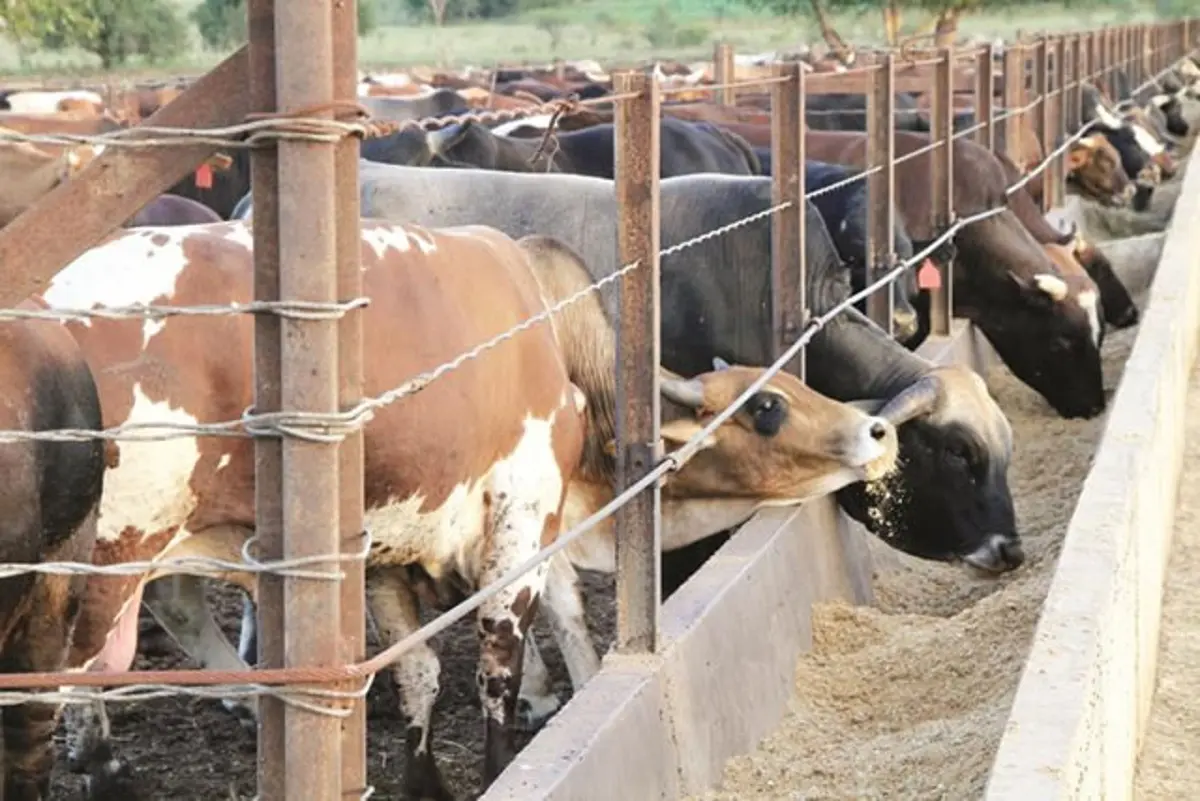
Farmers have been urged to reduce unproductive cattle, conserve livestock feed and protect water sources as concerns grow over erratic rainfall during the El Niño season.
Animal specialist Nqobani Manyabi told CITE that some farmers were behind schedule in preparing for the dry season, warning that anticipated rainfall might not be enough to sustain crops and livestock.
“There are strategies to mitigate drought in cattle, and what we have realised is that most people and some of our clients are a bit late in terms of preparation for the drought season. The first thing that we have to understand is that we are already in the El Niño season. The season started in June. By this time, the rains should have started. Reports are saying that the rains will be erratic, meaning that the rains we are going to receive won’t be able to support our crops or support our animals,” Manyabi said.
He said farmers should prioritise the quality of their herds over the number of cattle they own, as large herds place greater pressure on limited feed and water supplies during droughts.
On this topic
“We have to live by new rules. The first rule that we have to adhere to is that we have to shift from quantity to quality because drought punishes big herds. If you have many cows, many animals, drought is going to punish you heavily because there are not enough feed resources that are there in the field, and because water may be highly scarce. You have to remove cows that are highly unproductive. You cannot keep cows that skip their time of giving birth, or a cow that gives birth to a young calf that is below the weight of your farm goals. You cannot keep cows that are always sick. You have to downsize and keep quality cows,” Manyabi said.
Manyabi urged farmers to assess their available feed and determine whether it would sustain their cattle until December or January if the rains failed to arrive by then.
“You have to evaluate your feed resources. You have to see how much feed or grass you have and if they are going to sustain your cows until December or January, that’s if the rains don’t come during these months. Water is now your number one crop. It is the most important thing in your operation. If there are taps that are leaking, if cows destroy the pipes, they must be fixed. You have to protect your water sources and make sure that you reduce that distance that your animals walk to go and get water so that they preserve energy. We recommend that you have one water point per ten hectares, In fact, for every hectare, there should be a water point,” Manyabi said.
He also encouraged farmers to grow drought-resistant fodder crops and conserve crop residues to supplement livestock feed during dry periods.
“Some may plant spineless ‘Cartus’ and ‘doriffeya’, which have about 80 percent of water, so if your animals take that, they will need less water. On another note, feed is something that you make, not something that you buy, meaning you have to conserve hay bales. You have to conserve your hay bales and get the leaves of maize combs and stock as much as possible. You have to conserve crop residues and fortify those crop residues and use a urea treatment to sustain your crops,” he said.
Manyabi said treating crop residues with urea could improve their nutritional value and help livestock make better use of materials such as straw and maize stover when feed is scarce.
“Urea, when used for treatment of stover/straw, enhances the nutritional quality of straw in terms of increased nitrogen content, improved palatability and digestibility,” he said.
He outlined a method for treating crop residues using urea and water to improve their suitability as livestock feed.
“The general guidelines are that one must have 1,000kg of stover, which requires 50kg of urea. Two hundred litres of water can be used. Water is important for hydrolysis of the urea. Weigh 1,000kg of dry stover to be gradually added into the pit covered with black polythene plastic. Add the dry stover in stacks of 100 kg stover. Each stack should be sprayed with 20 litres of water and then compacted. Compaction improves the ammoniation process and reduces chances of mould growth. Cover the stover with a black plastic and put soil on top. The duration of treatment can take 21 to 35 days, depending on the season and temperature. Put the treated stover in a shade for seven days before feeding it to animals,” he said.
He said several types of crop residues could be treated, with the greatest benefits expected from materials with low nutritional value before treatment.
“On the type of crop residue used, many crop residues can be used, ranging from wheat straws, rice straws and maize stover. The poorer the initial quality of the stover/straw used, the higher the effect of the treatment. Research shows that by replacing a large amount of untreated stover with treated stover, animals of 100–150kg body weight will lose 50–100g/day if fed on only untreated stover, whereas they will gain 50–100g/day when fed on treated stover alone,” he said.







Leave a Reply