

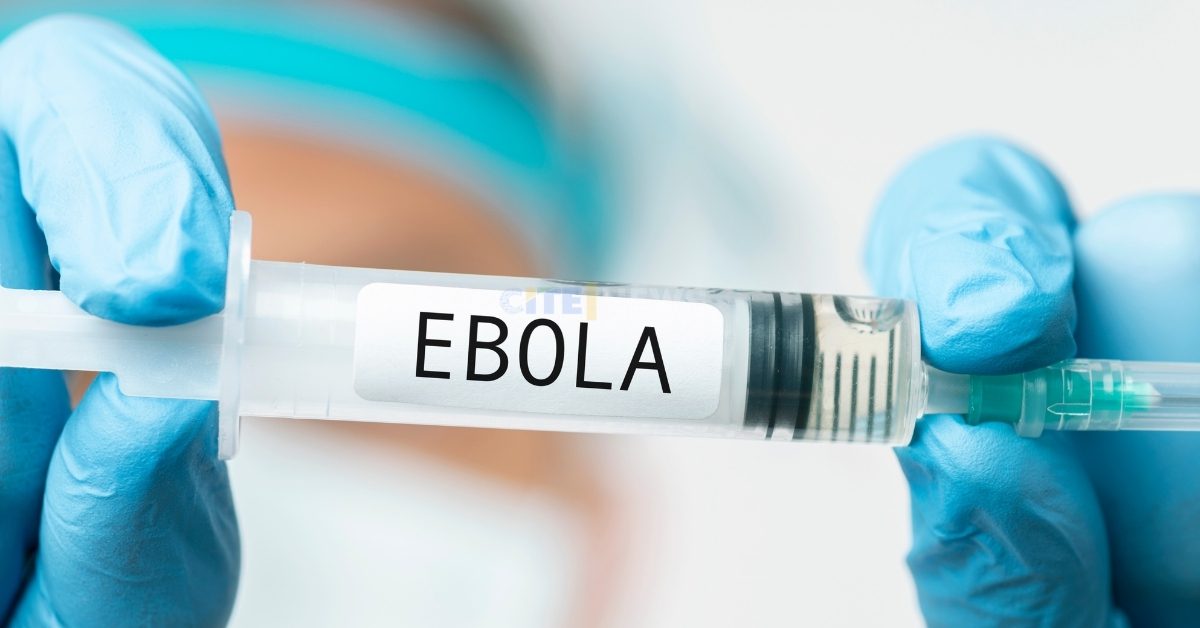
The World Health Organization (WHO) says it could take up to nine months before a vaccine against this particular species of Ebola is ready.
Two possible “candidate vaccines” against the Bundibugyo species are being developed, but neither had gone through clinical trials yet, WHO adviser Dr Vasee Moorthy said on Wednesday.
WHO chief Dr Tedros Adhanom Ghebreyesus said there had been 600 suspected cases of Ebola and 139 suspected deaths but numbers were expected to rise given the time taken to detect the virus.
Speaking to journalists in Geneva, he said 51 cases had been confirmed in the Democratic Republic of Congo – where the first case was reported – and two in neighbouring Uganda.
On this topic
On Sunday, the WHO declared a public health emergency of international concern, but said it was not at pandemic level.
Tedros said that after meeting on Tuesday, the health organisation’s emergency committee agreed the situation was “not a pandemic emergency”.
“WHO assesses the risk of the epidemic as high at the national and regional levels and low at the global level,” he explained.
How worrying is the Ebola outbreak in DR Congo?
The 51 cases confirmed in DR Congo are in its eastern Ituri province – the epicentre of the outbreak – as well as North Kivu province. Of the two confirmed in Uganda’s capital, Kampala, both had travelled from DR Congo, one of whom has died.
“We know the scale of the epidemic in DRC is much larger,” the WHO chief said, adding that healthcare workers were among those who had died, which was a particular concern.
Local health workers say some facilities are being overwhelmed. Although personal protective equipment has started to arrive, they say they are still working without adequate protection.
Trish Newport, a Médecins Sans Frontieres (MSF) emergency programme manager, said health facilities were telling them: “‘We are full of suspect cases. We don’t have any space’.
“This gives you a vision of how crazy it is right now,” she told AFP news agency.
The UK government has announced it will provide up to £20m ($27m) to help to contain the outbreak. The money will pay for frontline health workers, improvedinfection control and disease surveillance.
Originally Published by: https://www.bbc.com/news/articles/cwy2g197dp8o






Leave a Reply