
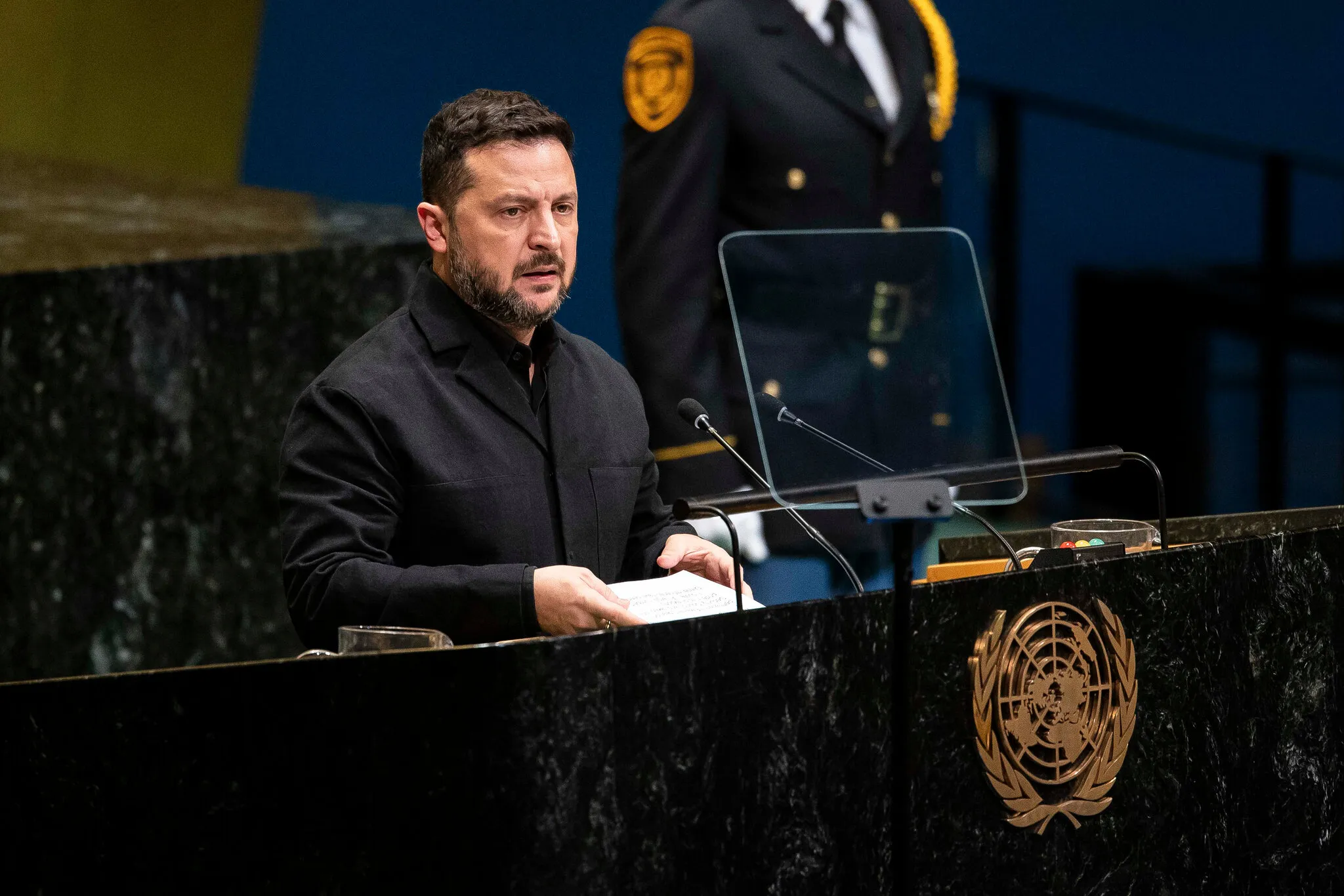
Ukrainian President Volodymyr Zelensky has called on the governments of 47 countries, including Zimbabwe, to protect their citizens from being drawn into Russia’s war against Ukraine, highlighting the international scale of a recruitment operation already documented by CITE.
Addressing the United Nations General Assembly in New York on September 23, Zelensky named Zimbabwe alongside India, Nepal, Ghana, Cuba, Yemen, Kenya, Belarus, Sudan, South Africa and Tajikistan among countries whose citizens have been recruited into Russian military units.
“I want to speak directly to every representative of these 47 countries… you know what Russia is doing with your people, your citizens. Take care of them,” Zelensky said.
He accused Russia of using financial incentives, deception and trafficking networks to recruit foreign nationals as it seeks additional manpower for the war.
On this topic
Zelensky said some foreigners were taken to Russia after being promised civilian employment or education before being pressured or coerced into joining the military and being deployed to fight in Ukraine.
His remarks bring international attention to a recruitment problem that CITE has previously investigated in Zimbabwe, including cases involving people who were allegedly deceived into travelling to Russia for civilian jobs.
A CITE investigation found that prospective recruits were approached through WhatsApp, Facebook and Telegram and offered jobs such as firefighting and truck driving, with some promised lucrative salaries and employment opportunities.
Some recruits later found themselves confronted with military contracts and deployment to the frontline after arriving in Russia.
However, CITE’s reporting has also established that not all Zimbabweans involved in the Russian military were deceived, with some joining the armed forces knowingly and voluntarily.
The recruitment issue has also exposed the difficulties faced by families after relatives leave Zimbabwe for Russia.
CITE subsequently reported on the arrest of suspected recruiters and the struggles families faced in securing the repatriation of relatives who died in Russia.
The cases have raised broader questions about what happens to foreign recruits once they enter the Russian military system, particularly when communication with their families is cut off or they go missing.
The United Nations Independent International Commission of Inquiry on Ukraine has also raised concerns about the recruitment of foreign nationals into the Russian armed forces.
In a statement released this week, the commission said it was investigating the recruitment of foreigners from several countries who were allegedly deceived by agents and intermediaries into travelling to Russia for civilian employment before being compelled to sign contracts with the Russian Ministry of Defence.
The commission said many recruits did not understand Russian or the terms of the contracts they signed.
“Many among the recruits died shortly after reaching the frontlines, were reported missing, injured, or were taken prisoners by Ukrainian armed forces,” the commission said.
It added that families were often left thousands of kilometres away trying to establish what had happened to their relatives, while recruitment agents allegedly blocked their calls.
The commission also said some foreigners already in Russia, including people serving prison sentences, were allegedly coerced by Russian authorities into joining the war.
The findings are consistent with a September 10, 2026 report by Amnesty International, which documented cases involving nationals from Brazil, Colombia, Egypt, Sierra Leone, Somalia, South Africa and Sri Lanka.
Amnesty identified two broad recruitment pathways.
The first involved foreigners being recruited in their home countries through promises of civilian employment in areas such as security, construction, logistics, driving and information technology.
Some were also promised high salaries and expedited access to Russian citizenship.
The second involved migrants already in Russia who were vulnerable because of precarious immigration or financial circumstances.
Amnesty documented cases in which migrants were allegedly offered military contracts as an alternative to penalties, detention or deportation.
The organisation said some recruits had their passports or phones confiscated and were sent to combat zones with limited military training.
Amnesty also found that promises of Russian citizenship were an important incentive for some foreign nationals, particularly those who believed citizenship could provide access to better economic opportunities.
Zelensky’s remarks therefore place Zimbabwe’s already documented experience within a wider international picture, with governments of the 47 countries now being urged to examine how their citizens are being recruited and what happens to them after they enter the Russian military system.
The UN commission is expected to present its full findings to the General Assembly in October.








Leave a Reply