
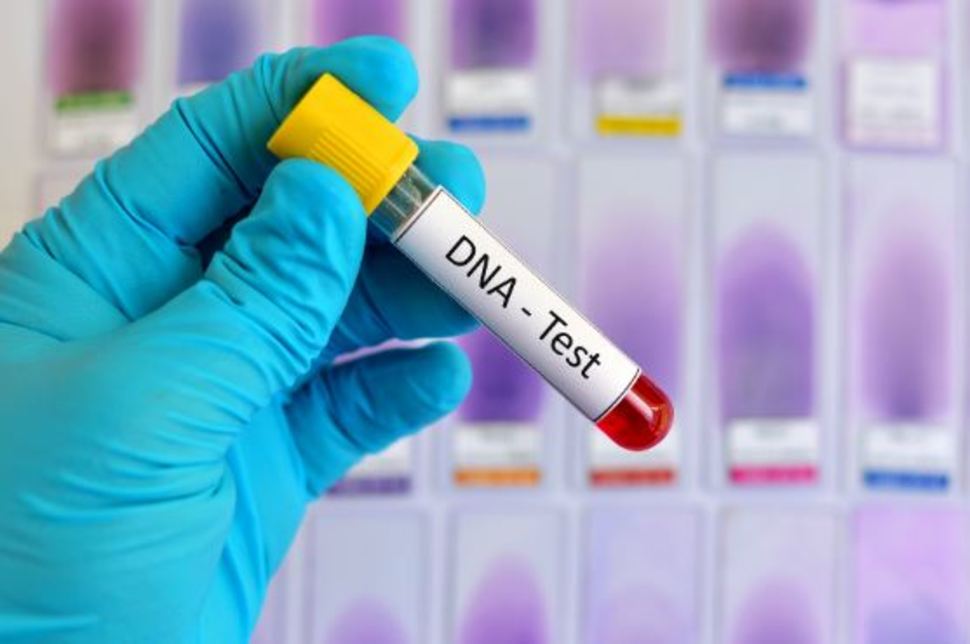
Grieving families from across Zimbabwe gathered at the Bulawayo Registry Office on Tuesday to provide DNA samples to help identify relatives who went missing or were reportedly killed after they were recruited to fight for Russia in its war against Ukraine, in a process that could bring them closer to bringing their loved ones home.
Some travelled from Beitbridge, Jotsholo, Lower Gwelo and Masvingo, while others came from Bulawayo and surrounding areas for the exercise, which the Ministry of Foreign Affairs and International Trade scheduled for 13 and 14 October 2026.
The atmosphere was heavy with grief and hope, some relatives arrived visibly distressed and broke down in tears as accompanying family members comforted them and urged them to remain strong.
These families have spent months seeking answers about relatives whose whereabouts or deaths remain uncertain and the exercise offered a measure of hope.
On this topic
However, it remains unclear when identification will be completed and repatriation can take place.
In a notice announcing the exercise, the ministry said the preferred DNA sample was from the deceased person’s biological mother, as this provides the most suitable reference for the identification process.
“If the biological mother is unavailable, a biological sibling who shares the same mother as the deceased may provide a sample. Where neither the biological mother nor a maternal sibling is available, other close biological relatives may be considered, subject to assessment by the forensic team on a case-by-case basis,” said the ministry..
“Families are therefore encouraged to identify and, where possible, arrange for the most appropriate, available relative to attend the DNA collection exercise.”
Participants were required to bring their original national identity documents, photocopies and, where available, identification documents belonging to their missing or deceased relatives.
The exercise comes about six months after the government pledged to assist Zimbabweans caught up in the conflict, as families continued to face uncertainty over the identification and repatriation of their relatives.
CITE reporting has documented how families spent months seeking answers about relatives reportedly killed while fighting for Russia, with some bodies believed to be lying in Moscow. Their efforts to secure repatriation involved submitting documents and making repeated approaches to officials in Zimbabwe and Russia, often without clear information about timelines or which institution was responsible for coordinating the process.
Read: https://cite.org.zw/zim-
The DNA exercise is a potentially important step, but identification is only one part of the process.
Families still need clear timelines, regular communication about the results and a plan for bringing their relatives’ remains home.
Relatives who attended the exercise said their grief was compounded by the fact they had not known their loved ones were travelling to Russia.

A 20-year-old man from Masvingo, who provided a sample on behalf of his family because his mother was in South Africa, said his 22-year-old brother had travelled to Russia in January and died the following month.
“I didn’t even see him at Christmas when he came last year. I was busy with a piece job, not knowing that would have been my last time to see him. He went in January and died in February,” he said.
CITE has obtained the names of families who attended the DNA testing exercise and their missing or deceased relatives but has withheld them out of respect for the ongoing identification and repatriation process.
A mother from Jotsholo said she had not known her son had travelled to Russia until after he left.
“He was in South Africa, then he came back to sort his documentation fast and went around March,” she said.
Another woman from Lower Gwelo said her brother had been a teacher before leaving for Russia in December.
He went missing on 29 January 2026, she said.
“I don’t know what overcame him to leave his teaching job,” she said.
She was comforted by a man whose nephew had also travelled to Russia, saying the prospect of earning substantial money had attracted the young men.
“At least he sent 500 000 rands before he died,” the uncle said, adding that the young man’s mother had refused to attend the DNA testing exercise because she did not believe the process was genuine.
The woman, however, said her brother had not sent the family any money, adding perhaps he might still have been trying to work out how to do so.
Their accounts illustrate the different experiences of families whose relatives left in search of better opportunities but ended up in a conflict zone.
Other relatives said their concerns extend beyond identification and repatriation to the welfare of children left behind.
One mother whose son reportedly died in Russia asked whether the government would provide compensation or other assistance to support his children.
“Is there some sort of compensation so that the children are at least taken care of?” she asked.
Her question highlights the need for the government’s response to extend beyond bringing remains home to include support for dependents and families left with the financial and emotional consequences of the deaths.
The recruitment of Zimbabweans to Russia has drawn growing official attention following investigations, including CITE’s reporting, which documented how people seeking employment were allegedly lured abroad through deceptive job offers, with some subsequently finding themselves fighting in the war against Ukraine.
Many of those affected were recruited from South Africa, where they had been working in different sectors.
Among the cases described by relatives were a teacher, an Uber driver and a worker in the tanning and milling sector.
Last week, the government renewed its warning against deceptive overseas recruitment, urging job seekers to verify employment offers and remain alert to increasingly sophisticated criminal networks.
Police have also said they are engaging regional and international partners, including through the Southern African Development Community and Interpol, to address human trafficking.
In September, President Emmerson Mnangagwa announced plans for a Trafficking in Persons Amendment Bill targeting transnational syndicates advertising fraudulent overseas employment opportunities.
Read: https://cite.org.zw/mnangagwa-
The DNA exercise offers families a possible route towards identifying their relatives and bringing their remains home, while providing a first step towards answers after months of uncertainty.
However, the government has yet to demonstrate publicly it has a fully coordinated system capable of providing families with clear timelines, consistent communication and comprehensive support.
Meanwhile, the Ministry of Foreign Affairs and International Trade encouraged families to attend the exercise on either of the two scheduled dates and said those seeking clarification could contact its consular services department.
“For any clarification regarding the DNA sample collection exercise, the family may contact Mr T. Gumisai on +263 242 780748 or email consularservices@zimfa.gov.zw,” the ministry said.






Leave a Reply