
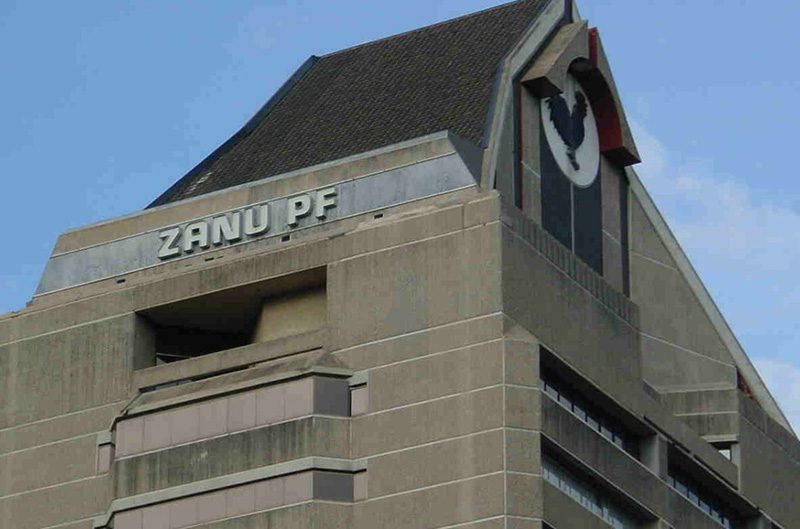
Zimbabweans have criticised a Zanu PF resolution directing the government to make sure all candidates seeking employment in public institutions are recommended by the ruling party, warning that the move could undermine merit-based recruitment, equal opportunities and the political neutrality of the civil service.
The resolution, adopted at the party’s 23rd National People’s Conference held at Chinhoyi University of Technology in Mashonaland West from October 12 to 17, has drawn criticism from members of the public who argue access to public-sector jobs should be determined by qualifications, experience and competence rather than political affiliation.
The resolution, listed under the state of the party in the conference outcomes, states that Zanu PF “directs the Government to ensure that all candidates for employment in public institutions be recommended by the Party.”
Members of the public who reacted to the resolution online questioned why citizens should be expected to fulfil their tax obligations if political affiliation could determine their access to public employment.
On this topic
“If it is like that, kindly direct the Government to only collect taxes from Zanu PF card carrying members. If all Zimbabweans are liable for taxation, every Zimbabwean must have equal opportunity for jobs. Reserved employment must be strictly to Zanu PF entities,” Morgen Munsaka said.
Tawanda Mupindu echoed the sentiment, saying the government should also collect taxes exclusively from Zanu PF members if access to public employment was to be tied to party affiliation.
Kenny Chirandu, however, suggested that the resolution formalised a practice he believed had existed for decades.
“It’s just a resolution but this has been happening since 1980,” Chirandu said.
Others raised concerns about the potential implications for the quality of public services, arguing recruitment decisions should prioritise professional expertise.
“Engineers, pilots, doctors and so on waiting for Zanu PF to decide their employment. Incompetence is spread throughout all public institutions,” one commentator said.
Another identified as Dzikamayi similarly questioned the quality of public administration, saying: “The level of incompetency at every level of government and service delivery says it all.”
Raphael Chipanga argued political recommendations should not determine who is employed in the public service.
“No wonder why we end up with incompetent people in the public service. Any job offered should be on merit and not partisan,” he said.
Another commentator, identified as James, questioned the rationale for professional recruitment procedures if political loyalty was to become a determining factor.
“When one is due to be hired there must be a skill, qualifications, experience for one to be hired. Recruiting HR officers go through a four year degree course to select an individual for a task,” he said, adding that hiring someone merely because they could recite party slogans would be wrong.
The criticism also extended to concerns about accountability and the implications of political influence over public institutions.
Collen Chikore said the resolution raised questions as to whether public servants would be expected to demonstrate loyalty to the ruling party rather than serve the public impartially.
“This is not right at all. We all know what they’re implying: if someone works for the government, they’re going to be a party member. Who is going to hold the government accountable? This is going to be biased,” Chikore said.
Abednico Siazyaba Mwembe described the resolution as evidence of what he regarded as disregard for legal and institutional safeguards, arguing that the country needed to address the implications of party control over public administration.
In an interview with CITE, political analyst, Dr Vusumuzi Sibanda, drew parallels between the resolution and concerns over the distribution of food aid and agricultural inputs, alleging government assistance had previously been directed towards Zanu PF supporters in rural areas.
“Indeed, government is for all people including those supporting other parties,” he said, arguing that using state resources to benefit ruling-party supporters amounted to patronage.
His comments highlighted a broader concern which was public institutions and resources should serve citizens regardless of their political affiliations.
The debate comes against the backdrop of constitutional provisions governing public administration and recruitment in Zimbabwe.
Section 194 of Zimbabwe’s Constitution requires public administration to uphold impartiality, fairness and equitable service delivery.
It further states that employment, training and advancement practices must be based on merit, ability, objectivity and fairness, while appointments to public offices must be made primarily on merit.
Section 200 also prohibits members of the Public Service from acting in a partisan manner or using their functions to further the interests of a political party.
It requires legislation to safeguard the political neutrality of the Public Service.
This resolution, however, does not by itself establish that the government has changed its recruitment procedures or that political recommendations have become a legal requirement for appointment.
Its implementation would raise questions about how the directive would interact with the constitutional principles governing public-sector employment.
The party has not, in the resolution itself, set out how recommendations would be made, what criteria would be used or how candidates who are not Zanu PF members would be treated.
The Zanu PF conference was held under the theme, “From Resolutions to Results: Consolidating Economic Development and Deepening Empowerment Towards Vision 2030.”
One of the ruling party’s major resolutions was to defer its elective congress from 2027 to 2029, keeping President Emmerson Mnangagwa as party leader until 2030.
This move aligned the Zanu PF constitution with the Constitution of Zimbabwe Amendment Number 3 Act (CAA3), which extended his presidential term by two years beyond 2028.
Other resolutions were measures relating to agricultural production, land administration and economic policy.








Leave a Reply