
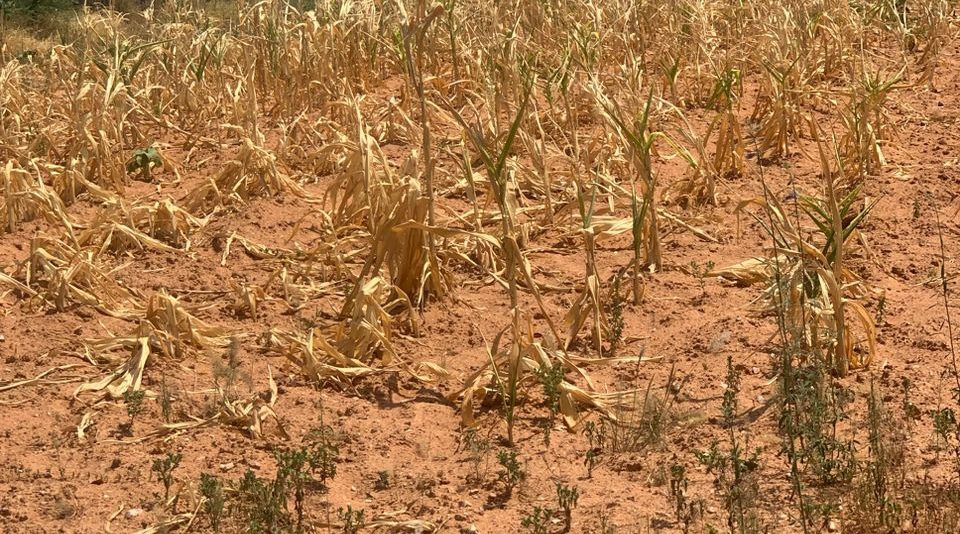
More than 18 million people in East and Southern Africa could face worsening food insecurity as a strengthening El Niño weather pattern threatens to disrupt rainfall, agriculture and food production across the region, the United Nations World Food Programme (WFP) has warned.
According to the latest WFP analysis, the two regions could record a 26 percent deterioration in food security, with communities that depend heavily on rain-fed agriculture particularly exposed to the impacts of drought, flooding and extreme temperatures.
The statement warns that the effects of El Niño could extend into 2027, even though the weather phenomenon is expected to peak between September and December this year.
“El Niño is a massive threat to the food security of millions who are already vulnerable. The sooner we help families to prepare for these climate shocks, the greater our ability to save lives and protect livelihoods,” WFP Acting Executive Director Carl Skau is quoted in the statement.
On this topic
“Severe floods and droughts can quickly push communities from coping to crisis. The WFP is already ramping-up early response efforts in eight countries and is prepared to expand its interventions.”
The WFP said severe floods and droughts could rapidly push vulnerable communities from being able to cope with shocks into humanitarian crisis, noting that East and Southern Africa face substantial risks because upcoming rainy seasons will be critical for food production.
“Southern African countries are particularly exposed because many households depend on rain-fed subsistence agriculture,” the statement read.
The warning comes as several countries in the region continue to grapple with the effects of previous climate shocks, while poverty, economic instability and other vulnerabilities could limit communities’ ability to withstand another major disruption to food production.
WFP said the impact of El Niño would not be uniform, with some countries already experiencing below-average rainfall, flooding and unusually high temperatures, while others could face worsening conditions during upcoming planting seasons and harvests.
Globally, WFP’s analysis of 45 countries already considered food insecure projects that the number of people facing acute food insecurity could rise from approximately 225 million to 274 million by the end of 2027.
This represents an increase of about 49 million people, or approximately 22 percent.
“The largest impacts are expected in parts of Central America and southern Africa. Significant effects are also anticipated in Eastern Africa and parts of South and Southeast Asia.
The analysis estimates that more than 16 million people could be affected in Latin America and the Caribbean, while Asia and the Pacific could see an additional 8.2 million people facing acute food insecurity.
West and Central Africa could see food insecurity rise by 12 percent, affecting nearly six million additional people.
The projected impact has prompted WFP and its partners to step up anticipatory action, with the agency saying early interventions can reduce the humanitarian and economic costs of climate shocks.
“WFP and its partners are taking early action now, preparing for floods, droughts, and storms before they hit, to reduce humanitarian needs. There are active anticipatory action plans in more than 50 countries and we are working with governments and partners, including the Food and Agriculture Organisation of the United Nations (FAO), to strengthen preparedness,” the statement read.
Since May, WFP says it had triggered anticipatory action plans in South Sudan, Chad, Mauritania, Uganda, Guatemala and El Salvador, providing more than US$14 million in life-saving assistance to about half a million people.
WFP and FAO have meanwhile appealed for increased support to help vulnerable communities prepare for El Niño before climate shocks escalate into humanitarian emergencies.







Leave a Reply