
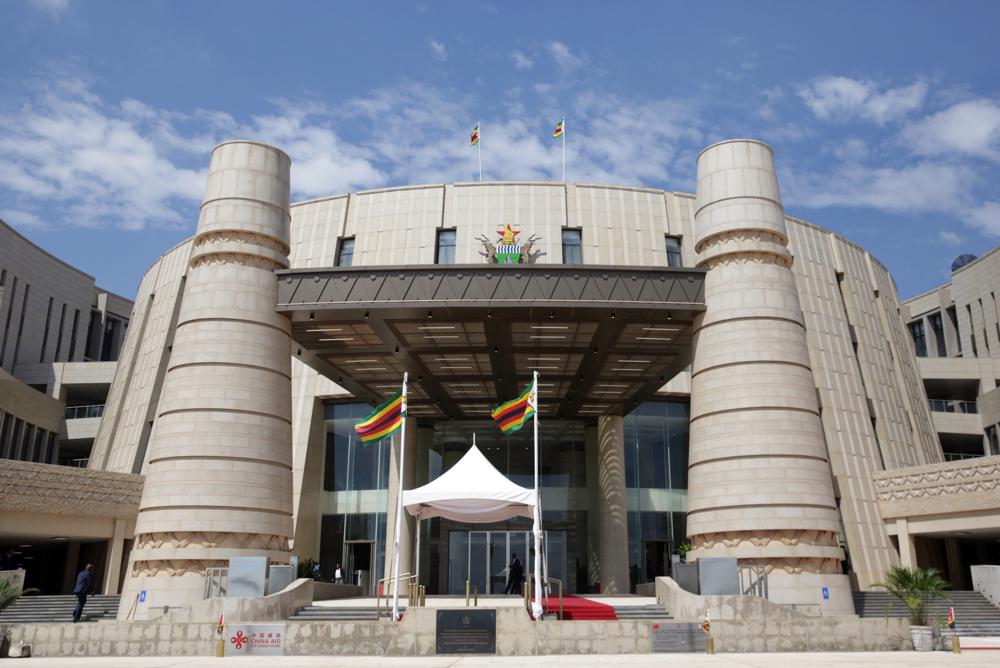
Political activists and opposition leaders have intensified calls for Members of Parliament to reject Constitution Amendment Bill No. 3 (CAB3), urging legislators to place the national interest above partisan considerations and fulfil their constitutional duty to protect the country’s supreme law.
The calls come amid growing debate over the controversial constitutional amendment, which threatens constitutionalism, democratic accountability and rights of citizens.
In a joint statement titled “The People Have Spoken,” Assembly of Minorities leader, Chilumbo Mudenda and political activist Bhekimpilo Mbedzi said Parliament had a responsibility to listen to citizens who have expressed concerns over the proposed amendments.
“The voice of the people is the foundation of democracy,” the statement read.
On this topic
“Any attempt to undermine the Constitution, disregard the will of citizens, or extend political power outside constitutional principles is a direct challenge to the democratic aspirations of the people of Zimbabwe.”
The two activists said Zimbabwe’s Constitution belongs to citizens and should not be altered in ways that benefit individuals currently holding public office.
“We reaffirm our commitment to constitutionalism, democracy, accountability and the rule of law,” they said.
“The Constitution belongs to the people and its provisions must be respected by all institutions and leaders without exception.”
Drawing parallels with the events that led to the removal of former President Robert Mugabe in 2017, Mudenda and Mbedzi said citizens had previously mobilised in large numbers under the belief that constitutional principles were defended.
“In 2017, the military was presented as having acted to defend the Constitution and restore legality. During Operation Restore Legacy, citizens took to the streets in large numbers and supported what was described as a constitutional process,” they said.
“The participation of the people was a significant factor in shaping the events of that period.”
They argued the defence of constitutionalism today should be driven by citizens through peaceful and democratic means rather than through extraordinary political interventions.
“Today, we believe that the defence of the Constitution must be led by citizens through peaceful, lawful and democratic means,” they said.
The activists specifically cited Section 328(7) of the Constitution, which bars incumbents from benefiting from constitutional amendments that extend terms of office.
“The Constitution of Zimbabwe is clear. Constitutional amendments must serve the nation and future generations rather than individuals currently holding office,” the activists said.
The statement also expressed concern that institutions tasked with safeguarding constitutional democracy have not adequately responded to concerns raised by citizens.
“We are concerned that some institutions which are expected to protect constitutionalism and democracy have failed to adequately respond to the concerns of citizens,” they said.
“We believe the Constitution represents a sacred trust between the people and those entrusted with public office and that this trust must be respected at all times.”
Mudenda and Mbedzi said they were closely monitoring developments around the proposed constitutional amendments and warned against any process that weakens constitutional safeguards.
“In our view, any process that seeks to undermine constitutional principles, democratic accountability, and the rule of law should be rejected by the people of Zimbabwe,” they said.
The activists reserved their strongest words for MPs, reminding them that their constitutional obligation is to represent citizens rather than political interests.
“We call upon Members of Parliament to act in the national interest and in accordance with their constitutional obligations,” they said.
“Their responsibility is to represent the will of the people and to protect the Constitution.”
The activists also urged Zimbabweans to remain engaged in the constitutional debate through peaceful means.
“We therefore call upon all Zimbabweans to remain vigilant and to exercise their constitutional rights responsibly and peacefully,” they said.
“Section 59 of the Constitution guarantees the right to peaceful assembly, demonstration and petition. These rights are fundamental pillars of a democratic society.”
Their intervention comes as MDC leader and constitutional lawyer, Douglas Mwonzora, also appealed directly to parliamentarians, arguing MPs must think beyond personal or party interests when deciding CAB3’s fate.
“To the MPs, I say they should not think about themselves. They should think about Zimbabwe,” Mwonzora said.
Referring to constitutional provisions governing Parliament, Mwonzora said legislators were elected to pursue the good governance of the country and remain accountable to their voters.
“I refer them to the sections that deal with the powers of Parliament, that says Parliament exists for the good and just governance of Zimbabwe,” he said.
“MPs have a responsibility to their electorate. What are their electorate saying? Their electorate are saying they don’t want Amendment No. 3.”
Mwonzora singled out opposition senators, arguing they currently hold the balance of power in determining whether the bill succeeds.
“Zanu PF does not have a two-thirds majority in the Senate. In fact, it needs about four MPs from the CCC for it to have a two-thirds majority. If the CCC in the Senate were to vote no, that would be the end of CAB3,” he said.
He noted that opposition lawmakers were carrying a significant historical responsibility.
“The CCC right now, as the representative of the opposition, is bearing great historic responsibility,” Mwonzora said.
“This thing is there in their hands. They can stop this CAB at the stroke of a pen within the Senate. They don’t even have to vote. If they abstain, they will carry the day and all of this headache will be behind us.”
Mwonzora also appealed to ruling party legislators, particularly those with liberation struggle backgrounds, to consider the long-term implications of the proposed changes.
“We know there are quite a number of them that do not agree, especially those who were freedom fighters or associated with freedom fighters,” he said.
“They know that one of the ideals of the liberation struggle was the right to vote, one man, one vote, universal suffrage. All that is going away.”
He warned the amendments would concentrate excessive authority in the presidency and weaken democratic checks and balances.
“There are far-reaching consequences. We now have a President who will be wielding a lot of power in electoral issues. He selects the person who registers the voters, he selects singularly the people who delimit the constituencies. That is an immense power,” Mwonzora said.
Addressing Zimbabweans who have become discouraged by the political process, Mwonzora urged citizens not to lose hope.
“As Zimbabweans, if we unite, we will defeat CAB3. It may look impossible. It may look insurmountable but there is one encouragement. It is the timidity of the wielders of power,” he said, noting that the actions of those in power reflected insecurity rather than strength.
“They are afraid. That is why they are resorting to unfairness, incarceration of people, threatening people with death and so on. They are an insecure regime and therefore we must keep knocking.”




Leave a Reply