
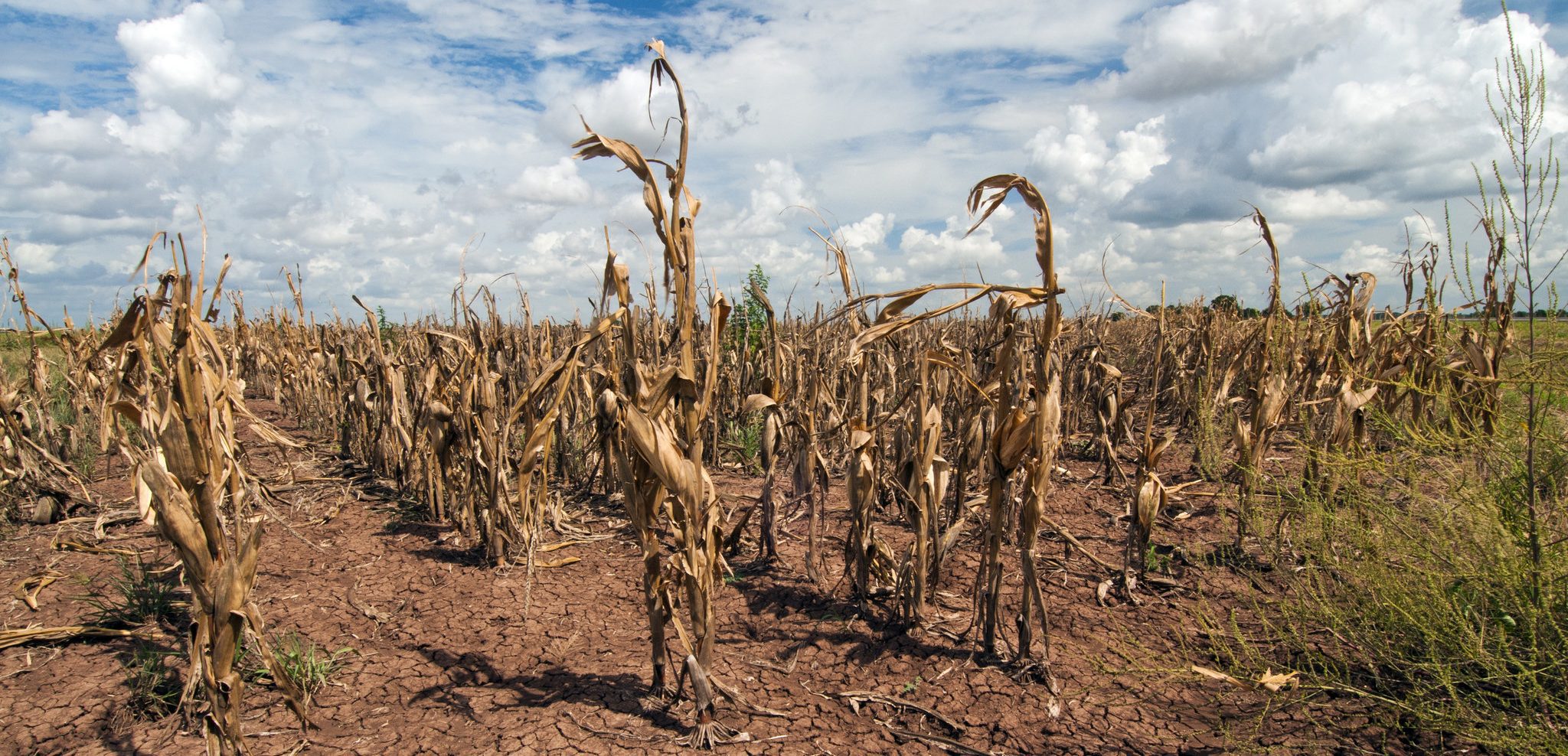
The Zimbabwean government says it is preparing for a possible super El Niño that could bring below-average rainfall and severe drought during the 2026-27 farming season, with Cabinet approving a six-point response plan aimed at protecting food security, agriculture and livelihoods.
Responding to a question in the National Assembly on Thursday from MP Felix Maburutse on the country’s preparedness for the coming agricultural season, Minister of Agriculture, Mechanisation and Water Resources Development, Dr Anxious Masuka, said global climate experts were unanimous that a super El Niño was likely to develop, although its impact on Zimbabwe would only become clearer after regional seasonal forecasts are released next month.
“There is a convergence of opinion among world experts in climate that there is a 100 percent chance of a super El Niño occurring in the world. For Southern Africa and Zimbabwe specifically, these super El Niños ordinarily translate to 88-92 percent drought and elevated heat waves during the summer season.
“At this stage, we are 100 percent certain that there will be below-average rainfall. What we are not yet 100 percent sure of is the magnitude of that El Niño season,” he said.
On this topic
Masuka said meteorologists from the Southern African Development Community (SADC) would meet in Namibia next month, with Zimbabwe expecting both regional and national seasonal forecasts by the end of August.
Although the severity of the drought remains uncertain, he said Cabinet had already approved a mitigation strategy based on six pillars.
Grain reserves and climate-smart farming
The first pillar focuses on strengthening the Strategic Grain Reserve (SGR), with the government aiming to increase grain stocks to 600,000 metric tonnes by mid-2027.
Masuka said the target reflected lessons learned from the 2023-24 El Niño-induced drought, when the government mobilised 328,000 metric tonnes of grain to assist 6.5 million food-insecure people.
The second pillar centres on expanding climate-smart agriculture through the Pfumvudza/Intwasa conservation farming programme and aligning crop production with agroecological regions.
“What is grown by a farmer must be determined by the exigencies of the region and not what the farmer wants,” Masuka said.
He said the government would also accelerate irrigation development. Zimbabwe has developed 280,200 hectares under irrigation and aims to increase that to 496,000 hectares by 2030.
Financing, livestock and food imports
The third pillar focuses on improving agricultural financing and expanding insurance coverage.
Masuka said the government was working with the Africa Risk Capacity on sovereign drought insurance while promoting crop insurance for individual farmers, particularly those participating in the Pfumvudza programme.
The fourth pillar targets livestock protection.
He said 2.5 million cattle out of Zimbabwe’s national herd of 5.7 million could be at risk if severe drought occurs.
“We are putting in place mechanisms to ensure that we will have the feed, medicines and that these drought mitigation centres will be established throughout the country,” he said.
The fifth pillar provides for increased imports of food and agricultural commodities.
Masuka said households would continue to be allowed to import basic foodstuffs until April 2028, while private companies, millers and feed manufacturers would also be encouraged to import supplies.
“We want corporates and millers to see business in our hunger, but not to profit from our hunger,” he said.
The sixth pillar focuses on strengthening coordination, early warning systems and institutional capacity across government.
Masuka said further details of the strategy would be released publicly at an appropriate time.
“We will ensure that even in the midst of the worst drought, we can emerge stronger as a country,” he said.
Calls for broader preparedness
During supplementary questions, MP Mutsa Murombedzi urged the government to adopt a wider response, arguing that a super El Niño would affect water supplies, nutrition and public health, in addition to agriculture.
She asked what measures were in place to coordinate the work of ministries responsible for agriculture, health and water.
Masuka said Zimbabwe already had an established disaster management framework under the Civil Protection Act, coordinated by the Ministry of Local Government and Public Works.
“The Government has a very elaborate architecture for response to droughts,” he said.
“There is a Standing Cabinet Committee that deals with this matter. There is a very strong Government-wide coordination mechanism to be able to respond to these ongoing aspects.”
He said Zimbabwe would continue expanding Pfumvudza/Intwasa, irrigation infrastructure, agroecological crop planning and permanent drought mitigation centres to strengthen resilience against increasingly frequent climate shocks.







Leave a Reply