
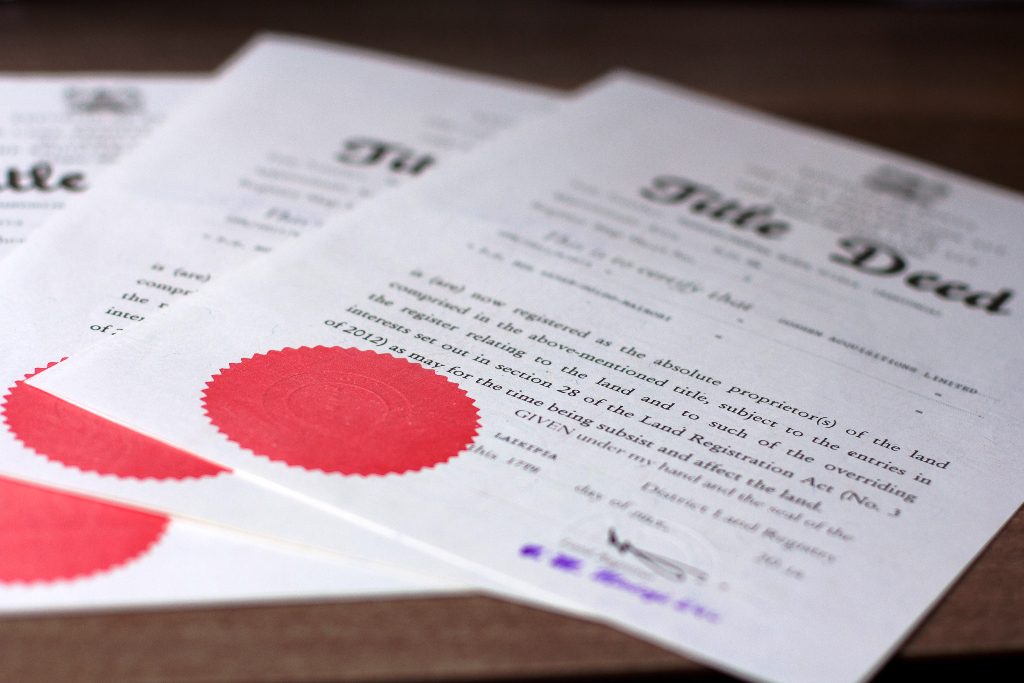
For many Zimbabweans, a title deed is more than just a legal document- it represents years of hard work, sacrifice and investment.
It is proof of ownership, a source of security for families, and often the most valuable proof of an asset a person will ever possess.
It is the document that gives a homeowner peace of mind that the property they have worked for belongs to them and can one day be passed on to future generations.
It is therefore understandable that the launch of the Title Deeds Validation and Securitisation Programme has generated widespread public interest and debate.
On this topic
While some property owners have expressed reservations about why they are being asked to validate title deeds that they already possess, experts across the property and legal sectors have come out in support of the programme highlighting that it is designed to strengthen and protect ownership in an era where property fraud has become increasingly prevalent.
At the centre of the programme, being done under Statutory Instrument 76 of 2025, is a simple reality-that Zimbabwe’s property registration system remains largely dependent on a vulnerable paper-based registry.
“The current system that we have is one that we inherited (from the colonial era),” the Deputy Chief Registrar in the Department of Deeds, Companies and Intellectual Property, Elizabeth Nyagura said during a recent interview.
“Therefore the objective of SI 76 of 2025 is to strengthen property rights and also to ensure that confidence in the local real estate sector is actually improved,” she said
The risks associated with relying on physical records have become increasingly apparent over the years with the case involving former Education Minister Dzingai Mutumbuka, whose Chisipite property was targeted by fraudsters, being one of the many such cases.
Court proceedings revealed that forged title deeds had been used in an attempt to unlawfully transfer ownership of Mutumbuka’s property which was valued at approximately US$600 000.
The case highlighted an uncomfortable truth- if a prominent individual with documented ownership could become a victim of title deed fraud, ordinary citizens are equally vulnerable.
Property fraud, forged documents, double sales and manipulation of records continue to pose risks to homeowners, buyers and investors alike.
It is these vulnerabilities that the Validation and Securitisation Programme seeks to address through the creation of a secure digital property registry- the Digital Land Administration Platform (DLAP).
The move places Zimbabwe among a growing number of countries, including Rwanda, Kenya and Estonia, that have embraced digital land administration systems to improve security, efficiency and transparency.
Beyond protecting ownership rights, experts say the programme could transform the way property transactions are conducted.
Estate Agents Council of Zimbabwe chairman Desire Dube believes accurate validation of property records will create a stronger and more trusted real estate market.
“A transparent property system is a cornerstone of a well-functioning real estate market and an important driver of both domestic and international investment,” he said.
“For buyers, it provides confidence that the property is genuine, properly recorded and accurately valued. For sellers, accurate property validation enhances marketability and reduces disputes stemming from unclear ownership records or inaccurate property information.”
According to Dube, reliable property records also lower transaction costs.
“Investors are more likely to commit capital where ownership rights are clear, records are reliable and transactions can be conducted with certainty and predictability,” he said.
The programme is therefore expected to benefit not only individual homeowners but also the broader economy and stakeholders in the property market.
From a legal perspective, Law Society of Zimbabwe Executive Secretary Edward Mapara contends that the digitisation of the Deeds Office creates a more secure property sector.
“Digitisation is a positive development for Zimbabwe. Secured title, ease of transacting, and reliable verification are good for business, investor confidence and ultimately the economy,” he said.
However, supporters of the programme also acknowledge that public confidence will depend on transparency, communication and meaningful engagement with citizens.
For residents’ organisations, the conversation is not simply about introducing a new technology or administration system- It is about ensuring that ordinary people understand the process and are not left behind.
“We believe that while some residents have heard about the programme, there is still a need for wider public awareness and education so that people fully understand its purpose, processes and benefits,” Zimbabwe National Organisation of Associations of Residents Trust (ZNOART) national chairman Mr Shalvar Chikomba said.
“We encourage continuous engagement between government, local authorities, community leaders and residents through meetings, media campaigns and outreach programmes to ensure that no one is left behind.”
Additionally, Chikomba said the programme has the potential to contribute significantly to sustainable urban development.
“As ZNOART, we view the Validation and Securitisation Programme as a progressive initiative by the government which has the potential to greatly benefit residents and communities.
“Proper validation and securitisation of properties and settlements can help bring order, security of tenure, improved service delivery and increased confidence among residents regarding their homes and investments.”
That call for greater awareness reflects the importance of ensuring that citizens understand what validation and securitisation actually mean.
Validation is the process of verifying the authenticity and accuracy of existing title deed records to ensure that ownership information is correct and legally sound.
Securitisation, in this context, refers to the conversion of those verified records into secure digital records that are protected against tampering, loss, forgery or duplication.
Therefore, It is important for property owners to understand that rather than replacing ownership rights, the process seeks to strengthen them by creating a more secure and reliable system for future generations.







Leave a Reply