
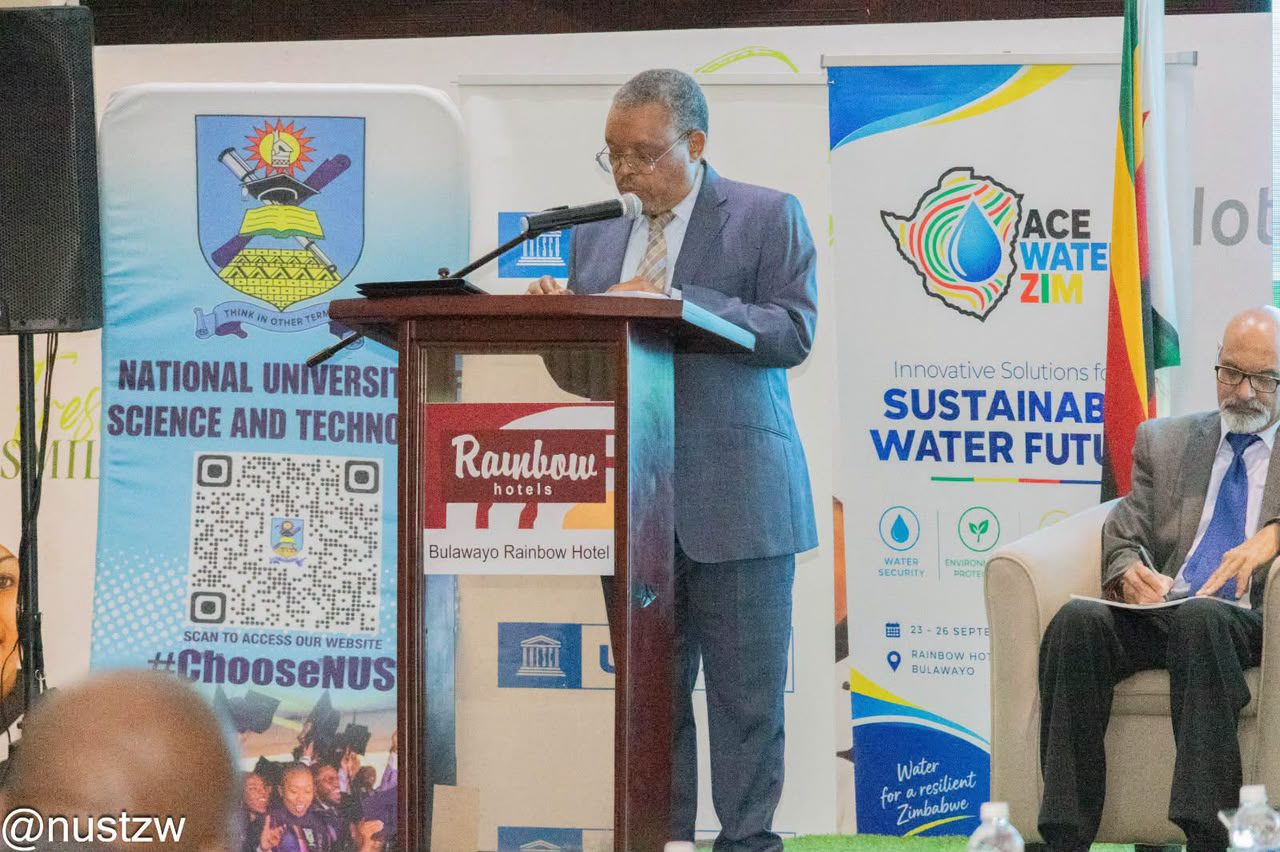
Water must be treated as a strategic driver of Zimbabwe’s development rather than simply a natural resource, National University of Science and Technology (NUST) Vice-Chancellor Professor Mqhele Dlodlo has said.
Speaking at the opening of the Zimbabwe Water Indaba in Bulawayo on Wednesday, Prof Dlodlo said reliable and sustainable water supplies were critical to the country’s health, food production, energy generation, industrial growth and environmental sustainability.
The Indaba, running under the theme “Building Zimbabwe’s Water Future: Innovation, Collaboration and Action for Sustainable Water Security”, brings together policymakers, researchers, development partners, the private sector, communities and young people to discuss the country’s water challenges and opportunities.
The Indaba comes as Zimbabwe grapples with climate variability, ageing infrastructure and rapid urbanisation, highlighting the need for coordinated investment and innovative approaches to managing water as a foundation for national development.
On this topic
“Water is not merely a natural resource. It is a strategic enabler of development and a foundation upon which health, food security, energy production, industrial growth, environmental sustainability and human well-being depend,” said Prof Dlodlo.
He said Zimbabwe’s development aspirations could not be achieved without reliable access to water, warning that climate change, population growth, urbanisation, environmental degradation and infrastructure deficits were placing increasing pressure on existing systems.
“These realities compel us to rethink traditional approaches and embrace innovative, integrated and forward-looking solutions,” he said.
Prof Dlodlo said the Indaba should move beyond dialogue and focus on practical interventions, investment, partnerships and policy innovation capable of addressing current challenges while preparing the country for future risks.
He said water management had to be considered alongside agriculture, energy, sanitation, environmental protection and industrial development.
“The central message remains the same: sustainable water management is fundamental to sustainable development,” said Prof Dlodlo.
He said discussions should also explore opportunities in the circular economy, particularly through wastewater management, while strengthening governance frameworks around water resources.
Prof Dlodlo said universities had a critical role in generating evidence-based solutions, fostering innovation and developing the skills required to address the country’s water challenges.
“As a university committed to advancing knowledge, innovation and societal impact, NUST firmly believes that higher education institutions have a critical role to play in generating evidence-based solutions, fostering innovation, building human capital, and supporting informed policymaking,” he said.
He highlighted NUST’s ACEWATER III Project and research agenda as part of the university’s contribution to national and regional efforts to strengthen climate resilience and improve water management.








Leave a Reply