
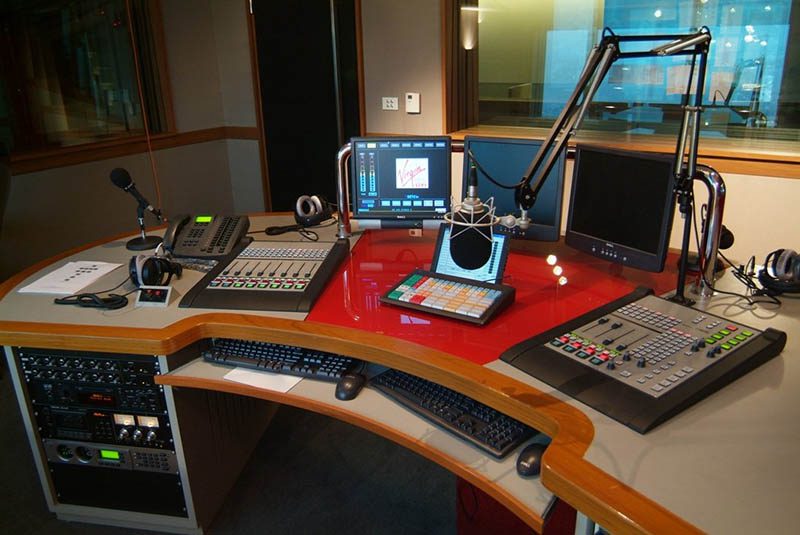
The Broadcasting Authority of Zimbabwe (BAZ) has officially set the ball rolling on religious broadcasting by issuing a formal invitation to apply for temporary free-to-air religious community radio service licences, marking a significant shift in the country’s broadcasting landscape.
Zimbabwe’s broadcasting sector has historically been dominated by public broadcasters, with licensing gradually expanding over the past decade to include commercial and community radio stations.
The introduction of dedicated religious community radio licences represents another step in the diversification of the country’s broadcasting sector
The move, announced through General Notice 894 of 2026 published in July, follows nearly two years of advocacy led by Emakhandeni-Luveve legislator Discent Bajila, who has been pushing for the introduction of a licensing framework for faith-based broadcasters.
On this topic
BAZ is inviting applications for three licences to serve Bulawayo, Harare and Masvingo.
The licences, valid for five years, are offered as part of a pilot programme for communities of interest under the category of Temporary Free-to-air Religious Community Radio Broadcasting Service.
Applicants will be required to pay a non-refundable application fee of US$2 000 and an annual regulatory fee of US$7 060.
The deadline for submissions has been set to September 4, 2026.
The journey towards this milestone began in October 2024, when Bajila raised a formal parliamentary question addressed to the Minister of Media, Information and Broadcasting Services, inquiring about government plans to introduce religious radio licences in Zimbabwe.
At the time, Bajila also queried the Ministry of Local Government on land allocation for religious organisations, highlighting the broader infrastructural challenges faced by faith communities.
The breakthrough came on 12 February 2025, the eve of World Radio Day, when then Information Minister, Dr Jenfan Muswere, delivered a positive response.
The minister confirmed the government had directed BAZ to immediately start consultations on a licensing framework specifically for religious broadcasters.
“We have since directed the Broadcasting Authority of Zimbabwe to immediately start consultations in terms of a licensing framework. As soon as BAZ has finalised, we will also take it through other processes for validation and approval,” the then minister stated.
Welcoming the ministerial directive at the time, Bajila, who serves on the Parliamentary Portfolio Committees for Health, Public Service, and ICT, called on churches to pray for the success of the consultations, noting such licences would enhance the “execution of the Great Commission given to us in Matthew 28 versus 19 to 20.”
Following the publication of the licensing notice, Bajila described the development as “special and significant,” saying it represented the fulfilment of a long-standing campaign to expand Zimbabwe’s broadcasting space to include faith-based stations.
According to the BAZ schedule, the three available licences are part of a trial conducted by the Authority in “licensing communities of interest.”
The service is designated as a Temporary Free-to-air Religious Community Radio Broadcasting Service.
However, media stakeholders say the significance of the new licensing regime will ultimately depend on how the licences are allocated.
Bulawayo Media Centre chairperson, Tuso Pamenus, said the introduction of religious radio stations should be accompanied by a transparent and equitable licensing process.
“From a journalism perspective, licensing religious radio stations is neither inherently positive nor negative. The real public interest questions lie in how these licences are awarded, who receives them, and whether the process is fair, transparent and pluralistic,” he said.
Tuso said the focus should be on making sure Zimbabwe’s limited broadcasting spectrum is managed in the public interest.
“We should be asking whether Zimbabwe’s broadcasting licensing system is allocating public radio frequencies fairly and transparently, or whether certain religious organisations are receiving preferential treatment,” said the media advocate.
“Since radio frequencies are a public resource, the licensing process must inspire public confidence and uphold the principles of fairness, accountability and media pluralism.”







Leave a Reply