
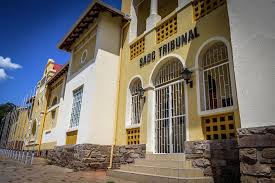
The Southern African Agri Initiative (SAAI) has urged the Southern African Development Community (SADC) Committee of Ministers of Justice and Attorneys-General to immediately reappoint judges to the long-defunct SADC Tribunal, arguing it is the only lawful route to restoring the regional court and safeguarding citizens access to justice.
The call comes as justice ministers and attorneys-general from SADC’s 16 member states met in Victoria Falls from June 1 to 5, 2026 to deliberate on key legal instruments aimed at strengthening regional cooperation, including the re-operationalisation of the SADC Tribunal and appointments to the SADC Administrative Tribunal.
In a letter addressed to the committee’s chairperson, South African Justice Minister Mmamoloko Kubayi, SAAI chairperson, Dr Theo de Jager, urged the regional bloc to uphold a position it adopted in 2011, which recommended that the tribunal be revived through the appointment of judges.
“We respectfully submit that the legal position is now clear: there is indeed only one legal, bona fide and effective manner to achieve the revival and re-operationalisation of the SADC Tribunal,” De Jager wrote.
On this topic
“It is indeed, as the Committee considered, to be done by forthwith reappointing judges to the Tribunal.”
The SADC Tribunal, established as the regional court of the bloc, was effectively suspended in 2011 after a series of rulings against Zimbabwe’s land reform programme.
The tribunal had found that the government’s land seizures violated property rights and discriminated against white commercial farmers.
Zimbabwe’s then president, Robert Mugabe, (now late) strongly opposed the tribunal’s decisions, arguing they infringed on national sovereignty.
Following pressure from Zimbabwe, SADC leaders suspended the court and later adopted measures that removed individuals’ ability to bring cases before it.
Most of the tribunal’s landmark cases involved the Zimbabwean government.
In a statement released ahead of the Victoria Falls meeting, SAAI accused regional leaders of undermining the rule of law by failing to enforce the tribunal’s rulings against Zimbabwe.
“The SADC Tribunal ruled repeatedly against the Mugabe regime’s racist and disastrous land reform programme which resulted in hyperinflation, hunger, extreme poverty and a diaspora of Zimbabweans throughout the SADC region and beyond,” the organisation said.
SAAI further alleged that instead of acting against Zimbabwe for defying court orders, SADC leaders collaborated in efforts to silence the tribunal.
“Zimbabwe’s response to the SADC Tribunal’s rulings was open defiance and retaliation,” the organisation said.
“At its instance, other heads of SADC States, instead of acting against Zimbabwe’s contempt of court, actively collaborated in what South African courts concluded was a conspiracy to silence the SADC Tribunal.”
The group cited judgments by South Africa’s Constitutional Court, which ruled attempts to strip the tribunal of its jurisdiction were unlawful and inconsistent with SADC’s obligations to uphold human rights, democracy and the rule of law.
According to SAAI, the Committee of Ministers of Justice and Attorneys-General had already agreed at a meeting held in Swakopmund, Namibia, in April 2011 that the tribunal should be revived through the appointment of judges to fill vacancies that arose after its suspension.
In his latest letter, De Jager urged the committee to maintain that position and avoid embarking on another lengthy process that could further delay the tribunal’s return.
“A consistent approach to the SADC Tribunal is, with respect, imperative,” he wrote.
“This is because the SADC Tribunal remains extant, and its legal instruments … remain operative and binding.”
He argued SADC institutions and member states remain legally obligated to make sure that the tribunal can perform its functions.
“Accordingly, the binding and enforceable duty of all organs of SADC and all member States of SADC to assist the SADC Tribunal to perform its functions must be fulfilled. This must be done by appointing judges to the SADC Tribunal,” the letter states.
SAAI also requested a clear timeline for the appointments and asked Minister Kubayi to provide an indication by June 26, 2026 of when judges could be expected to take office.
The organisation warned failure to provide a reasonable timeframe could result in legal action.
“Failing such indication of a reasonable date for the contemplated appointments, we would unfortunately have to take such legal recourse as we are advised would assist to achieve the objectives of the SADC Treaty and SADC Tribunal,” De Jager wrote.
The issue has gained renewed attention as SADC considers appointments to the SADC Administrative Tribunal, a separate judicial body.
SAAI argues that if judges can be appointed to that tribunal, there should be no obstacle to appointing judges to the SADC Tribunal as well.
“Expectations are high to see consistency with the Committee’s previous stance on the SADC Tribunal itself, the SADC Administrative Tribunal, and South Africa’s and SADC countries’ approach to other international courts,” De Jager said.
He added that a fully functional SADC Tribunal would help strengthen human rights protections, improve access to justice and reinforce democratic governance across the region.
“A functional SADC Tribunal vested with jurisdiction to give effect to SADC citizens’ right of access to court, human rights, democracy and the rule of law is essential to contribute positively to the renaissance of Africa,” he said.
Support CITE’s fearless, independent journalism. Your donation helps us amplify community voices, fight misinformation, and hold power to account. Help keep the truth alive. Donate today







Leave a Reply