
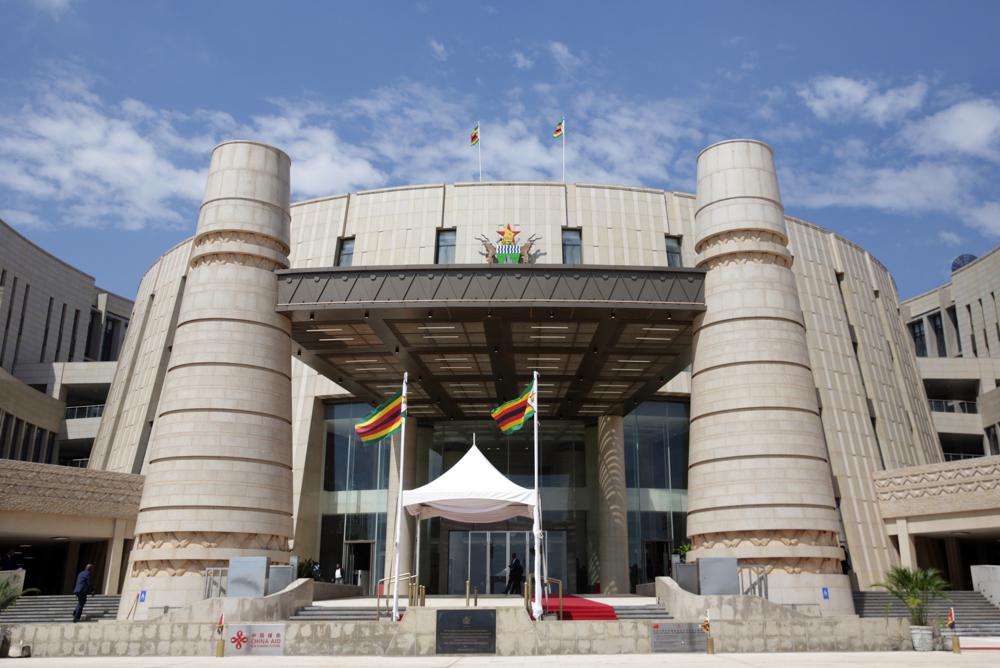
Zimbabwe’s National Assembly on Thursday passed the contentious Constitutional Amendment Bill 3 (CAB3) after a third reading vote that saw 216 legislators support the proposed changes, while 42 voted against them, paving the way for far-reaching alterations to the country’s supreme law.
Those who were against it have lamented how the critics undermine constitutional safeguards and democratic accountability.
The vote, conducted through division after the completion of the Bill’s Third Reading, took place amid sustained objections from opposition lawmakers, civil society organisations, ordinary citizens, war veterans and constitutional lawyers who have argued that some provisions of the legislation seek to circumvent entrenched constitutional protections.
Parliament later adjourned until July 7, 2026.
On this topic
Of the 280 members constituting the National Assembly, 216 voted in favour of the Bill while 42 voted against it.
22 MPs abstained from voting.
Zimbabwe currently has 86 opposition legislators in the National Assembly, all from the Citizens Coalition for Change (CCC), while the ruling Zanu PF party commands 194 seats.
The outcome means the Bill has secured the two-thirds majority required to amend the Constitution, although questions remain regarding the legality of some proposed amendments, particularly those affecting presidential term limits.
The vote also exposed apparent divisions within the opposition benches, with only 42 legislators ultimately voting against the Bill despite there being 86 opposition MPs in the National Assembly.
Attention now shifts to the Senate, where the Bill is expected to face further scrutiny before becoming law.
One of the most controversial proposals seeks to repeal Section 92 of the Constitution, which currently provides for the direct election of the President by Zimbabwean voters.
In its place, the Bill proposes a parliamentary electoral system in which Members of Parliament and senators would elect the Head of State, with a successful candidate requiring only a simple majority of sitting legislators.
The Bill also proposes extending presidential and parliamentary terms from five years to seven years and explicitly applies the extension to the “continuation in office” of the incumbent.
If implemented, the amendments would allow President Emmerson Mnangagwa, who is 83, to remain in office until 2030 despite being expected under the current constitutional framework to leave office in 2028 after serving two five-year terms.
Critics have argued the proposals conflict with Section 328(7) of the Constitution, which stipulates that amendments affecting presidential term limits must be approved through a national referendum.
The Constitution further provides that even where term limits are altered, such changes should not benefit an incumbent office holder unless specifically approved through a referendum applying to that individual.
Other contentious provisions in the Bill include changes to electoral administration, notably transferring voter registration responsibilities from the Zimbabwe Electoral Commission to the Registrar-General’s Office and creating a Zimbabwe Electoral Delimitation Commission.
Clause 16 of the Bill, dealing with the functions of the military, has also drawn criticism.
It seeks to amend Section 212 of the Constitution by replacing the phrase “and to uphold this Constitution” with “in accordance with the Constitution.”
Those against this amendment said the clause weakens the military’s independent constitutional obligation to uphold the Constitution and diminishes an important safeguard against unconstitutional conduct, with one opposition MP, Innocent Zvaipa of Zengeza West, saying that clause “reduced the military “to the level of Fawcett Security.”
However, the government retreated on two proposals that had generated widespread opposition.
Justice, Legal and Parliamentary Affairs Minister Ziyambi Ziyambi told the National Assembly on Wednesday, while winding up a seven-day Second Reading debate, that the government would no longer pursue plans to merge the Zimbabwe Gender Commission with the Zimbabwe Human Rights Commission.
The minister also said a proposal to remove constitutional restrictions barring traditional leaders from engaging in partisan politics had been dropped.
According to Ziyambi, both provisions fell away during the Committee Stage following recommendations made by the Joint Parliamentary Committee that scrutinised the Bill.
The passage of the Bill marks another significant chapter in Zimbabwe’s constitutional trajectory since the adoption of the 2013 Constitution, which emerged from years of negotiations and was widely hailed for introducing checks and balances aimed at curbing executive overreach.
The Bill has faced resistance from diverse quarters, including former liberation war fighters who unsuccessfully challenged aspects of the legislation before the Constitutional Court earlier this week.
Their legal representatives have since indicated they intend pursuing the matter before the High Court.
The bill’s passage has reinforced concerns that constitutional amendments, rather than broadening democratic participation, are increasingly used to accommodate immediate political interests.





Leave a Reply