
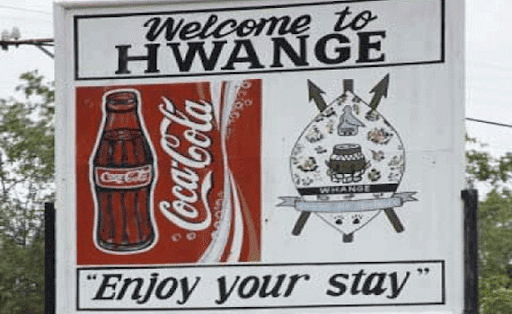
About 20 000 people living in Hwange Colliery Company’s concession area have been left caught between two local authorities in a long-running governance anomaly that Parliament says is undermining representation, service delivery and access to development funding.
The Parliamentary Portfolio Committee on Local Government, Public Works and National Housing has recommended that the government establish a Commission of Inquiry to determine whether the concession area should be placed under a single local authority.
The recommendation follows a petition submitted by Hwange residents Tinashe Matika and Nkosikhona Sibanda, who argued that people living in 11 wards within the concession area are excluded from the service delivery responsibilities of the Hwange Local Board despite paying taxes and voting in national elections.
The petition asked Parliament to investigate the dual administration system and recommend reforms to bring local governance into line with Section 274 of the Constitution.
On this topic
After holding public hearings with the Hwange Local Board, Hwange Rural District Council, Hwange Colliery Company Limited (HCCL), Zimbabwe Power Company, the National Railways of Zimbabwe and residents, the committee concluded that the current arrangement has created significant governance and service delivery problems.
It found that although the concession area falls under the administrative jurisdiction of Hwange Rural District Council, its elected councillors sit in the Hwange Local Board following the Zimbabwe Electoral Commission’s 2022 delimitation exercise.
As a result, residents are politically represented by councillors serving a local authority that does not administer the area where they live.
“The residents residing within Hwange Concession areas are caught in a governance puzzle. Although administratively under Hwange RDC, the area is politically represented by councillors adjudicating under Hwange Local Board. This arrangement unfortunately excludes them from meaningful participation in policy and decision-making, as rightfully echoed by the petitioners,” the committee said.
The committee also found that residents have been excluded from Intergovernmental Fiscal Transfers, commonly known as devolution funds, despite being eligible for government development funding.
“The Committee gathered that the 11 wards located within privately owned land under the Hwange Colliery Company, were not receiving any Government funding or Intergovernmental Fiscal Transfers (Devolution Funds). The Committee was informed that the disqualification of the concession area from receiving Government funding was short-changing the residents of the area from receiving much-needed financial support to augment existing service provision gaps.”
However, the committee said incorporating the concession area into the Hwange Local Board would involve complex legal, financial and property rights issues.
Hwange Rural District Council argued that the concession area legally falls within its jurisdiction and warned that transferring it to the local board would weaken the council’s financial viability and long-term development plans.
The council said the current arrangement arose from the 2022 electoral delimitation exercise and does not amount to dual governance.
Hwange Colliery Company also warned that incorporation could affect ownership of critical infrastructure, including roads, water systems, housing and utilities that support its mining operations.
According to the committee, the company cautioned that any incorporation process undertaken without proper consultation and compensation could have serious consequences.
“The company fairly argued that incorporation without proper agreement, consultation and consensus among the parties involved will lead to the company’s closure and unimaginable negative ripple effects on the socio-economic fabric of its workers and community.”
Despite those concerns, the committee said the fragmented governance system is limiting Hwange’s growth as an industrial town.
“Hwange is fast growing and booming due to the rapidly expanding mining activity, which requires urgent intervention for its upgrading to a thriving urban industrial hub. However, the current setup, on what the Committee observed as a disjointed urban administration system, undermines any meaningful progress towards having a vibrant urban system which responds to the need of the growing population and the fast-developing need for good urban governance.”
The committee also noted that the Hwange Local Board currently lacks the technical and human resource capacity to immediately take over administration of the concession area and said any transition should be accompanied by institutional capacity building.
Among its recommendations, the committee urged the Ministry of Local Government and Public Works to establish a Commission of Inquiry by 31 August 2026 to assess whether Hwange should be placed under a single local authority.
It also recommended that the ministry resolve inconsistencies arising from the 2022 Zimbabwe Electoral Commission delimitation exercise by 31 December 2026, while ensuring that any incorporation process fully compensates Hwange Colliery Company in line with Section 71 of the Constitution, which protects private property rights.
The committee further proposed completing any incorporation before the end of 2026 to improve urban planning, housing, sanitation, traffic management and access to government development funding.
In its conclusion, the committee said resolving the governance impasse would strengthen service delivery, improve infrastructure development and support Hwange’s bid for municipality status.
“The Committee recommends that incorporating the concession areas into Hwange Local Board is necessary to ensure unified governance, enhanced service delivery, orderly urban planning and improved overall quality of life for residents.”
The report adds that Hwange has “all the hallmarks to be accorded municipality status in the shortest period of time.”






Leave a Reply