
By Claude Phuti
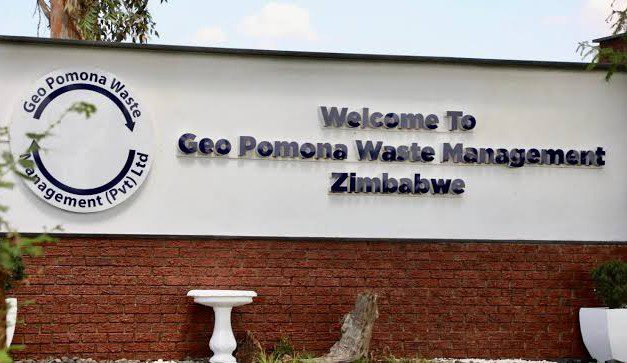
The uproar which triggered Bulawayo’s Residents Associations, Civil Society organisations, Faith based organisations and individuals to put out a joint statement against the Minister of Local Government and Public Works directive for Bulawayo City Council to engage and draft a Memorandum of Understanding with Geo Pomona Waste Management over the management of the Richmond landfill popularly known as Ngozi Mine dumpsite has rekindled old memories in Bulawayo. For many residents, this is not simply a waste management dispute. It recalls an earlier struggle on the control of local resources, when central government sought to transfer the city’s water services to the Zimbabwe National Water Authority (ZINWA), triggering one of the most remarkable episodes of civic unity in Bulawayo’s recent history as residents’ associations, civil society organisations, Faith-based organisations and individuals took to the street to march in solidarity against the move.
At the time, Bulawayo spoke with a unified voice. Political leaders from across the political divide, civic organizations led by Ibhetshu Likazulu, WOZA, Bulawayo Agenda amongst others, business leaders, residents’ associations in the form of Bulawayo Progressive Residents Association and Bulawayo United Residents Association and city officials united in defense of what they saw as the city’s right to manage its own affairs. It was one of the few moments when party affiliation became secondary to the interests of the city, with key figures such as Dumiso Dabengwa, Angelina Masuku, Moffat Ndlovu echoing the same sentiments. There was a shared belief that Bulawayo’s institutions, despite their limitations, were better placed to manage local services than externally imposed arrangements whose interests do not reflect those of residents and ratepayers of the city.
The question today is whether such unity still exists. The evidence suggests that it does not. The internal dynamical shifts in terms of Bulawayo’s local leadership in both the ruling and opposition political parties has left the city lingering in a leadership crisis.
On this topic
First, Zimbabwe’s political environment has become far less tolerant of deviation from the political elites. Political and institutional actors increasingly operate within boundaries that discourage open resistance or openly airing out the views of their constituencies to decisions taken by the center.
While disagreements may exist behind closed doors, there is limited space for public dissent, especially on issues that have acquired national political significance. Further, the fear of falling victim to recalls through the utilisation of Section 129k of Zimbabwe’s constitution, has disempowered political figures from across the political divide to fully carry out their representative role within municipalities or parliament.
Secondly, Bulawayo’s institutional leadership is much weaker than it was during the 2007 and 2014 ZINWA era. There is no Japhet Ndabeni Ncube or a Moffat Ndlovu. Many within the city’s political and administrative structures appear more concerned with political survival than defending municipal autonomy. The result is a city hall that is often reactive rather than assertive on Bulawayo’s interests.
This reality places the current Mayor, Sen. David Coltart in a predicament. While the mayor has demonstrated a willingness to speak out on issues affecting the city, he appears to have only a small group of councillors fully committed to uphold principles of integrity, accountability and good governance. Many others are preoccupied with their own political and legal vulnerabilities. Some face corruption allegations, while others are widely perceived as embedded in patronage networks that make confrontation with powerful political actors unattractive or risky. For such individuals, there have been perceptions around alignment with the ruling establishment lingering around them, all in the name of attaining greater protection than standing up for the interests of Bulawayo residents.
This is perhaps the most important difference between the 2007, 2014, 2015 crisis and today. During the ZINWA dispute, Bulawayo’s political leadership from across the political divide, technocrats, residents, the business community and civil society largely occupied the same corner. Today, the city appears fragmented, with fewer institutional actors willing or able to challenge decisions emanating from the centre.
That leaves one constituency. The residents. Ironically, the history of Bulawayo suggests that this may not be a weakness. Some of the city’s most successful campaigns have been driven not by politicians nor have they been politically motivated but by organised citizens. Residents’ associations, faith-based organisations, civic organisations, trade unions and community groups have repeatedly demonstrated an ability to self-mobilise around issues affecting local governance and public services.
A prime example of this collective power was the 2014 historic mobilisation against prepaid water meters. More than 20 civil society organisations including prominent resident associations, WOZA, NYDT, ZIMCODD and WILD brought together over 10 000 Bulawayo residents across all 29 wards to demonstrate against a decision by City Hall to introduce prepaid water metres. Recognising that the proposed prepaid metering system would disproportionately punish vulnerable families, these groups educated communities and maintained sustained public pressure until the policy was ultimately abandoned. This victory was not engineered by politicians. It was forged by ordinary citizens who believed they had a rightful stake in the future of their city. Yet, looking at the current landscape, one must ask: where has that spirit of civic ownership gone?
The lesson is clear. If there is to be meaningful public scrutiny of the Ngozi Waste Management tender, it is unlikely to emerge from City Hall alone. It will require active engagement from residents, civic organisations, professional associations, churches and community leaders. Whether one supports or opposes the proposed partnership is ultimately secondary. The more important issue is ensuring transparency, accountability and public participation in decisions that affect the city. Due procedure cannot be compromised as it will set a wrong precedent or create a lawless environment in the operations of a city that prides itself with integrity in terms of its operations.
The Geo Pomona controversy therefore represents more than a dispute over waste management. It is a test of whether Bulawayo still possesses the civic spirit that once enabled it to defend its interests against overwhelming odds. In the ZINWA era, Bulawayo fought as a united city. Today, it may have to fight as organised citizens to avert the creation of a crisis in the midst of attempting to solve another.
Claude Phuti is a Programme Manager at Bulawayo Progressive Residents Association. He writes in his personal capacity.





Leave a Reply