
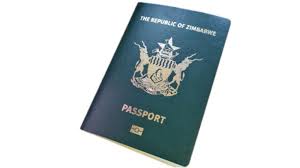
The Zimbabwe Human Rights Commission (ZHRC) has called on the government to reduce passport fees, saying the high cost of obtaining travel documents is restricting citizens’ freedom of movement, limiting access to economic opportunities and fuelling irregular migration.
In a policy brief titled: “Advocacy for the Reduction of Passport Fees in Zimbabwe,” the Commission said Zimbabwe had the highest passport fees in the Southern African Development Community (SADC) region, making the document unaffordable for many citizens.
Currently, an ordinary 48-page passport costs US$170, while an emergency passport costs US$270.
“Zimbabwe’s passport fees are the highest in the region, pegged at US$170 for ordinary passport and US$270 for emergency passport,” the Commission said.
On this topic
A comparative analysis of passport fees in eight other SADC countries found that the average cost of an ordinary 32-page passport was US$17.39, making Zimbabwe’s passport 877 percent more expensive than the regional average.
The commission noted that Zambia charges US$18.21 for a 48-page passport, while Eswatini charges US$16.10 and Malawi US$74.98 for a similar document.
It said the high fees were particularly burdensome given the country’s economic challenges and the number of people living in poverty.
According to the commission, Zimbabwe’s extremely poor population increased from 4.5 million in 2017 to six million in April and May 2019, representing 36.8 percent of the population.
“This makes the current fee of the ordinary passport in Zimbabwe unaffordable and out of reach of the majority,” the commission said.
The human rights body argued that although improvements in passport processing had reduced administrative delays, the efficiency had come at a cost that many citizens could not afford.
“However, with decentralisation, digitalisation and the introduction of the e-passport, the delays and inefficiency in the application processes at the Civil Registry Department (CRD) are a thing of the past,” the commission stated.
“The ordinary passport is now being processed in seven (7) working days. Whilst this is commendable, this efficiency has come at a price that most Zimbabweans cannot afford.”
ZHRC also raised concern over the absence of an option for applicants to pay passport fees in local currency, despite Zimbabwe operating a multi-currency system.
It said passport fees were only payable in foreign currency, arguing that this was contrary to Section 6 of Statutory Instrument 60 of 2024 and Section 25 of the Finance Act, 2024, which recognise ZiG as legal tender alongside other prescribed currencies.
The commission further warned that high passport fees were limiting low-income earners, young people and persons with disabilities from seeking employment and business opportunities outside the country.
“High passport fees fuel irregular migration that exposes citizens to a variety of risks like detention, financial loss, and physical risks such as assault,” it said.
“Affordable passports will facilitate regular migration and increase diaspora remittances, which contribute towards household incomes, foreign currency reserves and economic stability.”
To address the challenges, ZHRC recommended that government aligns passport fees with those charged in other SADC countries.
It also called for the introduction of cheaper 32-page ordinary passports for people who do not travel frequently, as well as reduced fees for children, senior citizens and persons with disabilities.
“Special pricing option for vulnerable groups such as persons with disability and senior citizens should be introduced to promote equality and fairness in accessing travel documents,” said the commission.
It also recommended lower fees for children’s passports, noting that children receive passports valid for only five years.
“We call on the Ministry of Home Affairs and Cultural Heritage to review passport charges and introduce the proposed pricing options. The Ministry of Finance and Economic Development needs to review passport production costs, introduce government subsidies to offset production expenses and increase budgetary support to the Civil Registry Department to reduce its reliance on passport fees for revenue,” the commission noted.







Leave a Reply