
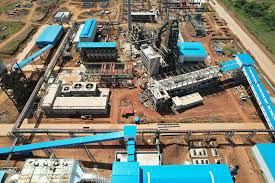
Twenty-two families from Mushenjere village in Manhize, many of them elderly people aged between 80 and 90 years old, are struggling to survive after losing their farmland and livelihoods following the expansion of the Dinson Iron and Steel Company (DISCO) project, the Centre for Natural Resource Governance (CNRG) has said.
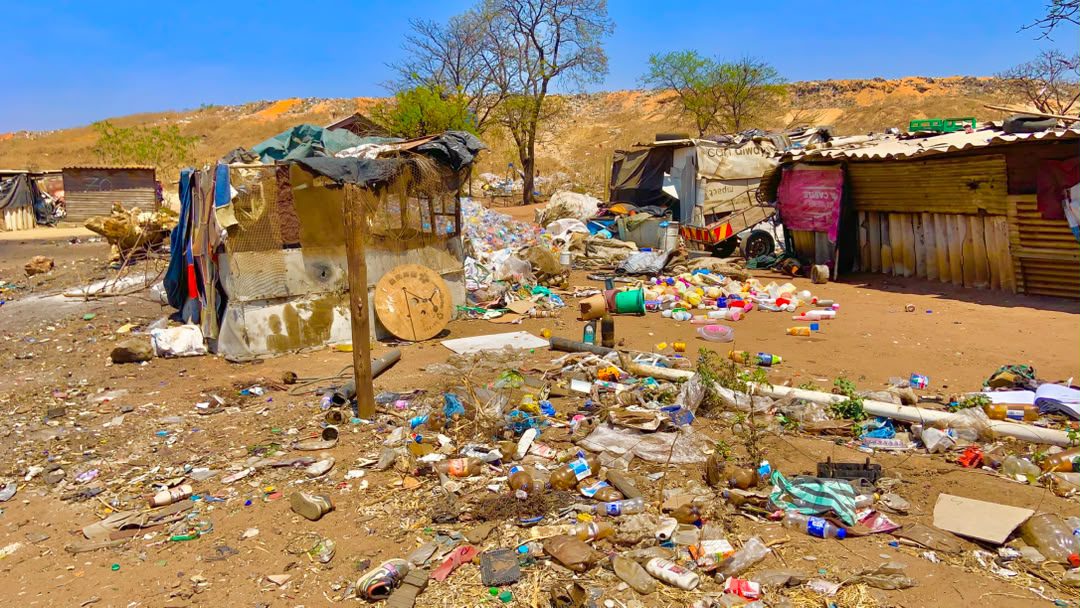
CNRG described the families’ situation as a worsening humanitarian, environmental and governance crisis surrounding the operations of DISCO in Manhize, where displaced communities are allegedly living under poor conditions, facing unclear relocation arrangements and enduring environmental harm.
The Manhize Steel Plant Project, located in Chirumanzu district in Midlands province, took shape in June 2022 when preliminary works by DISCO commenced on site.
DISCO is a subsidiary of China’s Tsingshan Holding Group, one of the world’s largest stainless steel producers.
On this topic
The integrated steel plant near Mvuma includes a carbon steel plant and an iron ore mine and is expected to produce millions of tonnes of iron and steel products annually.
The Manhize community itself was established around 2000 during Zimbabwe’s fast-track land reform programme and is largely dependent on agriculture.
CNRG said elderly families, many of whom depend on subsistence farming, have been left vulnerable after the company fenced off their agricultural land to pave way for the Dinson Industrial Park.
“CNRG is particularly alarmed by the situation facing approximately 22 families from Mushenjere village, many of whom are elderly people between 80 and 90 years old,” the organisation said.
“These villagers, especially elderly women who depend on subsistence farming, have lost access to their agricultural land following mining expansion.”
According to CNRG, DISCO constructed its industrial complex on land previously used by villagers for farming and later erected a wall around the industrial site, cutting communities off from their arable land.
“The company set up its industrial complex on the villagers’ farmland, thereby bringing farming activities to a halt,” the organisation said.
“Furthermore, DISCO built a wall around the industrial area, leaving communities outside while exposing them to dust, pollution, and emissions from nearby mining and limestone crushing operations.”
The organisation said the situation has effectively condemned the affected families to long-term food insecurity.
“More importantly, when it constructed the wall, the company enclosed all the arable land belonging to the families,” CNRG said.
“Consequently, for more than four years the affected families have not been able to grow crops for subsistence, thereby condemning them to perennial food insecurity.”
The rights watchdog said elderly residents now have little capacity to rebuild their lives elsewhere due to their age and economic circumstances.
Only three families have reportedly been relocated to a proposed relocation site, but CNRG alleged that the houses provided have already developed structural defects.
CNRG also raised concern over access to water at the relocation sites,g that six boreholes drilled by the company turned into dry holes.“Six boreholes drilled by the company at relocation sites reportedly turned into dry holes, leaving families without reliable access to water,” the rights watch organisation said
The organisation further alleged compensation offered to affected villagers was inadequate because the land was classified as state land, meaning compensation only covered structures and trees rather than the broader livelihood value attached to the land.
Families are reportedly surviving on subsistence allowances of US$200 paid every other month, which residents say is insufficient to cover food, medical costs and other basic needs amid rising living expenses.
“At one point, these payments reportedly stopped for more than five months until communities protested,” CNRG said.
The concerns raised by CNRG stand in sharp contrast to remarks made last year during a media tour of the facility organised to showcase progress at the project.
Speaking at the time, then Minister of Information, Publicity and Broadcasting Services, Dr Jenfan Muswere, said the majority of employees at DISCO were Zimbabweans and that issues of corporate social responsibility and social equity had been adequately addressed.
“At present, DISCO employs 2 000 skilled and unskilled workers, with locals being prioritised. At full operational capacity, the project is expected to create up to 25 000 direct jobs and 150 000 indirect jobs, making it one of the largest industrial ventures in the country,” Muswere said then.
“The relocation of families within this geographic area has been done extremely well, with the building of modern houses and power units within the particular ward.”
However, CNRG argues conditions on the ground tell a different story for many displaced villagers still struggling to rebuild their lives.
The organisation also accused some company-linked officials of attempting to sanitise the public image of the Manhize project while concealing the realities facing affected communities.
“Reports indicate that media houses are routinely invited for choreographed tours of the production facilities and industrial operations, while the affected community areas, cracked houses, dust pollution zones and relocation sites are deliberately excluded from the tours,” CNRG alleged.
The organisation said concerns were also growing around the conduct of some senior Zimbabwean managers at the project.
“CNRG has received information that officials from the Ministry of Lands recently called the manager to order over allegations that he engaged communities outside formal government relocation processes and without the knowledge or oversight of responsible state authorities,” the statement read.
Beyond community grievances, the watchdog also alleged that workers at the plant were operating under unsafe conditions.
“At some point the company engaged a medical doctor to carry out medical tests on the employees but the results were not declared to the workers,” CNRG claimed.
“Instead, they are kept at the safety office. In cases where some workers might have life-threatening conditions, this information remains a closely guarded secret by management.”
The organisation said the developments raise serious concerns about transparency, accountability and environmental justice in one of Zimbabwe’s flagship industrial projects.
“Zimbabwe’s industrialisation agenda cannot be realised by sacrificing human dignity, community rights, and environmental justice,” CNRG said.
The organisation called on the Zimbabwean government to urgently intervene by providing proper relocation processes, conducting independent structural assessments of houses, improving water infrastructure and carrying out independent environmental and health assessments related to dust pollution and emissions.
CNRG also demanded the release of workers’ medical results, free medical treatment for affected families and investigations into allegations of misinformation and irregular community engagements involving company officials.






Leave a Reply