

By Dr Mandlenkosi Mpofu
Herrick Dullie Moyo (nom de guerre Dwela Mashingaidze) has a lean frame which belies his big heart. Except for the confidence in his deep baritone voice, you would not think this is a former ZPRA combatant who fought in the Battle of Ratanyane, one of the most famous battles of Zimbabwe’s Liberation Struggle.
It is at the Battle of Ratanyane that the popular ZPRA guerrilla Mphini fell.
Moyo was among the first group of ZPRA members who were trained in conventional warfare, as ZAPU prepared to deploy a regular army, in line with its changing strategies.
On this topic
The experiences of this battle-hardened guerrilla, tracking into transit camps near Francistown in Botswana, joining the training camps in Zambia, and fighting Rhodesian forces back home, mirror the journey many ex-combatants walked in the struggle for Zimbabwe’s independence.
Answering a call to duty
Moyo was aged just 20 in 1977, when he joined a small group of young men and women and made the long journey to the ZPRA training camp, travelling from his village in Gwanda district, Matabeleland South, into Botswana, where he and his group spent what felt like an eternity before they were taken to Nampundwe refugee camp in Zambia.
The soft-spoken combatant’s account underlines the sacrifices of this generation in the liberation struggle.
When he decided to move to Botswana, Moyo had just returned home from South Africa for the December holidays, where he had been working for Anglo-American since 1976. He had joined Anglo-American after learning that the company gave workers opportunities to migrate to the USA. In the increasingly bleak economic situation in the then Rhodesia, such an opportunity could profoundly transform a young man’s life.
Moyo, therefore, effectively shut the door on that dream when he chose ZPRA, an example of how personal dreams and ambitions were often pushed aside when young people decided to join liberation movements, stepping into a very uncertain future.
Harsh realities under colonial rule forced many young people to choose the difficult path of war rather than staying home to pursue careers. Some chose that path because of the frustrations they experienced under colonial rule, and also because of the defiant mood that had gripped communities at the time. For Moyo, among many influences was memories of his difficult childhood after his parents’ political activism got them detained at the infamous Gonakudzingwa, together with Joshua Nkomo and other senior ZAPU politicians.
An older former combatant, Marshall Mhambi Mpofu, shocked his interviewer, Zenzele Ndebele, when he disclosed, almost casually, that he had given up an opportunity to train as a medical doctor to join ZPRA in 1973. Unfair treatment in Southern Rhodesia’s racialised work hierarchies pushed a young, politically conscious Mpofu to the edge.
He eventually cracked during a work dispute and declared casually to his superiors, ‘Gentlemen, we are going to meet in the Zambezi Valley.’
That was his last day at work.
Speaking with surgical clarity, Mpofu carefully explained that he never regretted his decision, as he recounted Rhodesian, regional, and global politics at the time to Ndebele.
Other young people joined the war as an act of defiance against Rhodesian institutions. Ngwana Maseko was a brilliant young student at Mpopoma High School when he joined the war. He is now one of Zimbabwe’s leading aircraft engineers.
Already politically conscious because of his work with ZAPU’s youth wing in the townships, Maseko received a thorough beating after he disrupted a school assembly when his white headmaster made a derogatory reference to freedom fighters. Facing a difficult future at the school, the young schoolboy mobilised friends from his Mzimnyama Village in Ramokgwebana District (now Mangwe District). The group tracked into Botswana, where they were eventually recruited into ZPRA.
Cde Knocks (Enoch Dube, nom de guerre John Mguni) was also one of the first cadres to be trained in conventional warfare by ZPRA, as part of the transition into regular units. Knocks became exposed to liberation struggles when he joined ANC structures in Soweto, where he lived while working at a hotel in Johannesburg. His frustration with colonial injustices reached a point of no return during the Soweto riots of 1976, when thousands of black schoolchildren protested against the apartheid government’s policy of enforcing Afrikaans as a medium of instruction.
An endurance game
While many inspirational factors fired them up to join the war, many young cadres did not imagine how difficult the journey they were about to embark on would be.
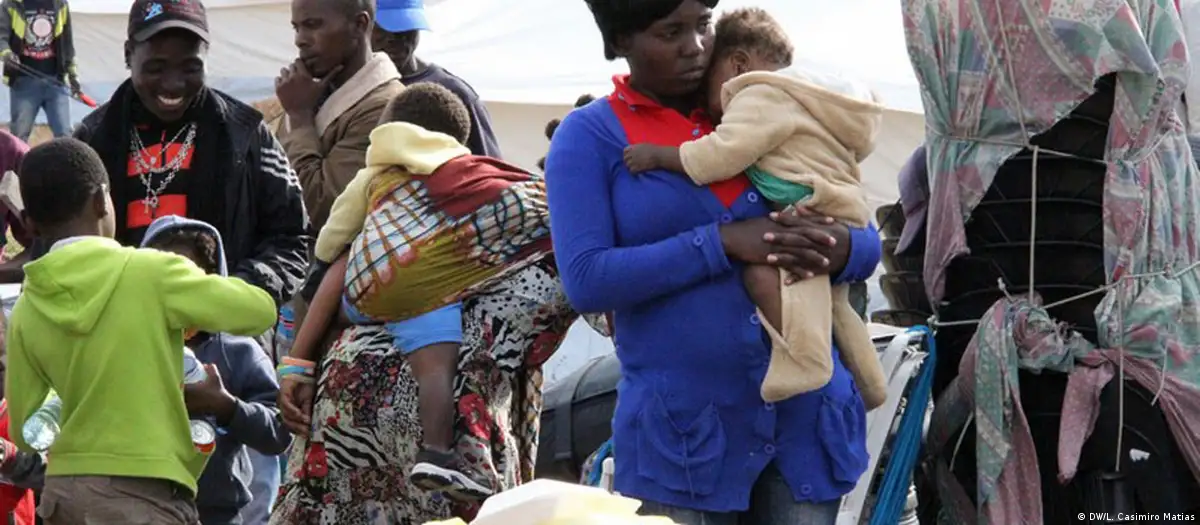
The endurance began from the moment the combatants, young boys and girls barely out of school, decided to embark on the long, treacherous journey through Botswana to join ZPRA training camps in Zambia. Most did not anticipate the challenges that were to come. These included harsh conditions in transit camps in Botswana, where morale was dampened as days passed and the hopefuls were unsure whether they would ever set foot in Zambia.
Speaking for the experiences of many others, Dulle Moyo recounted the testing experiences he and his group of 13 endured: very little food, almost no blankets, and having to sleep in cold prison cells, the only accommodation their hosts could secure for them.
These match the experiences of Cde Knocks, who said his group was shocked by the conditions, especially the food, which barely provided nourishment. Some of Knocks’ peers fled the refugee camp in Francis Town and returned home to Rhodesia, unable to cope with the punishing conditions.
While Botswana was gracious enough to provide the indispensable pit stop for multitudes of young people on their way to join the war in Zambia, conditions were not easy. A relatively small economy and newly independent country that depended on good relations with the apartheid South African state, Botswana could only do so much, beyond providing shelter and making sure the guests were safe.
This experience meant that, for most combatants, training began during the long, treacherous journey through Botswana, where their physical and mental endurance were pushed to the limit.
When they eventually arrived at the camps in Zambia, training proved to be intense. Most drills and routines were designed to build fighters’ endurance, to prepare them for confrontations with one of the most technologically advanced armies in Africa at the time.
In almost all cases, the young recruits had to hit the ground running.
Ngwana Maseko described his baptism of fire when he was made to roll and crawl through Nampundwe’s red soil on his first night in Zambia, after being found sleeping in a truck during roll call.
Just as in Botswana, the conditions in Zambia were also very harsh. For Moyo, many of the trainees hoped to be deployed back in Rhodesia as quickly as possible, to escape the harsh life in the training camps.
These experiences proved invaluable when the recruits were deployed, as prosecuting the war itself proved even more demanding.




Leave a Reply