
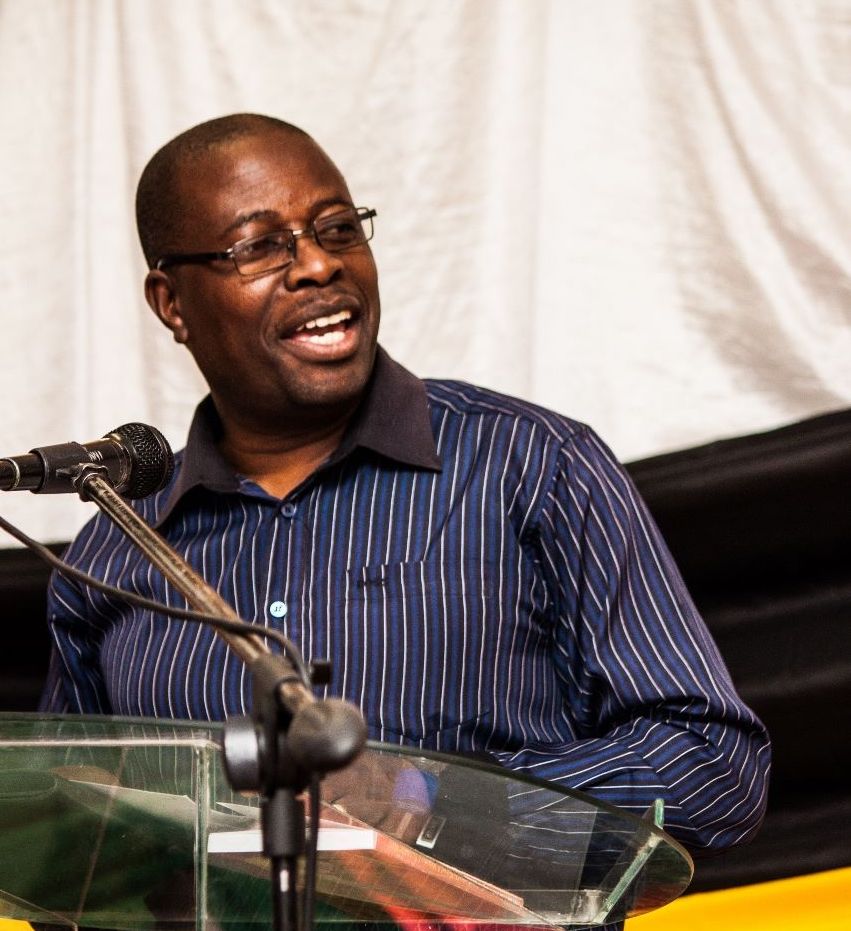
By Dr Samukele Hadebe
PREFACE
On 25 May 1963, African leaders assembled in the Ethiopian capital, Addis Ababa, founded the Organization for African Unity (OAU) later transformed to African Union (AU in 2002) to forge African unity as a prerequisite to stability and economic development after liberation. Accordingly, Africa Day is a legacy worth celebrating as it is “not merely a date on a calendar — but a living testament to the resilience …” of all Africans “who fought — and died — for African independence and self-determination.” Ideally we should be saying Africa is free at last but alas we still have some under occupation no longer from Europeans but from brethren – Western Sahara under Morocco being a prime example which should embarrass AU but it does not.
Why Africa is not ashamed is perhaps the reason our theme for this lecture is: Africa Day – the Price of Unity?
On this topic
INTRODUCTION
Many here will agree with me that History is the property of the winners and so is Memory. Those who are powerless have to fight hard for the right to remember. The powerful decide what must be remembered and what must be erased. Those pushing counter memory like Ibhetshu Likazulu must be prepared to wage a total struggle and even a deadly one.
Ibhetshu Likazulu has distinguished itself with memorialization work. Part of memorialization may involve setting physical structures as heritage sites. This Ibhetshu has done exceedingly well but all its memorial plaques have been short-lived, vandalized, desecrated and even bombed to smithereens. But memorialization could also be intangible using prayers, memorial services and lectures. Ibhetshu has done that as well. One of its distinguished members, the late Col. Patron Khutshwekhaya Nketa Ndlovu presented in most of these lectures and chaired some of them. It is therefore befitting to dedicate this Africa Day lecture to the memory of Comrade Nketa.
I am humbled to speak on this important occasion celebrating the life of a foremost freedom fighter, a distinguished commander and a very brave and forthright leader.
CELEBRATING A PROUD LEGACY – COL NKETHA
Of course, it is not my first time to give a lecture here but I never ever thought it could be so soon for Col Nketha to put down the spear of the revolution. I last gave the inaugural Mthandazo Ndema Ngwenya lecture, the Nikita Mangena Lecture and the memorial lecture remembering the Disappeared Six tourists, among others. Whenever such lectures were organised and asked to present, he was one of those I consulted thoroughly. He had the knowledge and experience of the liberation struggle that I do not have. He would not only freely advise but encourage us to work harder and research about some of these issues.
It is therefore befitting that we commemorate Africa Day today as we celebrate the life of our hero. Yes we are still mourning his untimely departure but we celebrate the legacy he bequeathed Zimbabwe. It is not an exaggeration that while we still have tens of thousands of former guerillas in our midst, Cde Nketa belonged to a rare breed of very few who dared associate with Ibhetshu Likazulu and openly work for justice, truth telling, human dignity and memorializing victims of both the anti-colonial struggle and those of post-independence genocide.
Personally, I met Col Nketa for the first time when he attended our meeting as Umhlahlo Wesizwe at Amakhosi. Little did I know I was to journey with him in this treacherous road to justice. I remember in one very tense meeting by MACRA which Cde Effie Ncube had organized in Beitbridge with former freedom fighters from both ZPRA and ZANLA. Col Nketa was there. But it is in his work at Ibhetshu Likazulu that I really benefitted a lot from his guidance and forthright approach to issues. He feared nothing.
CELEBRATING AFRICAN UNITY
The sacrifices; sweat, tears and blood of men like Col Nketa make it possible for us today to celebrate Africa Day. For countries like us in Zimbabwe, Africa Day was earned through rivers of blood of our people who perished in the hands of imperialists. We do not take Africa Day for granted at all.
Africa Day is about our being and identity. It is about our land, our home, our cultures and languages, our plenty natural resources and above all our human dignity, independence, freedom and the right to be.
Speaking at the occasion of the independence of the Congo, some few years before the formation of the OAU, Patrice Lumumba aptly noted that “our wounds are too fresh and too painful still for us to drive them from our memory.” Indeed, we celebrate the departure of colonial slavery but we cannot banish the memory of what it took.
Indeed, Africa Day commemorations are part of memorialization. We remember the good. Pan-African solidarity without which we could not have fought from Zambian and Mozambican bases. We could not have trained in Angola, Tanzania, Somalia, Uganda, Egypt, Libya, Algeria or Ethiopia among many countries that supported armed struggle in southern Africa. They gave us food and shelter. They clothed us. Supported us with medicines. Gave us travel documents and in some cases trained and armed us. Those were not small sacrifices.
These sacrifices were from governments that could barely feed their own nor give basic healthcare to all their people. Imperialists not only threatened economic sabotage but in many instances bombed their countries and even assassinated leaders like we saw with Samora Machel.
THE PRICE OF UNITY?
Without unity, Africa would remain in bondage. We must celebrate that unity. Of course, this unity was forged under some of the most trying times in Africa. The whites had parceled Africa willy-nilly dividing clans and even families into different jurisdictions. Creating Africa in the image of European imperialism meant landlocked Africa, politically ethnicized Africa, impoverished Africa, undemocratic Africa, and economically uncoordinated Africa. Rivalries predating colonization were magnified by divide and rule and scramble for limited state opportunities were a powder-keg that could inflame many African countries.
Let colonial boundaries be sacrosanct! Our leaders wisely declared as they believed to be preventing the inescapable conflagration tribe against tribe, country against country, African against fellow African.
Today, as we commemorate Africa unity we must reflect on the human cost to that unity. As I speak our brothers and sisters across the border are hiding like in holes like rats as some South Africans are bent on driving all Africans out. Obviously, Xenophobia was not anticipated by the founding fathers in 1963 the likes of Kwame Nkurumah, Haile Sellasie, Julius Nyerere, Sekou Toure, etc.
THE NKETHA EXPERIENCE – MGAGAO MASSACRE
Indeed, we get solace that the founding patriarchs of African unity did not foresee possibilities of black on black violence like xenophobia. Perhaps, we can forgive them on that, at least for now.
But those amongst our people like the late Col. Nketa told of experiences that make us doubt our African leaders were entirely innocent of what they were crafting. The late Cde Nketa was one of the recruits who found themselves under one camp as ZPRA and ZANLA in Tanzania at Mgagao at the insistence of OAU leaders. Not only was such a decision a disaster by OAU Liberation Committee as it ignored lived political realities but it bordered on complicity. Perhaps hundreds of ZPRA recruits perished from unprovoked fire from their supposed comrades allegedly with connivance of Tanzanian and Chinese instructors.
Our people died in a country that had offered them protection under the watch of those who had offered to train them, and were killed by fellow Zimbabweans. In Genesis 4vs 9: Then the Lord said to Cain, where is Abel your brother? He said, “I do not know. Am I my brother’s keeper?”
From my recollection in the talk with Ackim Mathew Ndlovu the case was too embarrassing to be talked about and it was conveniently forgotten. But the voice of their blood is still crying out from the ground. Only Ibhetshu Likazulu holds memorial lectures for Mgagao massacre victims. We are sincerely indebted to Mbuso Fuzwayo and the entirety of his leadership for keeping that memory alive.
Indeed, there are numerous documented episodes from the ZIPA era in Mozambique where we lost many again. Those with that experience were not surprised when after winning independence massacres of genocidal scale were visited upon Matabeleland and Midlands.
CONCLUSION – LESSONS LEARNT
I have merely scratched at the surface by illustrating the cost of unity as experienced by freedom fighters like Col Nketa. But Africa is littered with unstable and failed states, disintegrating countries like the Sudan and DRC, undemocratic governments, countries looted dry by capitalists masquerading as nationalists and many have experienced genocides like Rwanda, Burundi and Nigeria to name a few. And South Africa continues with Xenophobia.
Yes, we remain proud of our motherland Africa and its many accomplishments. But it is time we revisit 25 May 1963 resolutions (particularly the July 1964 Cairo resolution on the sanctity of colonially drawn borders). We cannot sustain the lie of non-interference in the internal affairs of sister countries even if they are corrupt and murderous? Can we continue to hold holy the colonial boundaries? Africa must look itself in the mirror and say NOT anymore. Our Comrade Patron Nketa and many other departed heroes/heroines and martyrs before him groomed us to reflect on African affairs without fear. To question the façade of unity that brings disunity, marginalization and injustice. They taught us to resist.
Long live the spirit of Col. Nketa. Long live Africa Day. Aluta Continua!







Leave a Reply