
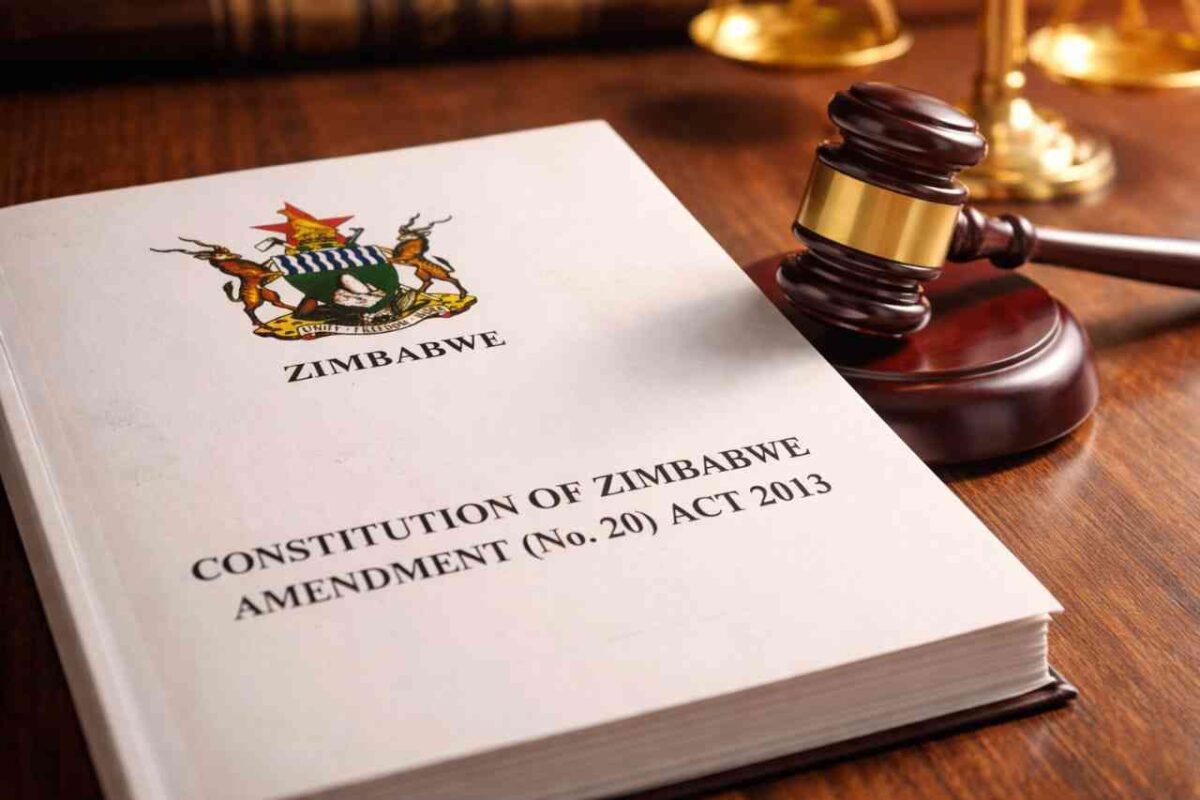
Zimbabweans living abroad are pushing ahead with a petition demanding the suspension of consultations on Constitutional Amendment Bill No. 3 until the country’s Diaspora communities are meaningfully included in the process.
They argue that excluding millions of citizens living outside the country undermines the legitimacy of the proposed constitutional changes.
As a result, some Zimbabweans living abroad have drawn a petition calling on the Zimbabwean government and embassy offices worldwide to immediately halt, review and reopen the consultation process until citizens abroad are formally consulted through public hearings and engagement platforms.
The demands also revive longstanding grievances over diaspora voting rights, an issue Zimbabweans abroad have pursued for years with little success.
On this topic
Although Zimbabweans in the Diaspora remain citizens and contribute significantly to the country’s economy through remittances and investments, successive governments have resisted extending external voting rights beyond diplomats and government officials stationed overseas.
In recent years, government officials, including President Emmerson Mnangagwa, have repeatedly courted diaspora investment under the “Zimbabwe is Open for Business” campaign, encouraging Zimbabweans abroad to invest skills and capital back home.
However, activists argue the government continues to treat the diaspora as an economic constituency rather than a political one.
“Zimbabweans living abroad remain citizens of Zimbabwe,” part of the petition reads.
“We contribute billions in remittances, support families, invest in communities, and remain directly affected by constitutional and governance changes taking place in our country. Yet despite this, diaspora communities continue to be systematically excluded from national consultation processes.”
The petition estimates between three and four million Zimbabweans live outside the country, representing nearly 30 percent of the national population.
Campaigners argue that excluding such a large constituency from consultations on constitutional reforms fundamentally weakens claims that the process is inclusive and representative.
“This makes the Diaspora one of the largest and most significant Zimbabwean constituencies globally,” the petition states.
“Any constitutional consultation process that excludes such a substantial portion of the citizenry cannot reasonably be regarded as fully representative, inclusive, or legitimate.”
Concerns over exclusion intensified following recent Independence Day engagements at Zimbabwe House in London, where activists alleged that consultations involved only a small group aligned to the ruling Zanu PF despite the United Kingdom hosting more than 200 000 documented Zimbabweans.
The petition accuses embassy officials of failing to represent the broader diaspora community regardless of political affiliation.
“Embassies and ambassadors are mandated to represent all Zimbabwean citizens regardless of political affiliation,” the petition reads.
“The continued failure by embassy offices to engage the broader diaspora community raises serious concerns regarding impartiality, representation, and the integrity of the consultation process surrounding CAB3.”
Campaigners argue the bill carries far-reaching constitutional implications, including issues relating to institutional independence, citizen participation and democratic accountability.
Among the demands contained in the petition are calls for the immediate suspension or review of the consultation process until diaspora consultations occur; public hearings through Zimbabwean embassies worldwide; transparency on how public consensus is measured; formal diaspora engagement mechanisms and providing concrete steps towards implementing diaspora voting rights.
The petition also warns continued exclusion of Zimbabweans abroad could provide grounds for future constitutional or legal challenges regarding the procedural fairness and legitimacy of the consultation process.
“Zimbabwe belongs to all Zimbabweans, including those in the Diaspora,” the petition states.
The controversy has also reignited debate around the economic significance of Zimbabweans abroad and the extent to which their financial contributions translate into political recognition.
According to the Reserve Bank of Zimbabwe, diaspora remittances have consistently exceeded US$2 billion annually in recent years, reaching US$2.45 billion in 2025.
Economists believe actual inflows may be significantly higher when informal transfer channels are included.
Analysts say remittances have become a critical lifeline for millions of households, supporting food security, healthcare, rentals, school fees and small businesses amid prolonged economic instability.
Remittances currently account for approximately 15 to 16 percent of Zimbabwe’s foreign currency receipts, making the Diaspora one of the country’s most significant economic stakeholders.
However, activists noted this economic importance has not translated into meaningful political inclusion.
“The exclusion of the diaspora from these hearings renders the consultation process incomplete and fundamentally flawed,” said migrant activist, Dr Vusumuzi Sibanda.
“Millions of Zimbabweans continue contributing to the economy, but when it comes to determining the future of the Constitution, they are treated as outsiders.”
Dr Sibanda said the omission reinforces longstanding frustrations surrounding diaspora voting rights and broader political participation.
“The issue also highlights the evolving political influence of the diaspora, whose economic contribution has increasingly contrasted with its limited formal political representation,” he said.
For many Zimbabwean families, these remittances from relatives abroad have become their lifeline amid high unemployment, inflationary pressures and recurring economic crises.





Leave a Reply