

Former Finance Minister Tendai Biti has dismissed Zimbabwe’s much-touted economic growth as “mascara and lipstick”, accusing the government of manipulating economic figures to create the appearance of faster growth and rising incomes while ordinary citizens remain trapped in poverty.
Biti also accused the government of repeatedly rebasing the economy to inflate the size of the country’s Gross Domestic Product (GDP), arguing that the practice was used to support the political objective of achieving upper-middle-income status by 2030.
He said Zimbabwe’s economy had been rebased three times in four years, with GDP rising from about US$21 billion to US$41 billion in 2023, US$45 billion in 2024 and about US$52 billion in the 2025 budget.
He said the 2026 Mid-Term Budget Review went further, citing gross national income per capita of about US$3 203 in 2025, up from US$1 737 in 2021.
On this topic
Biti argued these figures implied an even larger economy than officially acknowledged.
“They have quietly rebased, I should say dishonestly, rebased the economy to US$59.7 billion,” he said.
He accused authorities of “cooking books” through repeated rebasing to create the appearance of economic progress and support the target of attaining upper-middle-income status by 2030.
His remarks come amid debate over the World Bank’s decision to remove Zimbabwe from its list of severely fragile and conflict-affected economies, effective July 1, following a revision of its Fragility, Conflict and Violence classification.
The reclassification has been accompanied by an upbeat assessment of Zimbabwe’s economic performance, with the World Bank citing 7.5% growth in 2025 and placing the country among Sub-Saharan Africa’s fastest-growing economies.
However, analysts have questioned whether the classification risks creating the impression that “all is normal in Zimbabwe”, despite ongoing political tensions surrounding the Constitutional Amendment Act (CAA3) No. 3 and a worsening social crisis.
Speaking at a SAPES Policy Dialogue under the theme “The Growing Social Crisis in Zimbabwe: Exposing the World Bank’s Criteria for Economic Growth ” on Thursday, Biti said the government’s narrative of an glowing economy with projected growth of 5% this year, masked deeper structural weaknesses, including widespread informality, low productivity, poverty, unsustainable debt and corruption.
Biti said the positive economic indicators celebrated by the government and the World Bank did not reflect the lived experiences of ordinary Zimbabweans.
“But as usual with this government, it celebrates a form of a substance. It celebrates a mascara and lipstick of a substance,” said the former minister.
“The good thing with the economy is you cannot rig the same. The economy is a lived reality. So when the ordinary average person hears that the economy is 8.3%, he gets shocked because the ordinary average person is not living in that matrix at all.”
Biti said the headline growth figures were largely driven by a combination of high commodity prices, a strong agricultural season and increased consumption rather than a broad-based transformation of the productive economy.
He said Zimbabwe was benefiting from a global commodity-price boom, particularly in gold, lithium and platinum.
Zimbabwe produced about 47 tonnes of gold in 2025 and is targeting 56 tonnes this year, while export receipts reached about US$12 billion in 2025, with commodities accounting for approximately US$7 billion, Biti said.
He argued, however, the rising commodity prices had created a temporary bubble that was not felt across the economy.
“There is an artificial bubble that has not spread across the length and breadth of the country. That bubble is not felt by anyone in this economy,” he said.
Biti pointed to the sharp increase in gold prices since 2021, alongside rising lithium and platinum prices, as evidence that the country’s export performance was benefiting from external commodity conditions rather than fundamental changes in domestic production.
Agriculture, which performed strongly during the previous season, was another major contributor to growth, but Biti said the sector remained characterised by low productivity and low wages.
He cited the World Bank’s September 2026 Growth and Jobs report, which described Zimbabwe’s recent growth as structurally shallow and driven predominantly by consumption and a narrow sectoral base.
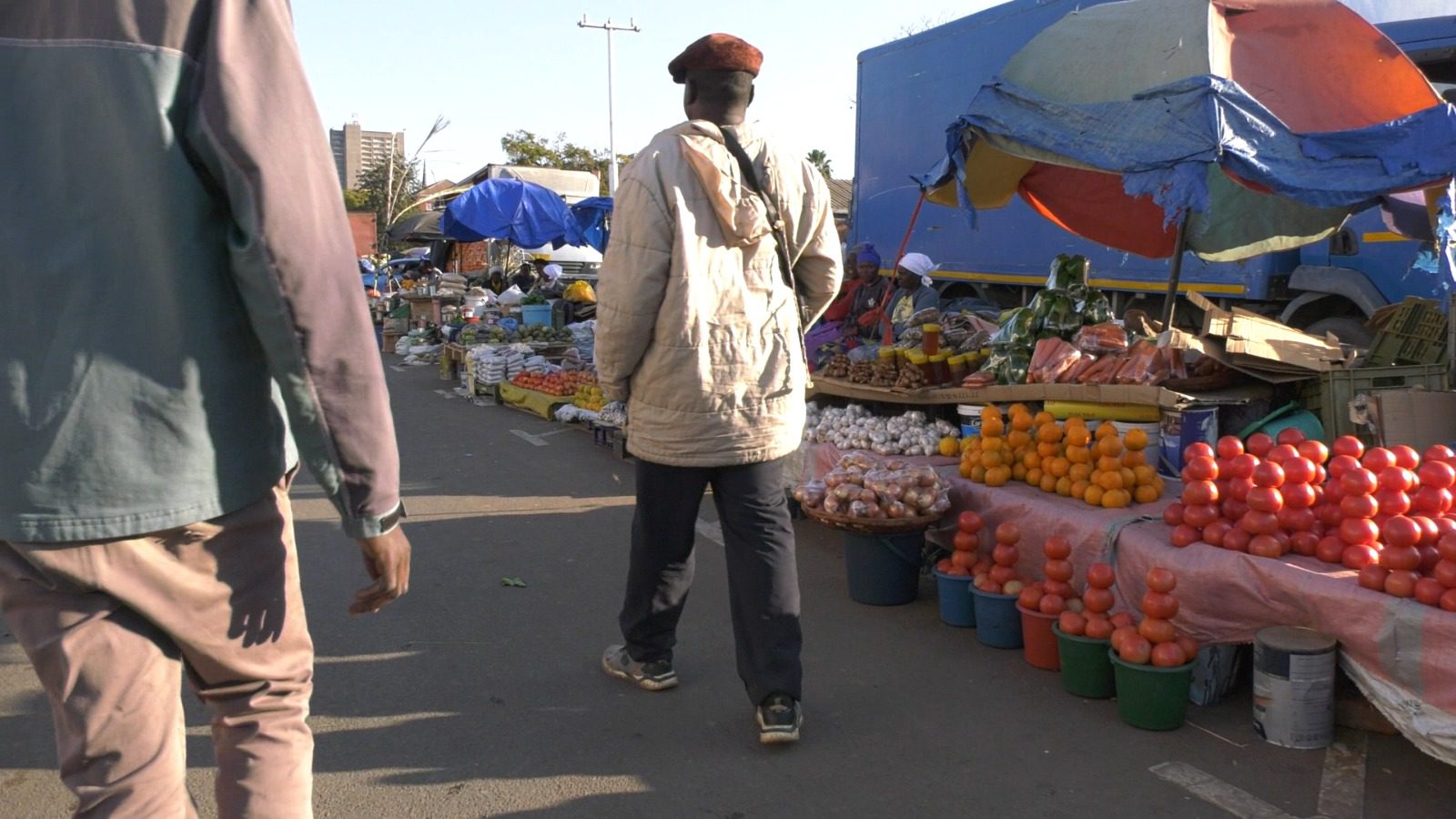
Biti said the structure of Zimbabwe’s labour market further demonstrated the weakness of the growth celebrated, noting that about four out of every five jobs in Zimbabwe are in the informal sector.
“Eighty percent of the economy is in the informal sector,” he said, adding informal employment was typically characterised by low incomes, insecurity and a lack of pensions or other forms of social protection.
Biti also pointed to agriculture and artisanal mining as major sources of employment, but said these sectors were dominated by low-productivity and poorly remunerated work.
He said about two million jobs were found in artisanal mining, which he argued was another indication of an economy struggling to create productive, secure employment.
Biti said consumption, rather than investment and increased productive capacity, was another major driver of the economy.
He attributed part of this consumption to diaspora remittances, which he said were approximately US$2.2 billion and could rise to about US$2.7 billion this year.
“Our people in the diaspora, our relatives, are looking after us. They are sending small amounts of money to look after their mothers, to look after their sick relatives, to buy food and so forth,” he said.
Biti said the strength of consumer-facing businesses was another indication of the nature of the current economic expansion.
He cited the strong performance of Innscor, saying its results demonstrated the extent to which consumption was driving economic activity.
“So one could say it’s largely a pizza and the chicken economy. People are eating, people are consuming,” he said.
He argued while increased consumption could boost GDP, it did not necessarily represent structural economic transformation.
Biti also challenged the government’s claims of macroeconomic stability, particularly the reduction in inflation.
He said the apparent stability of the Zimbabwe Gold (ZiG) currency was maintained through controls rather than the operation of a genuinely open foreign exchange market.
“Yes, prices have remained stable in the past few months. But we all know that this is a rigged stability,” Biti said.
“The ZiG has been shielded. The ZiG has not been allowed to operate in an open market. It has remained controlled. It has remained fixed.”
He said a substantial premium remained between the official exchange rate and the parallel market, which he put at almost 20%, meaning the apparent currency and inflation stability could not be taken as evidence that Zimbabwe had resolved its underlying macroeconomic problems.
Biti said the country’s social indicators offered the clearest contradiction to the economic boom narrative.
He cited World Bank figures showing that about 50% of Zimbabweans live below the international poverty line of US$3 a day.
He also referred to an earlier World Bank report which he said estimated that 79% of Zimbabweans survived on less than US$1.25 a day.
“The issues of poverty, we live with them. We are part of the poverty in Zimbabwe,” he said.
Biti said economic growth could not be considered meaningful if it did not improve people’s access to basic services and decent livelihoods.
“The ordinary average person is living in poverty in a country where they can’t access public health facilities, where they can’t send children to school, where they are going through power cuts, potholes, lack of water and deep underdevelopment,” he said.
He also cited Zimbabwe’s debt burden as another measure of the economy’s fragility.
Biti put the country’s total debt at between US$22 billion and US$32 billion, depending on the calculation used, saying the debt was unsustainable and equivalent to about 45.6% of GDP in 2025.
Corruption, he added, further undermined economic performance.
“We all know that we are losing, the economy is losing at least US$4 billion through corruption,” Biti said.
He argued corruption should be regarded as a major component of economic fragility because resources that could be invested in productive sectors and public services were instead being lost.
Biti also referred to the IMF’s 2025 Article IV report, which he said raised concerns about the capacity of Zimbabwe’s statistics agency, ZimStat, to undertake such economic rebasing.
He said the headline per-capita income figure was inconsistent with the reality of incomes in Zimbabwe.
“If you say to anyone that the per capita income is now US$3 203, they will laugh at you,” he said.
Biti cited figures he attributed to the World Bank showing median monthly income of about US$130, with agricultural workers earning about US$60 and workers in the informal private sector about US$108.
Biti also challenged the World Bank’s July 2026 decision that resulted in Zimbabwe no longer classified as a fragile state under its revised methodology.
He said the change did not represent an actual improvement in Zimbabwe’s political, economic or social conditions but was instead a methodological and “desktop” reclassification.
According to Biti, the World Bank had previously used a composite assessment incorporating political, economic and social factors, but revised the methodology in July by separating political and social dimensions of fragility and lowering the threshold used for classification.
He said Zimbabwe subsequently scored 2.9, below the revised threshold of three.
“This has been a desktop classification. Zimbabwe is not found in any of these categories and Zimbabwe purportedly is scoring 2.9 and not 3. So it’s no longer ranked fragile,” he said.
Biti argued Zimbabwe’s underlying conditions had not changed sufficiently to justify such a conclusion.
He pointed to political instability, the unresolved legacy of the 2017 military-assisted transition, ongoing political divisions and the controversy surrounding CAB3.
“CAB3 has thrown our country into serious massive conflict,” he said.
“For Christ’s sake, this is a country which only a few years ago went through a military coup in 2017 and the conditions for that have not changed at all.”
He said the World Bank’s own September 2026 Growth and Jobs report provided a contradiction to the July reclassification because its analysis of Zimbabwe’s economy highlighted precisely the structural weaknesses that demonstrate fragility.
“In a nutshell this report actually in a very scientific process captures Zimbabwe’s fragility,” Biti said.
“In other words it makes a case that defeats the reclassification or the desktop omission that took place in July of 2026.”
SAPES Trust director Ibbo Mandaza, who opened the dialogue, said the discussion had been prompted by the World Bank’s “glowing” assessment of Zimbabwe’s economy and the country’s continuing political and social crisis.
Mandaza said the World Bank’s assessment risked creating the impression that “all is normal in Zimbabwe”, despite the political fragility surrounding CAB3 and a worsening social crisis.
He also warned of the early indications of “Murambatsvina No. 2”, referring to the 2005 government clean-up operation that resulted in the destruction of informal businesses and homes.
Mandaza said the current clean-up campaign risked dealing with the symptoms of Zimbabwe’s crisis without addressing its underlying causes.
Biti, meanwhile, maintained the central test of Zimbabwe’s economic performance should not be the figures presented in official reports, but whether ordinary citizens were experiencing meaningful improvements in their lives.
“The economy is a lived reality. The ordinary average person is not living in that matrix at all,” he said.







Leave a Reply