
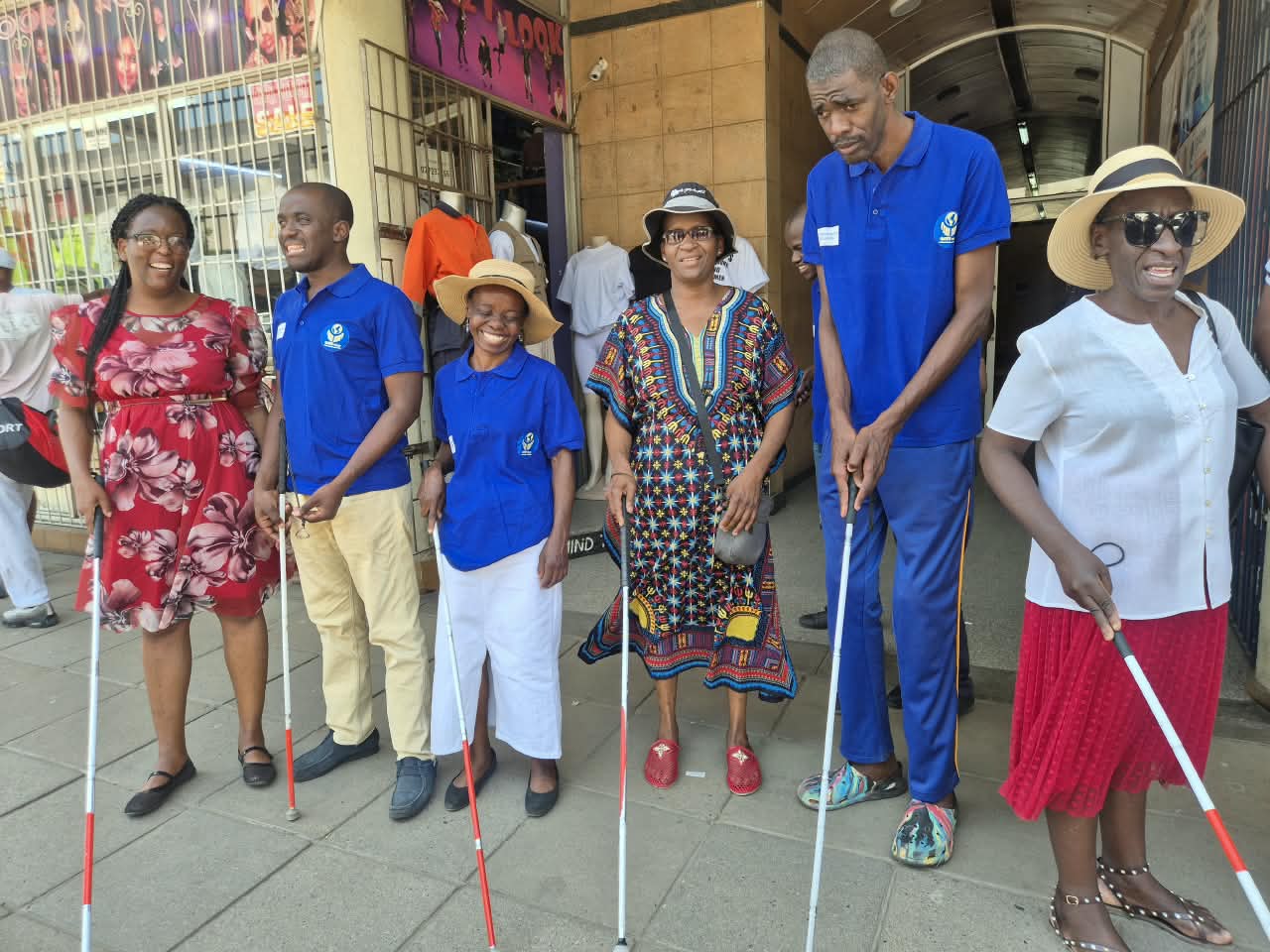
Poorly maintained pavements, potholes and obstructed walkways are making it difficult for people with visual impairments to move around safely in Bulawayo, Gateway to Elation founder and director Robert Malunda has said.
Malunda called on local authorities to make public infrastructure more accessible, while urging people with visual impairments to embrace white canes as tools of independence rather than symbols of disability.
He was speaking during the belated commemorations of International White Cane Safety Day, held on October 20 under the theme “White Cane: Navigating Without Limits”. The day is observed annually on October 15.
Gateway to Elation distributed white canes to participants at the event, which was supported by the Vera Ahlemann-Schoeller Foundation.
On this topic
Malunda said potholes and poorly maintained pavements sometimes caused white canes to become stuck or break, creating additional barriers for users.
“Our white canes, they get stuck in those potholes that we see every day on the pavement,” he said.
He also raised concerns about vendors setting up stalls on pedestrian walkways, saying the practice restricted movement for people relying on white canes to navigate public spaces.
He appealed to local authorities to consider the needs of people with visual impairments when maintaining pavements, regulating vending and planning public infrastructure.
Malunda also urged people with visual impairments not to avoid using white canes because of stigma, describing them as essential tools for mobility and a symbol of identity.
“I know many of us would want to do away with the white cane or to avoid the white cane. May we not do so because the white cane is a symbol of our identity,” he said.
He said greater acceptance of white canes among people with visual impairments could also help society become more accepting of them.
Malunda encouraged people with visual impairments to participate in council budget consultations and other public decision-making forums, saying their involvement was necessary to ensure that accessibility concerns were considered when spending priorities were set.
He urged the community to attend such meetings in 2027 and make its needs heard.
“That is where our voice is heard. That is where our views are heard,” he said.
Gateway to Elation board member Percival Mcijo said the white cane represented dignity, mobility and independence rather than helplessness.
He said it demonstrated that people with visual impairments could move around, learn, work and lead.
One of the participants, Thulani Sibanda, said relying on a white cane could provide greater confidence when navigating independently, particularly when assistance from other people was not always dependable.





Leave a Reply