
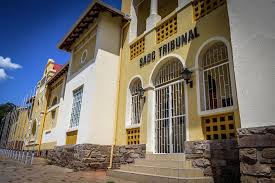
The Southern African Development Community (SADC) may be quietly considering the revival of its long-dormant Tribunal, nearly 16 years after regional leaders effectively rendered the institution non-operational, according to well-placed sources.
The Tribunal was effectively rendered non-operational following its landmark 2008 ruling condemning Zimbabwe’s land reform programme as unlawful and racially discriminatory.
It has remained suspended since 2011, depriving millions of SADC citizens of access to the region’s primary judicial mechanism and court of last resort, activists have lamented.
The discussions for its revival come ahead of the 46th Ordinary Summit of SADC Heads of State and Government, which will be held on 17 August 2026 in Durban, South Africa, where regional leaders are expected to review a range of issues concerning regional integration and governance.
On this topic
SADC has confirmed that the summit will take place at the Durban International Conference Centre, following meetings of the Council of Ministers from 12 to 14 August.
Sources said there was growing recognition within SADC of the need to restore the Tribunal, but raised concerns the process was taking place with limited public visibility and without meaningful involvement of civil society organisations that have campaigned for its restoration for years.
“Apparently, they woke up to the reality that what they did in 2010 was unlawful, that it was a violation of rights and everything else that we value rule of law, judicial independence and things like that,” a source said.
The source said a new protocol was drafted to provide the legal framework for restoring the Tribunal, but civil society had not been brought into the process.
“They are keeping it under wraps because they are not even involving civil society in the drafting of the new protocol,” the source said.
“So people are asking, what will it look like actually? We don’t really know what it will look like, but those are the conversations apparently.”
The lack of consultation has raised concerns over whether a revived Tribunal would guarantee meaningful access to justice, particularly in human rights cases and operate independently of member states.
“The worrying factor is they are not consulting civil society. It would be nice to get civil society involvement, especially to ensure there’s access to that Tribunal and that it is going to deal with human rights issues and also to ensure its independence,” the source said.
Despite the lack of formal involvement in the current process, civil society organisations have continued to push for the restoration of the regional court.
“Civil society has been working on this and they are relentless,” the source said.
Another source familiar with current SADC processes confirmed there had been discussions about revitalising the Tribunal, although no final decision had been reached.
“For the revitalisation of the Tribunal there has been a lot of talk about it but nothing concrete so far, apart from the efforts to approve the new protocol,” the source said.
The source said the immediate process before the summit involved the appointment of judges to the SADC Administrative Tribunal, an institution that remained after the original Tribunal was rendered non-operational.
“Currently the summit is now looking at appointments of judges for the SADC Administrative Tribunal,” the source said.
“This is the one which they sort of retained when they closed the former SADC Tribunal. The SADC Administrative Tribunal deals mainly with disputes between SADC states and also disputes between employees of the Secretariat and SADC itself.”
However, the source said there was a separate process concerning the possible restoration of the original Tribunal, which was based in Windhoek, Namibia.
“Currently, what we know is that they are in the process of drafting a new protocol,” the source said.
The Tribunal was established under the 2000 Protocol as the judicial arm of SADC, with a mandate to interpret the SADC Treaty and promote democracy, human rights and the rule of law. It could hear disputes between member states as well as cases involving individuals and states.
Its fate changed after the Tribunal ruled in favour of Zimbabwean farmer Mike Campbell and others in a landmark land dispute, finding that Zimbabwe had violated the SADC Treaty through its land reform programme.
Zimbabwe then did not comply with the ruling, after which SADC leaders in 2010 effectively suspended the Tribunal by failing to replace judges whose terms had expired.
A 2014 Protocol subsequently sought to replace the original arrangement and remove individuals’ ability to bring cases against member states.
The move was later challenged in South Africa, culminating in a landmark 2018 Constitutional Court judgment.
The South African Constitutional Court found that former President Jacob Zuma’s participation in the suspension of the Tribunal and his signing of the 2014 Protocol were unconstitutional, unlawful and irrational.
The court ordered Zuma to withdraw South Africa’s signature from the protocol and affirmed the importance of the Tribunal’s role in promoting human rights, democracy and the rule of law.
However, the ruling did not automatically restore the Tribunal, leaving its revival dependent on decisions by SADC member states.
Read: https://cite.org.zw/sadc-tribunals-17-year-suspension-denying-justice-to-millions/
Last year, SADC Tribunal Rights Watch spokesperson and Mike Campbell Foundation executive director, Ben Freeth, said the Tribunal’s continued non-operation was depriving SADC citizens of a regional court of last resort.
Freeth argued the Tribunal could become operational again through the appointment of judges by member states, describing its continued suspension as a failure to uphold human rights, the rule of law and SADC’s treaty obligations.
The renewed discussions come as SADC prepares for its 46th summit under the theme “Resilient, sustainable and inclusive industrialisation through Infrastructure Development, Agricultural and Critical Minerals Transformation in Pursuit of a Just World.”







Leave a Reply