

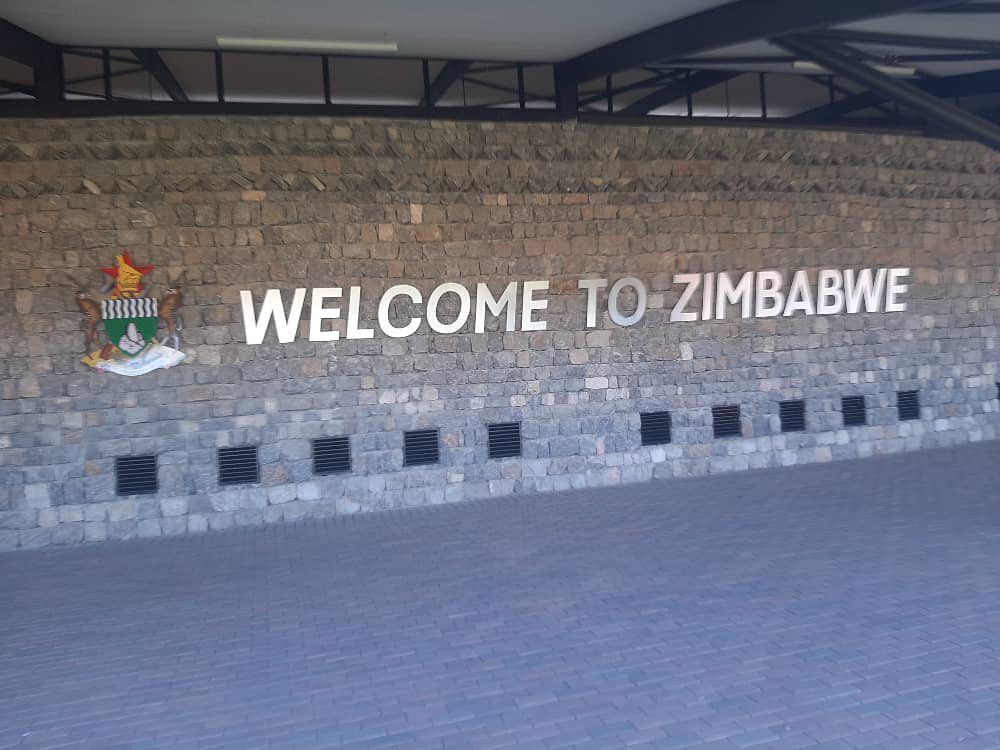
Questions have emerged over the Zimbabwean government’s claim that it has repatriated nearly 100 000 citizens from South Africa since late May, while recently released South African government statistics paint a different picture of the scale and composition of recent repatriations.
Zimbabwe’s figures appear to combine both voluntary returnees and those assisted through government repatriation programmes, whereas South African authorities reported processing just over 53 000 deportations and repatriations involving all foreign nationals over a slightly similar period.
The figures from Zimbabwe, announced during Tuesday’s post-Cabinet media briefing in Harare, also came as government officials projected that 70 percent of an estimated two million Zimbabweans living in South Africa could eventually return home.
The disparity between the two sets of figures has raised questions over how the two governments are accounting for returning migrants.
On this topic
Briefing the media after Cabinet on Tuesday, Information, Publicity and Broadcasting Services Minister, Dr Zhemu Soda said the government, working through an Inter-Ministerial Committee and development partners, had significantly expanded its repatriation and reintegration programme.
“The nation is informed that through collaborative efforts, the Inter-Ministerial Committee and development partners facilitated the return of 99 418 citizens between 28 May and 10 July, 2026,” he said.
The information minister said the majority of those returning were vulnerable groups.
“More than 70 percent of the returnees are women and children. Government noted that the number of Zimbabwean nationals requiring repatriation and reintegration assistance has continued to increase, and measures have been put in place to meet the growing demand,” he said.
Dr Soda added the programme was also assisting other foreign nationals transiting through Zimbabwe.
“The nation is further informed that other nationals from Malawi and Zambia arriving at Beitbridge are assisted through their respective embassies, with appropriate arrangements being put in place for assistance to be rendered to any other nationals facing challenges as they transit to their countries of origin,” he said.
The latest figures represent a sharp increase from those announced by the government only a week earlier.
At last week’s post-Cabinet briefing, Dr Soda said 21 291 Zimbabweans had returned through government-assisted repatriation arrangements since the exercise began on May 26, 2026 while more than 56 830 others had returned independently through self-repatriation mechanisms, bringing the cumulative total to about 78 000+.
The updated figure of 99 418 suggests the number of returnees increased by more than 21 000 within a week.
Meanwhile, South African figures released days before Zimbabwe’s latest announcement present a different picture.
On July 12, 2026, South Africa’s Minister of Justice and Constitutional Development and chairperson of the Inter-Ministerial Committee on Migration, Mmamoloko Kubayi, announced that 53 449 foreign nationals had been processed for deportation and repatriation to their countries of origin.
According to Kubayi, the repatriations were dominated by Malawian nationals, followed by Zimbabweans and Mozambicans.
“To date a total of 53 449 foreign nationals have been processed for deportation and repatriation which is dominated by the Malawians followed by the Zimbabweans and Mozambicans,” she said during a media briefing in Pretoria.
Read:https://www.sabcnews.com/sabcnews/kubayi-confirms-53-000-deportation-repatriation-cases/
Kubayi said the exercise formed part of South Africa’s five-point migration management strategy announced by President Cyril Ramaphosa, which includes strengthening border security, tightening immigration controls and improving cooperation with neighbouring countries.
Against that backdrop, Zimbabwe’s Minister of Foreign Affairs and International Trade, Professor Amon Murwira, reiterated on Tuesday’s post-Cabinet briefing that Zimbabwe had already repatriated about 100 000 citizens.
His remarks came while responding to questions at about the visit to Harare by Zulu monarch King Misuzulu kaZwelithini and other South African traditional leaders.
“Yes, we have disturbances in South Africa, and Honourable Garwe gave statistics in Cabinet today… that we have brought home about 100 000 of our citizens,” Prof Murwira said.
He explained Zimbabwe’s repatriation programme was coordinated between officials stationed in South Africa and authorities at Beitbridge under the Civil Protection Act.
“What happens is the Ministry of Foreign Affairs takes our citizens from South Africa itself, works within South Africa and then hands over these citizens across the bridge and our chairperson across the bridge, who takes care of Zimbabwe and distributes them to their homes, is Honourable Garwe, chairing our committee under the Civil Protection Act. So, everything is going well,” he said.
The foreign affairs minister described the government’s response as an expression of Zimbabwe’s constitutional commitment to Pan-Africanism.
“We are Pan-African. We regard Africa as our home. Within that context, we also treat other countries using the same logic that Zimbabwe is their home.“So, this is the logic upon which we treat our foreign relations, especially within our neighbourhood, first principle, within Africa. We expect our people to interact freely.”
Local Government and Public Works Minister Daniel Garwe said the government was preparing for significantly larger numbers of returnees.
“We have in excess of about two million Zimbabweans in South Africa, and we are hoping maybe 70 percent of that two million is coming back home, so we are very ready to receive them,” he said.
If his claims are realised, that projection would translate to approximately 1.4 million Zimbabweans returning from South Africa.
Garwe said the government had intensified repatriation efforts.
“Initially, we were dealing with numbers around 700, 1,000, 1,500 per day. We are hoping this week those numbers are going to swell and increase,” he said, adding reception mechanisms were already in place.
“Zimbabwe will not tire, because these are Zimbabweans… They are being well received by Zimbabweans, both in government and in the civil community.”
Meanwhile, South Africa’s figures of 53 449 include 2 615 repatriations beyond the Southern African Development Community (SADC), including 431 people returned to Kenya, 1 159 to Nigeria, 86 to the Republic of Congo and 939 to Uganda.
Reacting to the statistics, Chairperson of the Zimbabwe Community in South Africa, Ngqabutho Nicholas Mabhena, said Zimbabwe’s figures appeared to include both voluntary returnees and those assisted by the government.
He acknowledged that while South Africa’s figures referred to migrants processed through immigration enforcement operations, he disputed the Zimbabwean government’s overall figures.
“Their numbers are not accurate because the number of people repatriated is around 2 000. The rest are just travelling as they normally do. It’s just pure propaganda. The buses they have provided ferried about 2,000 people,” he said.
“There is no way buses have ferried 100 000 people. The government must stop propaganda and be truthful.”
Mabhena argued Zimbabwe’s long-term solution lay in addressing the economic conditions, which had pushed Zimbabweans to migrate in the first place.
“The Zimbabwean government must create conditions for people to remain in Zimbabwe. If people stay in Zimbabwe, then those who are in South Africa will be attracted to go back. But you can’t have a situation where people in South Africa are threatened and losing jobs and must go back, while those in Zimbabwe want to come to South Africa. The Zimbabwean government must create those conditions, create employment for people in Zimbabwe,” he said.
The chairperson said as a solution, both governments have to publish harmonised migration statistics.
“Zimbabwe and South Africa must release harmonised data showing the exact number of Zimbabwean nationals who have crossed back into Zimbabwe since the latest migration operations began,” he said.
“The differing figures show there is a need for transparent and verifiable data to accurately assess the scale of Zimbabweans returning to help in planning.”





Leave a Reply