
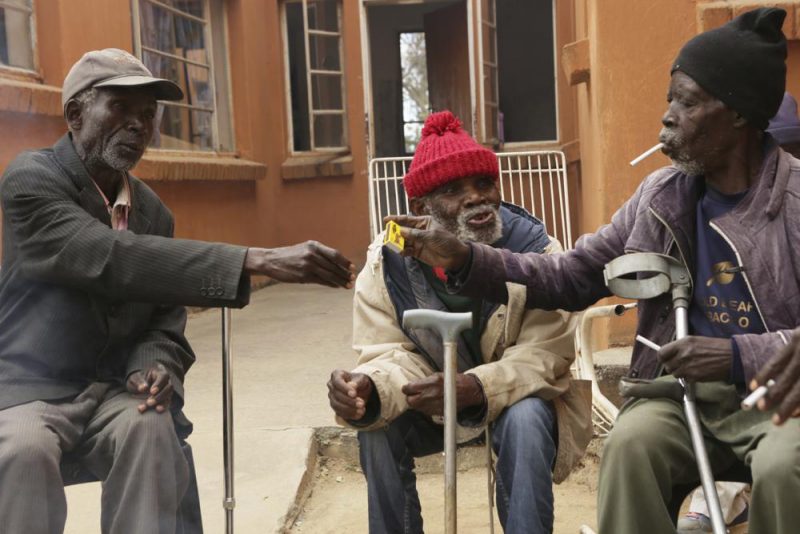
Thousands of senior citizens, pensioners and retired professionals in Zimbabwe are trapped in poverty, struggling to access healthcare and living without dignity, prompting Parliament to recommend sweeping legal reforms that include inflation-indexed pensions, expanded social protection and a new law dedicated to protecting the country’s ageing population.
A report by Parliament’s Joint Portfolio Committee on Public Service, Labour and Social Welfare and the Thematic Committee on Human Rights, highlighted this sad picture while concluding that the plight of older Zimbabweans is “structural, systemic and urgent” and requires coordinated government intervention.
The report follows a petition submitted to Parliament in August 2025 by the Power of Touch Institution, represented by Francis Dembetembe and Beatrice Sithole, who called for a review of laws affecting senior citizens, pensioners and retired professionals.
Since the matters raised directly implicated the rights, dignity and welfare of older persons, the Committee considered the petition jointly with the Thematic Committee on Human Rights.
On this topic
The petition urged lawmakers to enact a comprehensive Senior Citizens, Pensioners and Retired Professionals Act to consolidate the rights, protections and benefits currently scattered across different pieces of legislation.
“The evidence led before the Joint Committee showed that older persons face a multidimensional challenge encompassing legal uncertainty, weak institutional coordination, inadequate income security, constrained health access, and dignity deficits at service delivery points,” the report states.
The committee found that although Zimbabwe has constitutional provisions protecting older persons, together with the Older Persons Act, the Social Welfare Assistance Act and other policy frameworks, these measures remain fragmented and poorly coordinated, weakening implementation and accountability.
It also noted elderly Zimbabweans are not a homogeneous group, while some receive pensions after formal employment, many spend their working lives in informal trading, communal farming or other livelihoods that leave them without any retirement income, exposing them to poverty in old age.
To address these challenges, the petitioners proposed a raft of reforms aimed at improving both the financial security and quality of life of older citizens.
Among the key proposals is the enactment of a comprehensive law that clearly defines who qualifies as a senior citizen, establishes a dedicated department within the Ministry of Public Service, Labour and Social Welfare to oversee programmes for older persons and decentralises services through provincial offices and dedicated help desks at hospitals, banks, supermarkets, border posts and other public service centres.
The petitioners had proposed that an older person or senior citizen be defined as any Zimbabwean aged 55 years and above.
“Their argument was informed by the socio-economic realities of aging in Zimbabwe, including diminished earning capacity, dependency burdens, poor access to health services and the vulnerability of many persons approaching or entering retirement.”
The petition also calls for unconditional social welfare grants that are adjusted regularly to reflect inflation and the cost of living, while pensions and retirement benefits should be indexed to the Consumer Price Index to protect retirees from losing purchasing power.
Additional proposals include increasing allocations to the Older Persons Fund, waiving selected statutory charges such as passport fees, municipal rates and birth certificate costs, establishing inspection mechanisms for old people’s homes and providing targeted assistance to elderly people supporting unemployed children, orphaned grandchildren and single-parent families.
The parliamentary committee found merit in many of these recommendations.
It observed that while the government currently operates the Older Persons Fund and provides interventions such as cash transfers, food assistance, health support and educational assistance for dependents, “these programmes remain inadequate in the face of inflation, currency instability and rising healthcare costs.”
On healthcare, petitioners told lawmakers that many senior citizens continue to struggle to obtain affordable treatment because of high hospital fees, expensive medicines and the absence of functioning geriatric services.
Government officials told the committee that people aged 65 and above can access free treatment through the Assisted Medical Treatment Order while work is underway to establish a National Health Insurance Scheme.
However, the committee concluded that “a clear gap between legal entitlement or policy aspiration and the lived reality” remains because inadequate funding, administrative bottlenecks and limited public awareness continue to undermine access to healthcare.
Beyond financial hardship, lawmakers also highlighted concerns over the treatment of elderly people at public institutions.
The report says many older Zimbabweans experience disrespect, long queues and poor treatment at hospitals, banks, supermarkets and government offices despite existing expectations that they should receive priority service.
While the government indicated service providers are expected to prioritise older persons, the committee found that implementation remains inconsistent and called for standard service delivery guidelines to preserve the dignity of elderly citizens across public and private institutions.
The committee further recognised that many elderly Zimbabweans have become the primary caregivers for unemployed adult children, orphaned grandchildren and other dependents because of migration and prolonged economic hardship, deepening their vulnerability.
In its recommendations, Parliament urged the Ministry of Public Service, Labour and Social Welfare to complete the review of the Older Persons Act and related social protection legislation by December 2026 while considering a consolidated legal framework dedicated to senior citizens.
Parliament also recommended establishing a fully staffed directorate responsible for older persons by January 2027, increasing Treasury support for the Older Persons Fund and Assisted Medical Treatment Order, introducing standard service delivery guidelines at public institutions, and progressively adjusting pensions and social grants in line with inflation and cost-of-living benchmarks beginning with the 2027 national budget.
Concluding its inquiry, the committee said Zimbabwe owes its elderly “not only care and protection, but also dignity, recognition and inclusion,” arguing that a comprehensive Senior Citizens, Pensioners and Retired Professionals Act, backed by a strong coordinating institution, offers the most sustainable path towards improving the lives of the country’s ageing population.








Leave a Reply