

Conservationists have raised concerns over the lack of transparency surrounding Zimbabwe’s decision to transfer wildlife to Equatorial Guinea, questioning why key details about the exercise have not been disclosed to the public or Parliament.
The concerns follow an announcement by the Zimbabwe Parks and Wildlife Management Authority (ZimParks) that it is undertaking the capture and translocation of “a limited number of selected plains game species” under a government-to-government conservation cooperation agreement between Zimbabwe and Equatorial Guinea.
According to ZimParks, the programme is intended to support biodiversity conservation, strengthen wildlife management and assist Equatorial Guinea in restoring wildlife populations within its protected areas.
However, conservationists who spoke to CITE said the authority’s statement leaves critical questions unanswered.
On this topic
“There are no figures. There are no names of the species being moved. There is no indication of which national park or protected area these animals are being taken from,” Sharon Hoole said.
“They say the animals are being donated for scientific reasons, but what exactly does that mean? Who is paying for the capture, veterinary work, transport, aircraft, insurance and the Convention on International Trade in Endangered Species of Wild Fauna and Flora (CITES) permits? These are legitimate public interest questions.”
The conservationists also questioned whether Parliament had been informed of the arrangement or whether environmental stakeholders had been consulted before the operation commenced.
“Where is the public consultation? Where is Parliament in all this?” she asked.
Hoole argued that while governments have the authority to enter bilateral conservation agreements, the movement of Zimbabwe’s wildlife, considered a national heritage and public resource, should be accompanied by greater transparency.
In a statement, ZimParks spokesperson Luckmore Safuli said the translocation followed a formal request from the Government of Equatorial Guinea seeking technical assistance to restore selected wildlife populations and improve biodiversity conservation in its protected areas.
Safuli said ecological and habitat suitability assessments had been conducted by wildlife experts before the project was approved.
“The release sites are appropriate and the programme will support long-term conservation, ecotourism and sustainable community livelihoods,” he said.
Safuli said only common plains game species found in healthy and sustainable populations in Zimbabwe were being translocated.
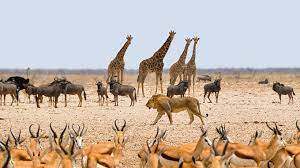
Plains game is a broad term used in southern Africa to describe non-dangerous herbivores commonly found in savannahs, grasslands and woodlands. They typically include impala, kudu, eland, sable antelope, roan antelope, waterbuck, bushbuck, nyala, wildebeest, zebra, giraffe, tsessebe, hartebeest, reedbuck, oribi, steenbok, duiker and warthog. Some wildlife authorities also include buffalo, although it is generally classified as dangerous game because of its size and behaviour.
However, ZimParks did not identify which species were being moved, how many animals were involved or the protected areas from which they were sourced. Conservationists said that information was essential because different plains game species have different conservation status, ecological roles and economic value.
The authority said scientific assessments confirmed the removals would not adversely affect Zimbabwe’s biodiversity, ecological integrity or wildlife populations.
It added that the operation complies with Zimbabwean law, internationally accepted animal welfare standards and the International Air Transport Association (IATA) Live Animals Regulations and is being undertaken by experienced wildlife professionals.
“ZimParks remains committed to responsible wildlife management and working with other African nations to advance practical conservation solutions,” Safuli said, adding that the operation was lawful, planned and professionally managed.
Conservationists said the absence of detailed information makes it difficult for independent experts and the public to assess whether the transfer is in Zimbabwe’s best conservation interests.
Among the issues they said require clarification are the scientific basis for selecting the animals, the costs associated with the operation, the identity of the institutions receiving the wildlife in Equatorial Guinea and whether the international permits required under CITES have been issued.
They also questioned whether Zimbabwe was donating the animals or whether any financial arrangement exists under the bilateral agreement.
The latest wildlife transfer comes against the backdrop of previous controversy over Zimbabwe’s export of wild animals.
In 2019, Zimbabwe strongly opposed a decision by member states of CITES to tighten restrictions on the international export of wild African elephants to captive facilities.
The decision followed years of criticism from animal welfare organisations over Zimbabwe’s capture and export of baby elephants to zoos in China and the United Arab Emirates.
Although authorities had previously denied the trade, the government later confirmed that between 2012 and 2018 Zimbabwe exported 97 baby elephants to China and Dubai, generating approximately US$2.7 million in revenue.
At the time, ZimParks said proceeds from the sales were used to support conservation programmes.
Conservationists have long argued that wildlife exports and translocations should be conducted transparently, with full public disclosure of the species involved, the scientific justification and any financial arrangements because the animals are part of Zimbabwe’s natural heritage and a valuable national resource.
The current translocation has revived those concerns, with calls for ZimParks and the government to release more information about the operation, arguing that public confidence depends on greater openness over decisions involving Zimbabwe’s wildlife.





Leave a Reply